Within Remote Viewing
What the Famous Review Really Said
The 1995 review found disputed lab claims but no reliable intelligence value from operational remote viewing.

On this page
- Two Expert Interpretations
- Laboratory Versus Operations
- Why the Program Ended
Page outline Jump by section
Introduction
The 1995 evaluation of the U.S. remote-viewing programme is often remembered as the moment the government “confirmed” psychic spying, but that is not what the review concluded. Its real finding was more divided and more damaging to the programme: some laboratory results were statistically unusual, and one expert argued they supported “psychic functioning”, but the operational programme had not shown reliable intelligence value. In governance terms, that distinction mattered more than the headline debate over whether the lab data were anomalous.
The review, commissioned for the CIA and conducted by the American Institutes for Research, examined both research claims and practical intelligence use. Jessica Utts, a statistician, judged the best experimental evidence to be strong enough to support a real effect. Ray Hyman, a psychologist and sceptic, agreed that some recent experiments looked better than earlier work, but argued that the conclusion was premature because independent replication, theory and safeguards against hidden bias were still insufficient. The broader AIR conclusion was decisive for government: remote viewing did not produce the concrete, dependable information needed for intelligence operations.[CIA+2National Security Archive]cia.govAN EVALUATION OF REMOTE VIEWINGThis evaluation was intended to determine: (a) whether this research has any long-term practical value…
Why the 1995 Review Became the Hinge Point
By 1995, remote viewing was no longer just a fringe scientific claim or a Cold War curiosity. It had become an administrative problem. The programme later known as Stargate had moved through different sponsors and contractors, including work at Stanford Research Institute and Science Applications International Corporation. The Senate Appropriations Committee asked the CIA to evaluate the programme, and the CIA contracted the American Institutes for Research to review whether it had scientific merit and whether it had practical value for intelligence.[UC Davis]ucdavis.eduUC Davis'Psychic Spying' Research Produces Credible Evidence | UC DavisUC Davis'Psychic Spying' Research Produces Credible Evidence | UC Davis
That timing explains why the review carries so much weight. Earlier debates asked whether unusual remote-viewing scores could be found under experimental conditions. The 1995 review asked a harder institutional question: even if a statistical anomaly existed, could it help intelligence agencies make decisions? The answer separated “interesting laboratory claim” from “fundable intelligence capability”.
AIR’s review had two main components. One looked at the research programme, including the dispute between Utts and Hyman over the meaning of the experimental record. The other looked at operational use: what end users received, how they judged it, and whether remote-viewing reports supplied actionable intelligence. The operational side is the part most often lost in popular retellings, yet it was the part that determined the programme’s fate.[scribd.com]scribd.comEvaluation of Remote Viewing Program | PDFThe document provides an executivesummary of a review conducted by the American Institutes for Research (AIR) to evaluate the research program and…Read more…
Two Expert Interpretations
The famous split in the 1995 review was not a simple “believer versus debunker” exchange. Utts and Hyman agreed on several important points: the early research had serious weaknesses, the later SAIC-era experiments were methodologically stronger, and the statistical results deserved scrutiny. Their disagreement concerned what those results justified saying.
Utts argued that, under standards used in other scientific fields, the evidence for “psychic functioning” had been established. She pointed to statistically significant results and to effect sizes she considered consistent with findings from other laboratories. In a UC Davis account published soon after the review, she was quoted as saying that it would be wasteful to keep asking whether the effect existed and that research should instead examine how it worked.[ResearchGate]researchgate.netResearch Gate An Assessment of the Evidence for Psychic FunctioningResearch Gate An Assessment of the Evidence for Psychic Functioning
Hyman’s position was more cautious. He acknowledged that the newer findings were stronger than much earlier parapsychology research, but argued that unexplained departures from chance were not the same thing as proof of anomalous cognition. His concern was that the research was too recent, too insufficiently evaluated, and too lacking in independent replication to justify the leap from statistical anomaly to demonstrated psychic ability.[UC Davis]ucdavis.eduUC Davis'Psychic Spying' Research Produces Credible Evidence | UC DavisUC Davis'Psychic Spying' Research Produces Credible Evidence | UC Davis
The disagreement matters because both interpretations are still selectively quoted. Pro-remote-viewing accounts often emphasise Utts’s conclusion that the laboratory data were statistically impressive. Sceptical accounts often emphasise Hyman’s warning that the cause of those results had not been established. The full review contained both positions, but government decision-making did not rest only on either expert’s philosophical interpretation of the lab evidence.
Laboratory Versus Operations
The most important distinction in the 1995 evaluation was between controlled laboratory performance and field intelligence value. Laboratory remote-viewing studies could use fixed targets, controlled feedback, judging procedures and statistical scoring. Intelligence operations could not reliably reproduce those conditions. A real target might be ambiguous, time-sensitive, complex, or mixed with background information. An analyst needed specifics, not a suggestive match after the fact.
AIR’s operational review examined end-user feedback, interviews with intelligence consumers, viewers and programme personnel, and the research literature on whether laboratory conditions could plausibly transfer into intelligence work. It concluded that the conditions under which positive remote-viewing results appeared in laboratory settings did not apply well to intelligence-gathering situations. Viewers could not always receive useful feedback, and real intelligence targets might not have the characteristics thought to produce the best “hits”.[National Security Archive]nsarchive2.gwu.eduNational Security ArchiveAn Evaluation of Remote Viewing: Research and…by MD Mumford · 1995 · Cited by 76 — To assess the operational…
This is where the review’s real conclusion becomes clear. End users reported that some remote-viewing reports seemed to contain broad background accuracy, but they did not produce the concrete and specific information valued in intelligence work. In other words, a report might sound partly relevant without being precise enough to guide action. For an intelligence agency, that is a fundamental failure: a method that produces interesting impressions but cannot reliably distinguish signal from noise is not an intelligence tool.[National Security Archive]nsarchive2.gwu.eduNational Security ArchiveAn Evaluation of Remote Viewing: Research and…by MD Mumford · 1995 · Cited by 76 — To assess the operational…
The AIR report also noted that strong conclusions about operational applications were tenuous without better evidence. A later accessible copy of the evaluation summarised the problem bluntly: evidence for operational value was not available even after years of attempts, and remote viewing as then understood was unlikely to prove useful for intelligence gathering because of the constraints of real operations.[documents.theblackvault.com]documents.theblackvault.comOpen source on theblackvault.com.
What “No Reliable Intelligence Value” Really Means
The 1995 conclusion did not necessarily mean that every remote-viewing session was judged worthless by everyone who saw it. It meant that the programme had not demonstrated a dependable intelligence capability. That is a higher bar than producing occasional striking anecdotes.
Anecdotes were part of the programme’s public afterlife. Remote-viewing supporters often cited dramatic “hits” from earlier decades, while critics asked whether viewers had access to more background information than later accounts suggested. The AIR operational assessment looked past the memorable examples and asked whether the reports, as a body of work, produced usable intelligence. Its answer was no: the information was not concrete, reliable or sufficiently actionable for intelligence decision-making.[National Security Archive]nsarchive2.gwu.eduNational Security ArchiveAn Evaluation of Remote Viewing: Research and…by MD Mumford · 1995 · Cited by 76 — To assess the operational…
This distinction is essential because intelligence work punishes vagueness. A report that says a target has water, structures, metallic objects or movement may be retrospectively matched to many possible targets. A useful intelligence product needs discriminating details: what, where, when, how certain, and what action follows. The 1995 review found that remote-viewing reports did not meet that standard.
The conclusion also pushed back against a common myth: that the CIA ended the programme despite having a working psychic espionage tool. The better reading is that the government had enough documentary and administrative basis to stop funding a method whose research claims remained disputed and whose operational utility had not been shown. The programme’s termination was therefore not a cover-up of success; it was a governance decision after an external review found no demonstrated intelligence value.[Wikipedia]WikipediaRemote viewingRemote viewing
Why the Programme Ended
The programme ended because the evaluation turned remote viewing from a speculative possibility into a failed operational investment. Even if one accepted Utts’s favourable reading of the lab data, the case for an intelligence programme still had to pass a different test: could it provide information that agencies could trust enough to use? AIR’s answer was that it could not.
That outcome was reinforced by several weaknesses:
- The early research record was uneven. Utts and Hyman both recognised serious methodological problems in the earlier era, including poor controls and selective research reporting.[UC Davis]ucdavis.eduUC Davis'Psychic Spying' Research Produces Credible Evidence | UC DavisUC Davis'Psychic Spying' Research Produces Credible Evidence | UC Davis
- The later research looked stronger but remained disputed. Hyman did not claim to have found an obvious flaw in every newer experiment, but he argued that the programme had not been sufficiently exposed to public scientific checks, independent replication and theory-driven testing.[UC Davis]ucdavis.eduUC Davis'Psychic Spying' Research Produces Credible Evidence | UC DavisUC Davis'Psychic Spying' Research Produces Credible Evidence | UC Davis
- The operational reports did not satisfy intelligence users. AIR found that remote-viewing outputs lacked the concrete, specific value needed for intelligence gathering, even where end users perceived some broad accuracy.[National Security Archive]nsarchive2.gwu.eduNational Security ArchiveAn Evaluation of Remote Viewing: Research and…by MD Mumford · 1995 · Cited by 76 — To assess the operational…
- The laboratory-to-field bridge was weak. Conditions that might support positive scoring in an experiment — such as well-defined targets, feedback and structured judging — were not the same as the conditions facing real intelligence problems.[National Security Archive]nsarchive2.gwu.eduNational Security ArchiveAn Evaluation of Remote Viewing: Research and…by MD Mumford · 1995 · Cited by 76 — To assess the operational…
The CIA’s decision therefore reflected a practical judgement: the programme had not justified its continued use as an intelligence capability. Reports from the period and later summaries describe the end of Stargate as following the AIR review’s finding that the programme had no documented value to the intelligence community.[Wikipedia]WikipediaRemote viewingRemote viewing

Why the Review Is Still Misread
The 1995 evaluation is easy to misread because it contains two different kinds of conclusion. One is a scientific dispute over whether statistical anomalies in remote-viewing experiments indicate an unknown mental phenomenon. The other is an institutional conclusion about whether the government should keep using remote viewing for intelligence. Popular accounts often collapse the first into the second.
That collapse produces two misleading stories. The first says the government proved remote viewing was real. That overstates Utts’s position and ignores Hyman’s objections, the acknowledged problems in earlier research, and the operational failure. The second says the review found nothing at all. That understates the fact that even Hyman treated the better later experiments as worth serious examination, while Utts saw them as strong evidence of an effect.[UC Davis]ucdavis.eduUC Davis'Psychic Spying' Research Produces Credible Evidence | UC DavisUC Davis'Psychic Spying' Research Produces Credible Evidence | UC Davis
A more accurate reading is less dramatic but more useful. The review found disputed laboratory claims, not a settled intelligence capability. It found enough statistical anomaly to sustain argument among specialists, but not enough reliability, specificity or operational value to justify a government programme.
Subsequent critiques reinforced the concern that even apparently strong studies could be fragile. A 1999 re-evaluation by Richard Wiseman and Julie Milton focused on one key SAIC experiment highlighted in the AIR-era discussion and argued that reconstructing important aspects of the study was difficult and that two potential flaws might account for the outcome. That did not by itself settle the entire remote-viewing question, but it illustrated Hyman’s broader warning: “no obvious flaw” at first review is not the same as robust, independently secured evidence.[Hertfordshire Research Profiles]researchprofiles.herts.ac.ukExperiment One of the SAIC Remote Viewing Program: A critical re-evaluation - University of Hertfordshire (Research Profiles)…
The Real Takeaway
The 1995 review did not say, simply, “remote viewing works” or “remote viewing was fake”. Its real conclusion was narrower and more consequential: the laboratory evidence was disputed, and the operational programme had not demonstrated reliable intelligence value.
That is why the review became the hinge between government funding and the modern public myth. Before 1995, remote viewing could be presented inside government as a speculative capability still worth testing. After the AIR evaluation, it became much harder to defend as an intelligence programme. The remaining debate shifted into books, documentaries, declassified archives, paranormal research circles and sceptical commentary — places where a statistical anomaly could continue to fascinate even after the government had decided it was not a usable tool.
Amazon book picks
Further Reading
Books and field guides related to What the Famous Review Really Said. Use these as the next step if you want deeper reading beyond the article.
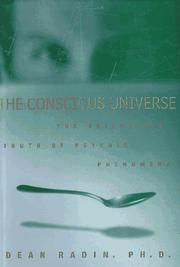
The conscious universe
Represents the positive interpretation of anomalous experimental findings.
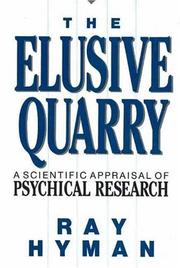
The Elusive Quarry: A Scientific Appraisal of Psychical Research
Explains the methodological concerns central to the 1995 evaluation.
Parapsychology: A Handbook for the 21st Century
Places the review within broader parapsychology research.
eBay marketplace picks
Marketplace Samples
Live-tested eBay searches with available results related to this page.

Endnotes
1.
Source: cia.gov
Link:https://www.cia.gov/readingroom/docs/CIA-RDP96-00791R000200180006-4.pdf
Source snippet
AN EVALUATION OF REMOTE VIEWINGThis evaluation was intended to determine: (a) whether this research has any long-term practical value...
2.
Source: scribd.com
Title: Evaluation of Remote Viewing Program | PDFThe document provides an executive
Link:https://www.scribd.com/doc/92017954/Air-Report
Source snippet
summary of a review conducted by the American Institutes for Research (AIR) to evaluate the research program and...Read more...
3.
Source: researchgate.net
Title: Research Gate An Assessment of the Evidence for Psychic Functioning
Link:https://www.researchgate.net/publication/333228024_An_Assessment_of_the_Evidence_for_Psychic_Functioning
4.
Source: cia.gov
Link:https://www.cia.gov/readingroom/document/cia-rdp96-00791r000200180005-5
5.
Source: documents.theblackvault.com
Link:https://documents.theblackvault.com/documents/remoteviewing/rvevaluation.pdf
6.
Source: theblackvault.com
Link:https://www.theblackvault.com/documents/remoteviewing/eval.pdf
7.
Source: Wikipedia
Title: Stargate Project (U.S. Army unit)
Link:https://en.wikipedia.org/wiki/Stargate_Project_%28U.S._Army_unit%29
8.
Source: Wikipedia
Title: Remote viewing
Link:https://en.wikipedia.org/wiki/Remote_viewing
9.
Source: researchprofiles.herts.ac.uk
Title: Hertfordshire Research Profiles
Link:https://researchprofiles.herts.ac.uk/en/publications/experiment-one-of-the-saic-remote-viewing-program-a-critical-re-e/
Source snippet
Experiment One of the SAIC Remote Viewing Program: A critical re-evaluation - University of Hertfordshire (Research Profiles)...
10.
Source: cia.gov
Link:https://www.cia.gov/readingroom/docs/CIA-RDP96-00791R000200180005-5.pdf
11.
Source: cia.gov
Link:https://www.cia.gov/readingroom/document/cia-rdp96-00791r000200180006-4
12.
Source: cia.gov
Link:https://www.cia.gov/readingroom/docs/CIA-RDP99-01448R000402140001-7.pdf
13.
Source: cia.gov
Link:https://www.cia.gov/readingroom/document/cia-rdp96-00789r002700010001-1
14.
Source: cia.gov
Link:https://www.cia.gov/readingroom/document/cia-rdp96-00792r000100130002-1
15.
Source: cia.gov
Link:https://www.cia.gov/readingroom/document/cia-rdp96-00789r003100030001-4
16.
Source: cia.gov
Link:https://www.cia.gov/readingroom/document/cia-rdp96-00789r003100010001-6
17.
Source: cia.gov
Link:https://www.cia.gov/readingroom/document/cia-rdp96-00791r000200280002-5
18.
Source: cia.gov
Title: STARGAT E
Link:https://www.cia.gov/readingroom/docs/CIA-RDP96-00791R000100160003-8.pdf
19.
Source: cia.gov
Link:https://www.cia.gov/readingroom/docs/CIA-RDP96-00791R000200070001-9.pdf
20.
Source: cia.gov
Link:https://www.cia.gov/readingroom/docs/CIA-RDP96-00789R003100030001-4.pdf
21.
Source: researchgate.net
Link:https://www.researchgate.net/publication/267978941Evaluation_of_Program_on%27Anomalous_Mental_Phenomena%27
22.
Source: researchgate.net
Link:https://www.researchgate.net/publication/403178755_The_Star_Gate_Archives_Reports_of_the_United_States_Government_Sponsored_Psi_Program_1972-1995_Volume_4_Operational_Remote_Viewing_Memorandums_and_Reports
23.
Source: researchgate.net
Link:https://www.researchgate.net/publication/248497861_Remote_viewing_as_applied_to_futures_studies
24.
Source: researchgate.net
Title: 250509613 An Assessment of the Evidence for Psychic Functioning
Link:https://www.researchgate.net/publication/250509613_An_Assessment_of_the_Evidence_for_Psychic_Functioning
25.
Source: Wikipedia
Title: Jessica Utts
Link:https://en.wikipedia.org/wiki/Jessica_Utts
26.
Source: nsarchive2.gwu.edu
Link:https://nsarchive2.gwu.edu/NSAEBB/NSAEBB438/docs/doc_57.pdf
Source snippet
National Security ArchiveAn Evaluation of Remote Viewing: Research and...by MD Mumford · 1995 · Cited by 76 — To assess the operational...
27.
Source: ucdavis.edu
Title: UC Davis’[Psychic Spying]({{ ‘psychic-spying/’ | relative_url }})’ Research Produces Credible Evidence | UC Davis
Link:https://www.ucdavis.edu/news/psychic-spying-research-produces-credible-evidence
28.
Source: ics.uci.edu
Link:https://www.ics.uci.edu/~jutts/hyman.html
29.
Source: ics.uci.edu
Link:https://www.ics.uci.edu/~jutts/may.pdf
Additional References
30.
Source: philpapers.org
Link:https://philpapers.org/rec/HYMEOP
Source snippet
Professor Jessica Utts and I were given the task of evaluating the program on "Anomalous Mental Phenomena" carried out at SRI International...
31.
Source: youtube.com
Title: Stargate Project: How Did the CIA Turn the Human Mind into a Weapon?
Link:https://www.youtube.com/watch?v=IDPlEXpzRoQ
Source snippet
[Statistics]({{ 'statistics/' | relative_url }}) in Parapsychology with Jessica Utts...
32.
Source: youtube.com
Title: Statistics in Parapsychology with Jessica Utts
Link:https://www.youtube.com/watch?v=WmYGtKB9EEA
Source snippet
The CIA Filed a 9-Page Report Describing Pyramids on Mars. Then Classified It...
33.
Source: youtube.com
Title: CONTROLLED REMOTE VIEWING
Link:https://www.youtube.com/watch?v=wWqldsr_zIg
Source snippet
Stargate Project: How Did the CIA Turn the Human Mind into a Weapon?...
34.
Source: semanticscholar.org
Link:https://www.semanticscholar.org/paper/An-Assessment-of-the-Evidence-for-Psychic-Utts/3f64d1c2520cbd3082fe2dfa5eab9bd66eaa6b0d
35.
Source: skepsis.nl
Link:https://skepsis.nl/stargate/
36.
Source: reddit.com
Link:https://www.reddit.com/r/skeptic/comments/vv8j6s/dr_jessica_utts_is_convinced_that_psychic/
37.
Source: facebook.com
Link:https://www.facebook.com/100090372200308/posts/during-the-cold-war-the-cia-funded-research-into-what-they-called-remote-viewing/937678002587931/
38.
Source: koestlerunit.wordpress.com
Link:https://koestlerunit.wordpress.com/wp-content/uploads/2015/06/wiseman-milton-1998.pdf
39.
Source: reddit.com
Link:https://www.reddit.com/r/AlternativeHistory/comments/1mjynec/the_cias_stargate_project_was_never_about_remote/
Topic Tree