Within Remote Viewing
Why Some Statisticians Took Results Seriously
Jessica Utts argued that laboratory results showed real statistical effects, even if practical use was unresolved.

On this page
- What Utts Argued
- Above Chance Results
- Limits of Statistics Alone
Page outline Jump by section
Introduction
Jessica Utts’ 1995 review is one of the main reasons remote viewing is still cited as more than a Cold War curiosity. Asked to evaluate U.S. government-sponsored research on “anomalous cognition”, Utts argued that the best laboratory work from Stanford Research Institute and Science Applications International Corporation had produced above-chance results that could not reasonably be dismissed as statistical accident. Her position was not that remote viewing had become a practical intelligence tool. It was narrower and more provocative: she believed the laboratory evidence showed a real effect, even if its mechanism, reliability and usefulness remained unresolved.[UC Irvine Bren School]ics.uci.eduUC Irvine Bren School AIR.RT FUC Irvine Bren School AIR.RT F
That distinction matters. The 1995 American Institutes for Research evaluation did not simply say “remote viewing worked” or “remote viewing failed”. It found that recent laboratory studies had produced statistically significant results, while also concluding that those results did not unambiguously prove a paranormal ability and did not justify continued intelligence use. Utts stood on the pro-evidence side of that divide; psychologist Ray Hyman accepted that the numbers were not easily brushed aside, but argued that statistics alone could not establish psychic functioning.[National Security Archive]nsarchive2.gwu.eduNational Security Archiveremote~1.PD FNational Security Archiveremote~1.PD F
What Utts Argued
Utts’ central claim was that the remote-viewing database, especially the later and better-controlled laboratory experiments, met ordinary statistical standards for showing an effect. In her report, she used the term “anomalous cognition” for the claimed acquisition of information through unexplained means, and described remote viewing as the main experimental method used at both SRI and SAIC: a viewer attempted to draw or describe a hidden target such as a location, photograph, object or video segment, while known channels of information were blocked.[UC Irvine Bren School]ics.uci.eduUC Irvine Bren School AIR.RT FUC Irvine Bren School AIR.RT F
Her argument had three layers. First, she distinguished the existence question from the usefulness question. A laboratory effect could be statistically real even if it was too weak, vague or inconsistent to help intelligence analysts. Second, she gave more weight to later studies than to early SRI work, because the later experiments used stronger controls, clearer randomisation and blind judging. Third, she treated replication of average effects as the relevant test, rather than expecting remote viewers to succeed on demand in every trial.[UC Irvine Bren School]ics.uci.eduUC Irvine Bren School AIR.RT FUC Irvine Bren School AIR.RT F
This was a statistician’s defence rather than a mystical one. Utts did not need every session to look impressive. She argued that many human abilities are variable, and that scientific evidence often comes from repeated small departures from chance over many trials. In that framing, remote viewing should be judged less like a magic demonstration and more like a weak behavioural effect: noisy in individual cases, but potentially meaningful if the average result repeatedly shifts in the predicted direction.[UC Irvine Bren School]ics.uci.eduUC Irvine Bren School AIR.RT FUC Irvine Bren School AIR.RT F
The most controversial step was her conclusion about interpretation. Hyman and the AIR panel accepted that statistically significant effects had been observed in recent laboratory experiments, but Utts went further by treating the consistency of those results as strong evidence for psychic functioning. The AIR synthesis described the remaining disagreement clearly: Utts believed competing methodological explanations had been adequately ruled out; Hyman believed they had not.[National Security Archive]nsarchive2.gwu.eduNational Security Archiveremote~1.PD FNational Security Archiveremote~1.PD F

Why the Numbers Looked Interesting
The statistical design in many later remote-viewing experiments was not simply a judge saying, “This description feels accurate.” A common method was rank-order judging. After a viewing session, a blind judge compared the viewer’s response with five possible targets: one correct target and four decoys. The judge ranked the five targets from best match to worst match. By chance, the correct target should average a rank of three. Evidence for anomalous cognition appeared when the correct target’s average rank was significantly better than three.[National Security Archive]nsarchive2.gwu.eduNational Security Archiveremote~1.PD FNational Security Archiveremote~1.PD F
This method gave Utts a cleaner statistical baseline than many anecdotal claims about psychic spying. If the target was chosen randomly from a pre-set group, and if the judge was genuinely blind to the answer, then chance expectations could be calculated. In a five-choice rank-order design, Utts expressed effect size as the distance between the chance average rank and the observed average rank, scaled by the rank distribution. In practical terms, lower average ranks meant the true target was being judged as a better match more often than chance predicted.[National Security Archive]nsarchive2.gwu.eduNational Security Archiveremote~1.PD FNational Security Archiveremote~1.PD F
The reported effects were not enormous in everyday terms, but they were large enough to draw attention. The AIR report’s presentation of Utts’ review notes that, in social-science convention, an effect size of 0.2 is small, 0.5 is medium and 0.8 is large; in rank-order judging with five targets, those correspond to average ranks of 2.72, 2.29 and 1.87 respectively, compared with a chance expectation of three.[National Security Archive]nsarchive2.gwu.eduNational Security Archiveremote~1.PD FNational Security Archiveremote~1.PD F
One concrete example was SAIC Experiment 1, which tested target and sender dependencies. It used 200 trials with experienced viewers and compared static photographic targets with dynamic video targets, with and without a sender. The combined result was reported as statistically significant, with an effect size of 0.124 and p = 0.040; static targets alone did better, with an effect size of 0.248 and exact p = 0.0073, while dynamic targets were at chance in that particular study.[National Security Archive]nsarchive2.gwu.eduNational Security Archiveremote~1.PD FNational Security Archiveremote~1.PD F
Utts also compared remote viewing with related free-response experiments, especially ganzfeld studies, where participants describe impressions while in a mild sensory-reduction state. She argued that similarities in effect sizes across different laboratories and protocols made it harder to explain the results as fraud, sloppy procedures or one laboratory’s peculiar artefact. The AIR report records her comparison: novice remote viewers at SRI had an effect size of 0.164, similar to 0.17 for novice ganzfeld participants at the Psychophysical Research Laboratories, while experienced remote viewers at SRI had an effect size of 0.385, close to 0.35 for experienced ganzfeld participants.[National Security Archive]nsarchive2.gwu.eduNational Security Archiveremote~1.PD FNational Security Archiveremote~1.PD F
Above-Chance Results Did Not Mean Actionable Intelligence
The phrase “statistically significant” is often misunderstood in remote-viewing debates. It does not mean the result was large, practical, repeatable on command or obviously paranormal. It means that, under the statistical model being used, the observed results would be unlikely if chance alone were operating. Utts leaned heavily on that distinction: an effect could be genuine in the lab while still failing as an intelligence method.[National Security Archive]nsarchive2.gwu.eduNational Security Archiveremote~1.PD FNational Security Archiveremote~1.PD F
The AIR panel’s operational findings were much harsher than its statistical findings. It concluded that remote-viewing reports were inconsistent, inaccurate in specifics and required substantial subjective interpretation. It also reported that, in no case examined, had remote-viewing information been used to guide intelligence operations. The executive summary therefore drew a sharp line: even though a statistically significant laboratory effect had been observed, the technique did not warrant continued use for intelligence gathering.[National Security Archive]nsarchive2.gwu.eduNational Security Archiveremote~1.PD FNational Security Archiveremote~1.PD F
That is why Utts’ review should not be read as a blanket validation of government psychic spying. Her statistical claim concerned controlled experiments, not the day-to-day operational programme. Intelligence work asks for concrete, timely and specific information: a location, a capability, an identity, an action that can be checked and acted upon. Remote-viewing outputs were often broad, ambiguous and dependent on interpretation after the fact.[National Security Archive]nsarchive2.gwu.eduNational Security Archiveremote~1.PD FNational Security Archiveremote~1.PD F
This gap between laboratory scoring and operational usefulness is central to the controversy. In a laboratory, a vague sketch can still be scored against a limited set of decoy targets. In intelligence work, the analyst usually does not have five neatly bounded possibilities and a feedback loop confirming the answer. AIR’s conclusion was that the conditions under which remote viewing seemed to show effects in the lab did not translate well to intelligence-gathering situations, where targets were variable, feedback was limited and information needed to be specific enough to support action.[National Security Archive]nsarchive2.gwu.eduNational Security Archiveremote~1.PD FNational Security Archiveremote~1.PD F

Why Hyman Still Objected
Ray Hyman’s critique is important because he did not simply say the results were random noise. He acknowledged that the contemporary findings looked better than earlier parapsychology evidence and that something beyond “odd statistical hiccups” might be occurring. But he argued that unexplained statistical departures from chance were still far from compelling evidence for anomalous cognition.[National Security Archive]nsarchive2.gwu.eduNational Security Archiveremote~1.PD FNational Security Archiveremote~1.PD F
His objection was about causation. A statistical anomaly is a negative finding: it says the data did not behave as expected under a particular chance model. It does not, by itself, identify what caused the departure. Hyman argued that parapsychology needed more than significant p-values; it needed a positive theory that predicted when remote viewing should appear, when it should fail, and what variables should control its strength. Without that, any departure from chance risked being interpreted as evidence for psi simply because no ordinary explanation had yet been found.[National Security Archive]nsarchive2.gwu.eduNational Security Archiveremote~1.PD FNational Security Archiveremote~1.PD F
He also focused on independence. The AIR synthesis noted a central methodological concern: many significant findings came from the same viewers, the same judge, the same target sets and the same scoring procedures. That raised the possibility of “monomethod bias”, where subtle features of one experimental system produce apparent regularities that may not generalise. Both Utts and Hyman therefore stressed the need for independent replication, even though they disagreed about how strong the existing evidence already was.[National Security Archive]nsarchive2.gwu.eduNational Security Archiveremote~1.PD FNational Security Archiveremote~1.PD F
One especially sensitive issue was judging. Hyman pointed out that SAIC remote-viewing studies relied heavily on external judging, and in some cases a single judge who was also the principal investigator. For Hyman, that made the findings less independent than they first appeared. If the same person, target pool and scoring culture ran through multiple experiments, then several “replications” might not be as separate as their p-values suggested.[National Security Archive]nsarchive2.gwu.eduNational Security Archiveremote~1.PD FNational Security Archiveremote~1.PD F
Limits of Statistics Alone
Utts’ review remains influential because it forces a more careful reading of the remote-viewing evidence. A simple debunking line — “there was no evidence” — does not match the AIR record. The evaluators agreed that recent laboratory studies had produced statistically significant effects and that methods had improved. A simple pro-remote-viewing line — “the CIA proved psychic powers” — is equally misleading. The same evaluation concluded that the research did not unambiguously establish a paranormal phenomenon and that remote viewing had not shown value in intelligence operations.[National Security Archive]nsarchive2.gwu.eduNational Security Archiveremote~1.PD FNational Security Archiveremote~1.PD F
The deepest lesson is about what statistics can and cannot do. Statistics can show that results are unlikely under a stated chance model. They can estimate effect sizes, compare protocols and test whether an average result recurs. They cannot, on their own, prove that the cause is paranormal, rule out every subtle artefact, or make vague impressions operationally useful. That is why Utts’ claim was powerful but limited: she argued that the statistical evidence deserved to be taken seriously, not that every practical or theoretical problem had been solved.[National Security Archive]nsarchive2.gwu.eduNational Security Archiveremote~1.PD FNational Security Archiveremote~1.PD F
For readers trying to understand the remote-viewing debate, Utts’ position is best seen as the strongest version of the pro-evidence case from the 1995 review. It says: the better laboratory experiments were not mere anecdotes; their above-chance results were consistent enough to require explanation; and dismissing them as chance alone was too easy. The counterpoint says: requiring an explanation is not the same as having demonstrated psychic perception, especially when the effects depend on narrow protocols, subjective judging and limited independent replication.[National Security Archive]nsarchive2.gwu.eduNational Security Archiveremote~1.PD FNational Security Archiveremote~1.PD F
That balanced reading is why the Utts review still matters. It did not settle remote viewing, but it sharpened the question. The issue was no longer only whether strange claims had been made during a secret government programme. It became whether a set of controlled but controversial laboratory results could cross the line from statistical anomaly to accepted evidence of a new human capability. The 1995 record shows that Utts believed they had crossed that line; Hyman and the AIR conclusion did not.

Amazon book picks
Further Reading
Books and field guides related to Why Some Statisticians Took Results Seriously. Use these as the next step if you want deeper reading beyond the article.
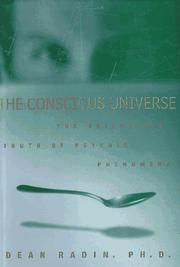
The conscious universe
Explains statistical claims similar to those discussed by Utts.
The Men Who Stare At Goats
Rating: 3.5/5 from 11 Google Books ratings
Provides broader military context.
Extrasensory Perception After Sixty Years
Provides historical context for statistical arguments about psi research.
Parapsychology: A Handbook for the 21st Century
Covers experimental evidence, statistics and competing interpretations.
eBay marketplace picks
Marketplace Samples
Live-tested eBay searches with available results related to this page.



Endnotes
1.
Source: cia.gov
Link:https://www.cia.gov/readingroom/docs/CIA-RDP96-00791R000200180005-5.pdf
2.
Source: cia.gov
Link:https://www.cia.gov/readingroom/docs/CIA-RDP96-00791R000200180006-4.pdf
3.
Source: cia.gov
Link:https://www.cia.gov/readingroom/docs/CIA-RDP96-00791R000200070001-9.pdf
4.
Source: cia.gov
Link:https://www.cia.gov/readingroom/document/cia-rdp96-00791r000200180006-4
5.
Source: ics.uci.edu
Title: UC Irvine Bren School AIR.RT F
Link:https://www.ics.uci.edu/~jutts/air.pdf
6.
Source: nsarchive2.gwu.edu
Title: National Security Archiveremote~1.PD F
Link:https://nsarchive2.gwu.edu/NSAEBB/NSAEBB438/docs/doc_57.pdf
7.
Source: news.uci.edu
Title: supernatural conclusions
Link:https://news.uci.edu/2008/10/27/supernatural-conclusions/
8.
Source: ics.uci.edu
Link:https://www.ics.uci.edu/~jutts/may.pdf
9.
Source: ics.uci.edu
Title: St Olaf
Link:https://ics.uci.edu/~jutts/StOlaf.pdf
10.
Source: ics.uci.edu
Link:https://www.ics.uci.edu/~jutts/hyman.html
11.
Source: ics.uci.edu
Title: Utts Publications
Link:https://ics.uci.edu/~jutts/UttsPublications.PDF
12.
Source: Wikipedia
Title: Remote viewing
Link:https://en.wikipedia.org/wiki/Remote_viewing
13.
Source: enlightened-spirituality.org
Title: Remote Viewing
Link:https://www.enlightened-spirituality.org/Remote_Viewing.html
Additional References
14.
Source: koestlerunit.wordpress.com
Link:https://koestlerunit.wordpress.com/wp-content/uploads/2015/06/wiseman-milton-1998.pdf
Source snippet
above chance (N=200, effect size, Z/N1/2,=.12, p<.043, 1-tailed). Lantz et...
15.
Source: merriam-webster.com
Link:https://www.merriam-webster.com/dictionary/an
16.
Source: merriam-webster.com
Link:https://www.merriam-webster.com/dictionary/American
17.
Source: scispace.com
Link:https://scispace.com/pdf/an-assessment-of-the-evidence-for-psychic-functioning-20iaajrp5w.pdf
18.
Source: scispace.com
Link:https://scispace.com/papers/an-assessment-of-the-evidence-for-psychic-functioning-20iaajrp5w
19.
Source: semanticscholar.org
Link:https://www.semanticscholar.org/paper/An-Assessment-of-the-Evidence-for-Psychic-Utts/3f64d1c2520cbd3082fe2dfa5eab9bd66eaa6b0d
20.
Source: slideshare.net
Link:https://www.slideshare.net/slideshow/an-evaluation-of-remote-viewing-research-and-applications-air1995pdf/257460594
21.
Source: skepsis.nl
Link:https://skepsis.nl/[stargate
22.
Source: reddit.com
Link:https://www.reddit.com/r/remoteviewing/comments/1dazs09/creation_of_study_on_statistical_evidence_of/
23.
Source: reddit.com
Link:https://www.reddit.com/r/HighStrangeness/comments/vv3020/dr_jessica_utts_is_convinced_that_psychic/
Topic Tree