Within Remote Viewing
The Physicists Behind Remote Viewing's Rise
Targ and Puthoff gave remote viewing its scientific public identity, but their claims remain heavily contested.
On this page
- Who They Were
- What They Claimed
- How Critics Responded
Page outline Jump by section
Introduction
Russell Targ and Harold “Hal” Puthoff gave remote viewing its modern scientific public identity. Working at Stanford Research Institute in the 1970s, they reframed older claims about clairvoyance into a laboratory protocol: a person, shielded from ordinary information, attempts to describe a distant or hidden target. Their papers, CIA-linked contracts and later books made remote viewing sound testable, technical and potentially useful for intelligence work. That is their lasting influence. It is also why their legacy remains contested. Their supporters see them as pioneers who pushed an ignored human capacity into formal research; critics argue that their most famous experiments were weakened by sensory cueing, subjective judging and poor repeatability. The Targ-Puthoff story is therefore not simply a tale of “psychic spying”. It is the story of how an extraordinary claim gained institutional backing, entered respectable journals, and then became a long-running case study in the difficulty of separating suggestive anomalies from reliable evidence.[Nature+2CIA]nature.comInformation transmission under conditions of sensory…by R TARG · 1974 · Cited by 364 — 1974 Information transmission under condi…
Who They Were
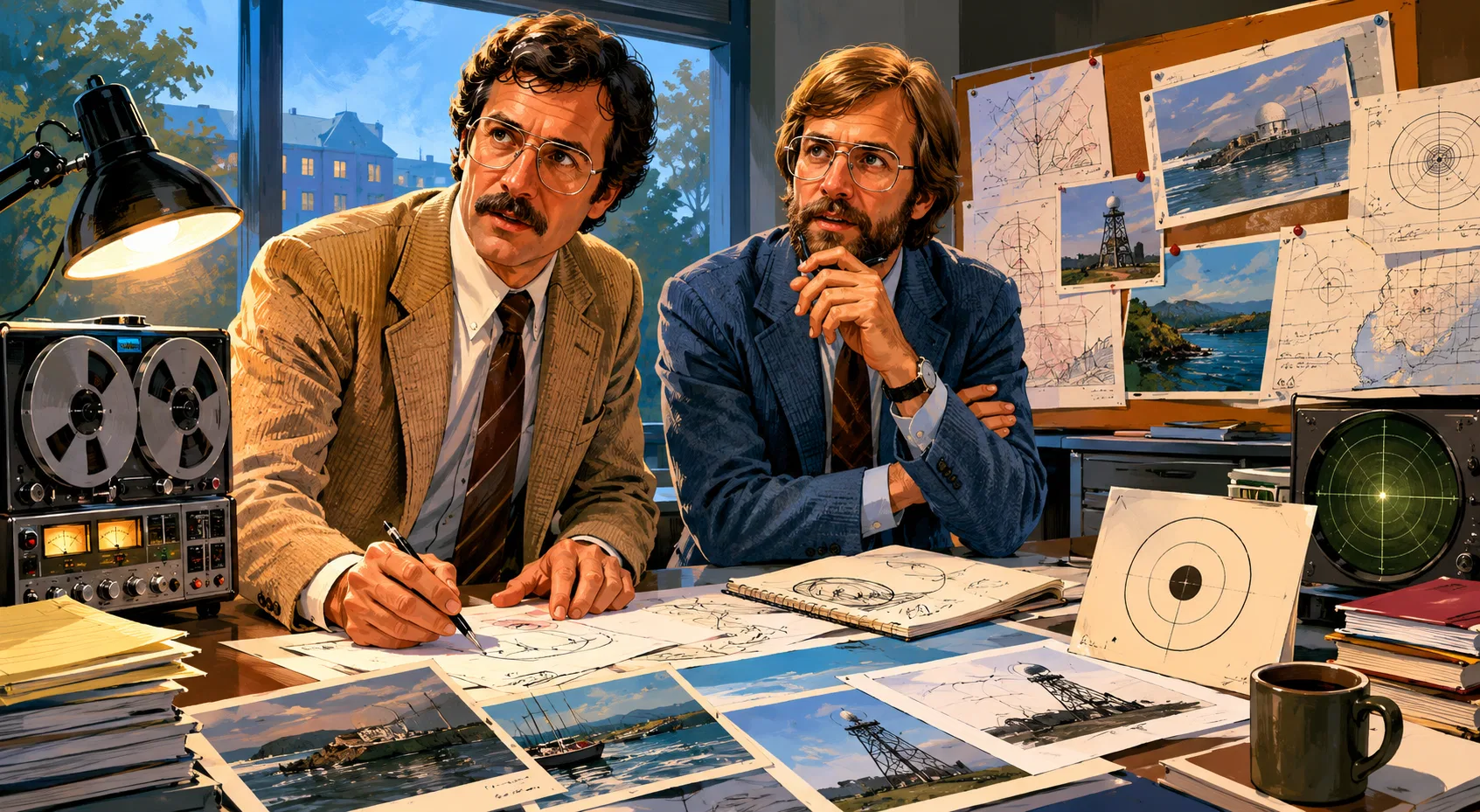
Targ and Puthoff were not fringe outsiders when remote viewing began to attract attention. Both came from technical physics and engineering backgrounds, which mattered enormously for the public reception of their claims. Puthoff was an electrical engineer with a Stanford PhD and experience in lasers and quantum electronics; a CIA biographical file described him in the mid-1970s as a specialist in quantum physics, parapsychology and “paraphysical phenomena” who had come to SRI in 1972.[CIA]cia.govOpen source on cia.gov.
Targ was also associated with laser and electro-optical work before and after his parapsychology period. His own author biography presents him as a physicist and laser pioneer who co-founded SRI’s investigation into psychic abilities in the 1970s and 1980s. That mix of hard-science credentials and paranormal claims became central to his public persona: he did not present remote viewing as folklore, but as a neglected perceptual capacity that could be studied with instruments, blinding and statistical analysis.[ESP Research]espresearch.comESP Research Russell TargESP Research Russell Targ
Their institutional home also mattered. Stanford Research Institute, now SRI International, was not Stanford University, but its name, location in Menlo Park, and history of government and defence contracting gave the work a degree of authority that a private occult circle would not have had. When the CIA and later defence agencies showed interest, the setting helped remote viewing move from parapsychological curiosity to Cold War research programme. Declassified records describe SRI experiments in which subjects were asked to describe remote sites chosen by experimenters and unknown to the subject.[CIA]cia.govREMOTE VIEWING OF NATURAL TARGETS. SRI….This paper presents a series of experiments in which a subject is asked to describe a remot…
Their most important collaborators were not only scientists. Ingo Swann and Pat Price became central early viewers, while Uri Geller’s SRI testing attracted heavy attention and criticism. Targ and Puthoff’s role was to make such performances legible as experiments: targets, shielding, transcripts, independent judging and statistical rankings. Whether or not one accepts the results, this format shaped almost every later debate about remote viewing.
What They Claimed
Targ and Puthoff’s signature claim was that information could be transferred under conditions intended to block ordinary sensory channels. Their 1974 Nature paper, “Information transmission under conditions of sensory shielding”, reported experiments with people attempting to describe targets they could not normally perceive. The paper’s title was carefully chosen: it did not simply say “psychic powers”, but framed the issue as information transmission under controlled conditions.[Nature]nature.comInformation transmission under conditions of sensory…by R TARG · 1974 · Cited by 364 — 1974 Information transmission under condi…
Their later work extended that claim into a broader research programme. In a 1976 paper in Proceedings of the IEEE, Puthoff and Targ described remote viewing as a possible “perceptual channel” for information transfer over kilometre distances. That article surveyed earlier parapsychological research and presented SRI experiments as part of a larger scientific question about whether humans could access remote information outside recognised sensory mechanisms.[IEEE Xplore]ieeexplore.ieee.orgOpen source on ieee.org.
The basic experimental image was simple and powerful. A viewer stayed at SRI or another controlled location. A target team went to a randomly selected outdoor site, such as a marina, tower, park or building. The viewer described impressions and sometimes made sketches. Later, judges compared the viewer’s transcript with a set of possible targets. This format made remote viewing feel more disciplined than earlier clairvoyance claims because it produced documents, rankings and apparent hits.
A concrete example from the early SRI material is the “natural targets” work, in which the remote target was a real-world location rather than a card, symbol or sealed object. A CIA-hosted SRI paper describes a double-blind series involving local targets in the San Francisco Bay Area. The appeal was obvious: if a viewer could describe an actual place miles away, the result looked more vivid and operationally relevant than guessing symbols in a laboratory deck.[CIA]cia.govREMOTE VIEWING OF NATURAL TARGETS. SRI….This paper presents a series of experiments in which a subject is asked to describe a remot…
Targ and Puthoff also promoted the idea that remote viewing was not limited to rare mystics. Their work helped shift the language from “clairvoyant” to “viewer”, from “vision” to “transcript”, and from “gift” to a capacity that might be trained or at least tested. That rhetorical move was part of their legacy. It made remote viewing attractive to intelligence sponsors because it suggested a repeatable skill rather than an unpredictable occult talent.
How They Built Remote Viewing’s Public Identity
Targ and Puthoff’s influence came from more than experimental results. They built a durable package: scientific language, Cold War relevance, memorable participants, and a claim that could be explained to journalists and officials in a few sentences. Remote viewing was no longer just “ESP”; it was a procedure in which a person described a hidden target while ordinary sensory contact was blocked.
Their publication record gave the field unusual visibility. The 1974 Nature paper put the claims in one of the world’s most prestigious scientific journals. The 1976 Proceedings of the IEEE article placed the discussion before engineers and physicists rather than only parapsychologists. A 1980 Nature exchange involving Charles Tart, Puthoff and Targ continued the debate over whether the results could survive criticism about cueing and judging.[Nature+2IEEE Xplore]nature.comInformation transmission under conditions of sensory…by R TARG · 1974 · Cited by 364 — 1974 Information transmission under condi…
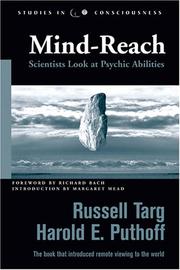
Their popular writing then carried the claims beyond specialist journals. Mind-Reach, published in the late 1970s, helped present remote viewing as a frontier of consciousness research for a general audience. Later, Targ continued to write and lecture on ESP, nonlocal awareness and remote viewing, keeping the SRI story alive long after the government programme had ended.[scribd.com]scribd.comRemote Viewing at Stanford TargRemote Viewing at Stanford Targ
The government connection became the most durable part of the public story. Declassified material shows that SRI’s early work was connected to CIA interest, and later remote-viewing programmes became associated with names such as Grill Flame, Sun Streak and Stargate. A declassified DIA sourcebook summary describes early 1970s attempts using experienced experimenters, including Puthoff and Targ, and “gifted” subjects such as Price and Swann.[National Security Archive]nsarchive2.gwu.eduDIA 21DIA 21
This created a lasting ambiguity in public memory. The phrase “CIA remote viewing” can sound as though the agency proved psychic spying worked. The documents support a narrower claim: U.S. agencies funded and evaluated the possibility, partly because of Cold War concerns and partly because early SRI results appeared intriguing to some officials. That distinction is central to judging Targ and Puthoff’s legacy fairly.
Why Their Claims Drew Serious Criticism
The main scientific objection was not that remote viewing sounded strange. It was that the evidence did not reliably exclude ordinary explanations. Critics focused on sensory leakage, weaknesses in judging procedures, selective attention to striking matches, and the difficulty of obtaining repeatable results under tighter controls.
Psychologists David Marks and Richard Kammann became central critics. They attempted replications and then examined the original SRI procedures. Their argument was that some transcripts contained clues that could help judges match them to targets without any paranormal information. Examples discussed in later summaries include cues about dates, sequence, or references to previous sessions. Marks argued in Nature that sensory cues invalidated key remote-viewing experiments.[ResearchGate]researchgate.netResearch Gate Information transmission in remote viewing experimentsResearch Gate Information transmission in remote viewing experiments
Puthoff and Targ did not accept that criticism as decisive. They published a rebuttal in Nature in 1981, and the debate continued over whether edited transcripts still produced above-chance judging. Tart, Puthoff and Targ argued that reanalysis after removing possible cues still supported genuine target-transcript correlations. Marks and later critics replied that cue removal had not been adequate and that the original record remained too compromised to carry the weight placed on it.[PubMed+2SciSpace]pubmed.ncbi.nlm.nih.govOpen source on nih.gov.
This dispute matters because remote viewing results often depended on judging human descriptions, not on simple right-or-wrong outcomes. A transcript might contain many impressions: water, height, metal, circular shapes, open space, movement, an institutional feeling. After the target is known, some details can feel uncannily apt while misses fade into the background. Critics call this subjective validation; supporters argue that formal blind judging and rankings can control for it. The Targ-Puthoff controversy became a textbook example of why free-response paranormal experiments are hard to evaluate.
The sceptical critique also extended to personnel and belief. Critics argued that Targ and Puthoff were too ready to accept claims from gifted subjects and that stronger magicians’ controls and stricter experimental design were needed, especially in work involving figures such as Uri Geller. Supporters countered that sceptics underestimated the statistical evidence and focused too heavily on possible flaws in a subset of early trials. The argument never resolved into consensus because the same record could be read as either suggestive but imperfect evidence or as a warning about how easily weak controls can generate apparent anomalies.
What the 1995 Evaluation Did and Did Not Decide
The later Stargate evaluation is often treated as the final verdict on the world Targ and Puthoff helped create, but it should be read carefully. In 1995, the CIA asked the American Institutes for Research to evaluate the remote-viewing programme. The review drew on two high-profile assessors with contrasting views: statistician Jessica Utts, who argued that the laboratory evidence showed statistically significant anomalous effects, and psychologist Ray Hyman, who argued that the evidence did not justify concluding that paranormal functioning had been established.[CIA+2National Security Archive]cia.govAN EVALUATION OF THE REMOTE VIEWING PROGRAMTo evaluate the research program, a "blue ribbon" panel was assembled. The panel included t…
Utts’ position was not that every operational claim was reliable. Her argument was that the accumulated laboratory data showed effects too large and consistent to dismiss as chance. Hyman’s response was that statistical departures from chance were not enough: independent replication, methodological clarity and a plausible account of how the effect worked still mattered. The University of California, Davis summary of the dispute captured the tension neatly, noting that “inexplicable statistical departures from chance” are not the same as compelling evidence for anomalous cognition.[UC Davis]ucdavis.eduUC Davis'Psychic Spying' Research Produces Credible EvidenceUC Davis'Psychic Spying' Research Produces Credible Evidence
On intelligence use, the conclusion was more damaging to remote viewing’s practical reputation. The AIR evaluation found that remote-viewing information had not demonstrated sufficient usefulness for intelligence operations. Later summaries of the report emphasise that operational reports were often vague, ambiguous or mixed with erroneous material, making them difficult to use as actionable intelligence.[CIA]cia.govOpen source on cia.gov.
For Targ and Puthoff’s legacy, this creates a split judgement. Their work succeeded in launching a programme that lasted long enough to be evaluated by major institutions. But the programme did not end with government endorsement of remote viewing as an intelligence tool. It ended with disagreement over laboratory anomalies and a broad conclusion that the method was not operationally reliable.
The Legacy They Left Behind
Targ and Puthoff’s legacy has three layers: historical, methodological and cultural.
Historically, they made remote viewing a named modern practice. The phrase itself became attached to SRI-style protocols and to the Cold War intelligence story. Without their institutional work, remote viewing might have remained a minor subcategory of clairvoyance. With them, it became a recognisable field with its own literature, training claims, declassified documents and public mythology.
Methodologically, they forced both proponents and critics to become more precise. Their experiments encouraged protocols involving blinding, random targets, transcripts and independent judging. At the same time, the criticisms of their work sharpened the standards expected of later studies: remove all cueing, predefine judging methods, keep complete records, avoid post hoc target matching, and separate operational anecdotes from controlled evidence. Even sceptics who reject remote viewing as unproven often treat the Targ-Puthoff episode as useful because it shows exactly where extraordinary-claim research can go wrong.[Nature]nature.comOpen source on nature.com.
Culturally, they gave remote viewing a story that continues to circulate: physicists at SRI, secret CIA funding, gifted viewers, hidden targets and a government programme later released through declassification. That story is compelling because it contains real documents and real institutions, even though those facts do not prove the paranormal claim. The result is a field where believers and sceptics often talk past each other: one side points to the seriousness of the programme’s sponsors and statistical claims; the other points to flawed controls, non-repeatability and lack of intelligence value.
Their individual afterlives also diverged. Targ became one of remote viewing’s most visible public advocates, writing books and presenting the work as evidence for a broader model of consciousness. Puthoff moved through other unconventional frontiers, including zero-point energy, advanced propulsion speculation and later UAP-adjacent discussions, while still being strongly associated with the SRI remote-viewing origin story.[ESP Research+2arXiv]espresearch.comESP Research Russell TargESP Research Russell Targ
How to Read Their Legacy Today
The most balanced reading is neither “they proved psychic spying” nor “nothing happened”. Targ and Puthoff did something historically important: they made remote viewing testable enough to attract serious money, serious criticism and serious archival scrutiny. Their work shaped the vocabulary, protocols and public imagination of the field.
But scientific status depends on more than institutional attention. The core claim still faces the same obstacles that surrounded the SRI work: ambiguous free-response data, possible cueing, uneven replication, subjective judging and a gap between statistical anomalies and practical reliability. The 1995 evaluation did not erase every unusual result, but it did undercut the claim that remote viewing had become a dependable intelligence method.[CIA+2UC Davis]cia.govAN EVALUATION OF THE REMOTE VIEWING PROGRAMTo evaluate the research program, a "blue ribbon" panel was assembled. The panel included t…
Their legacy is therefore best understood as formative rather than settled. Targ and Puthoff made remote viewing famous, technically framed and institutionally consequential. They also made it vulnerable to a kind of criticism that has followed it ever since: if a claimed perceptual channel exists, it must survive procedures that leave no ordinary route for information to enter and no flexible judging process for chance correspondences to look meaningful. That unresolved demand is the real inheritance of the physicists behind remote viewing’s rise.
eBay marketplace picks
Marketplace Samples
Live-tested eBay searches with available results related to this page.
Endnotes
1.
Source: nature.com
Link:https://www.nature.com/articles/251602a0
Source snippet
Information transmission under conditions of sensory...by R TARG · 1974 · Cited by 364 — 1974 Information transmission under condi...
2.
Source: cia.gov
Link:https://www.cia.gov/readingroom/document/cia-rdp96-00787r000500410001-3
Source snippet
REMOTE VIEWING OF NATURAL TARGETS. SRI....This paper presents a series of experiments in which a subject is asked to describe a remot...
3.
Source: cia.gov
Link:https://www.cia.gov/readingroom/docs/CIA-RDP96-00791R000200180005-5.pdf
Source snippet
AN EVALUATION OF THE REMOTE VIEWING PROGRAMTo evaluate the research program, a "blue ribbon" panel was assembled. The panel included t...
4.
Source: cia.gov
Link:https://www.cia.gov/readingroom/document/cia-rdp96-00787r000100220005-4
5.
Source: cia.gov
Title: [PDF] REMOTE VIEWING OF NATURAL TARGETS. SRI. RUSSELL
Link:https://www.cia.gov/readingroom/docs/CIA-RDP96-00787R000500410001-3.pdf
6.
Source: ieeexplore.ieee.org
Link:https://ieeexplore.ieee.org/document/1454382/
7.
Source: nature.com
Link:https://www.nature.com/articles/284191a0
8.
Source: scribd.com
Title: Remote Viewing at Stanford Targ
Link:https://www.scribd.com/document/79635939/Remote-Viewing-at-Stanford-Targ
9.
Source: cia.gov
Link:https://www.cia.gov/readingroom/docs/CIA-RDP96-00789R002100240001-2.pdf
10.
Source: researchgate.net
Title: Research Gate Information transmission in remote viewing experiments
Link:https://www.researchgate.net/publication/15839349_Information_transmission_in_remote_viewing_experiments
11.
Source: nature.com
Link:https://www.nature.com/articles/292177a0
12.
Source: scispace.com
Title: information transmission in remote viewing experiments 4jd6pdendv
Link:https://scispace.com/pdf/information-transmission-in-remote-viewing-experiments-4jd6pdendv.pdf
13.
Source: nature.com
Link:https://www.nature.com/articles/319444e0.pdf
14.
Source: researchgate.net
Link:https://www.researchgate.net/publication/267978941Evaluation_of_Program_on%27Anomalous_Mental_Phenomena%27
15.
Source: cia.gov
Link:https://www.cia.gov/readingroom/docs/CIA-RDP96-00791R000200180006-4.pdf
16.
Source: arxiv.org
Link:https://arxiv.org/abs/1012.5264
17.
Source: arxiv.org
Title: arXiv Advanced Space Propulsion Based on Vacuum (Spacetime Metric) Engineering
Link:https://arxiv.org/abs/1204.2184
18.
Source: researchgate.net
Link:https://www.researchgate.net/publication/18741867_Information_Transmission_Under_Conditions_of_Sensory_Shielding
19.
Source: researchgate.net
Link:https://www.researchgate.net/publication/333228024_An_Assessment_of_the_Evidence_for_Psychic_Functioning
20.
Source: researchgate.net
Link:https://www.researchgate.net/publication/2994352_Corrections_to_A_Perceptual_Channel_for_Information_Transfer_over_Kilometer_Distances_Historical_Perspective_and_Recent_Research
21.
Source: researchgate.net
Link:https://www.researchgate.net/publication/342061969_What_Do_We_Know_About_Psi_The_First_Decade_of_Remote_Viewing_Research_and_Operations_at_Stanford_Research_Institute
22.
Source: cia.gov
Link:https://www.cia.gov/readingroom/document/cia-rdp79-00999a000200010008-7
23.
Source: cia.gov
Link:https://www.cia.gov/readingroom/document/cia-rdp96-00787r000200090017-5
24.
Source: cia.gov
Link:https://www.cia.gov/readingroom/docs/CIA-RDP96-00787R000200090017-5.pdf
25.
Source: cia.gov
Link:https://www.cia.gov/readingroom/docs/CIA-RDP96-00791R000200090001-7.pdf
26.
Source: cia.gov
Link:https://www.cia.gov/readingroom/document/cia-rdp79-00999a000300060005-1
27.
Source: cia.gov
Link:https://www.cia.gov/readingroom/docs/CIA-RDP96-00788R001100040004-3.pdf
28.
Source: cia.gov
Link:https://www.cia.gov/readingroom/document/cia-rdp96-00787r000100220006-3
29.
Source: cia.gov
Link:https://www.cia.gov/readingroom/document/cia-rdp96-00787r000500400001-4
30.
Source: scribd.com
Link:https://www.scribd.com/doc/92017954/Air-Report
31.
Source: scribd.com
Link:https://www.scribd.com/document/957486111/3-Puthoff-H-E-Targ-R-1976-a-Perceptual-Channel-for-Information-Transfer-Over-Kilometer-Distances-Historical-Perspective-and-Recent-Researc
32.
Source: espresearch.com
Title: ESP Research Russell Targ
Link:https://espresearch.com/
33.
Source: pubmed.ncbi.nlm.nih.gov
Link:https://pubmed.ncbi.nlm.nih.gov/4423858/
34.
Source: nsarchive2.gwu.edu
Title: DIA 21
Link:https://nsarchive2.gwu.edu/NSAEBB/NSAEBB534-DIA-Declassified-Sourcebook/documents/DIA-21.pdf
35.
Source: pubmed.ncbi.nlm.nih.gov
Link:https://pubmed.ncbi.nlm.nih.gov/7254336/
36.
Source: nsarchive2.gwu.edu
Title: doc 57
Link:https://nsarchive2.gwu.edu/NSAEBB/NSAEBB438/docs/doc_57.pdf
37.
Source: ucdavis.edu
Title: UC Davis’Psychic Spying’ Research Produces Credible Evidence
Link:https://www.ucdavis.edu/news/psychic-spying-research-produces-credible-evidence
38.
Source: Wikipedia
Title: Russell Targ
Link:https://en.wikipedia.org/wiki/Russell_Targ
39.
Source: Wikipedia
Title: Remote viewing
Link:https://en.wikipedia.org/wiki/Remote_viewing
40.
Source: pmc.ncbi.nlm.nih.gov
Link:https://pmc.ncbi.nlm.nih.gov/articles/PMC10275521/
41.
Source: pubmed.ncbi.nlm.nih.gov
Link:https://pubmed.ncbi.nlm.nih.gov/7360248/
42.
Source: irenaroglic.si
Link:https://irenaroglic.si/wp-content/uploads/slo/znanclanki/nature1974.doc
43.
Source: skepsis.nl
Link:https://skepsis.nl/stargate/
44.
Source: sixthsensereader.org
Title: remote viewing
Link:https://sixthsensereader.org/about-the-book/abcderium-index/remote-viewing/
Additional References
45.
Source: youtube.com
Title: Remote Viewing: The Evidence
Link:https://www.youtube.com/watch?v=Ph-kd1Igwzs
Source snippet
Mind Reach by Russell Targ and Harold E. Puthoff Book Review...
46.
Source: youtube.com
Link:https://www.youtube.com/watch?v=iBokQomPr_g
Source snippet
Remote Viewing: The Evidence - Jimmy Akin's Mysterious World...
47.
Source: academia.edu
Link:https://www.academia.edu/51621266/CIA_Initiated_Remote_Viewing_Program_at_Stanford_Research_Institute
48.
Source: alephtalks.com
Link:https://alephtalks.com/wp-content/uploads/2022/09/PuthoffTargIEEEProc1976.pdf
49.
Source: semanticscholar.org
Link:https://www.semanticscholar.org/paper/A-perceptual-channel-for-information-transfer-over-Puthoff-Targ/8d6528f7dd07f0b4e1e373592b9c6cd8a031c10a
50.
Source: newdualism.org
Link:https://www.newdualism.org/papers/H.Puthoff/CIA-Initiated%20Remote%20Viewing%20At%20Stanford%20Research%20Institute.htm
51.
Source: reddit.com
Link:https://www.reddit.com/r/remoteviewing/comments/qrmn2c/can_someone_explain_remote_viewing_to_me_i_dont/
52.
Source: philpapers.org
Link:https://philpapers.org/rec/HYMEOP
53.
Source: scirp.org
Link:https://www.scirp.org/reference/referencespapers?referenceid=908845
54.
Source: reddit.com
Link:https://www.reddit.com/r/UFOs/comments/1cq55cp/hal_puthoff/
Topic Tree
Follow this branch
Parent topic
Remote ViewingRelated pages 29
- Authority Problem Did Physics Credentials Make Remote Viewing Credible?
- CIA Interest Did CIA Interest Prove Remote Viewing Worked?
- Geller Testing Why Uri Geller Made SRI More Controversial
- Legacy Chain How SRI Became the Remote Viewing Origin Story
- Mind Reach How Mind Reach Sold Remote Viewing to Readers
- +1 more in sidebar