Within Remote Viewing
Why Remote Viewing Lost Government Support
The government ended remote viewing funding after evaluators found no documented intelligence value worth continuing.
On this page
- Evaluation Findings
- Operational Usefulness
- Aftermath and Declassification
Page outline Jump by section
Introduction
The U.S. government’s remote-viewing programme was shut down because it could not show that it produced intelligence worth paying for. The key issue was not whether anyone had ever reported an intriguing hit, or whether some laboratory results appeared statistically unusual. The issue was governance: after years of funding, evaluators asked whether remote viewing gave intelligence officers reliable, specific, actionable information. Their answer was no.
In 1995, the Central Intelligence Agency inherited the programme from the Defense Intelligence Agency and commissioned the American Institutes for Research to assess it. The review found that remote-viewing reports were often vague, inconsistent, hard to interpret, and mixed with large amounts of irrelevant or erroneous material. Most decisively, the evaluators concluded that remote viewing had not produced information that guided intelligence operations. That finding explains why the programme’s end should be read as a withdrawal of institutional support, not simply as a scientific verdict on every remote-viewing claim.[National Security Archive]nsarchive2.gwu.eduNational Security Archiveremote~1.PD FNational Security Archiveremote~1.PD F
Why the Final Review Mattered
By the mid-1990s, remote viewing had moved from Cold War experiment to budgetary problem. The programme, commonly known by the later umbrella name Star Gate, had survived through changing sponsors, code names, and levels of secrecy. Its justification had always been practical: if a trained viewer could provide information unavailable through normal intelligence collection, even rare successes might be valuable.
That was exactly what the 1995 review tested. The American Institutes for Research report treated the programme as having two linked but distinct questions. First, was there convincing evidence of a real anomalous effect in laboratory research? Second, even if some effect existed, did it help government intelligence work? The shutdown turned mainly on the second question. The evaluators wrote that remote viewing had failed to produce “actionable intelligence” and that the observations provided a “compelling argument” against continuing the programme inside the intelligence community.[National Security Archive]nsarchive2.gwu.eduNational Security Archiveremote~1.PD FNational Security Archiveremote~1.PD F
This distinction is important because it prevents two common misreadings. Supporters sometimes point to statistical findings and argue that the government closed a programme despite evidence of something unusual. Sceptics sometimes treat the closure as if it alone disproved every paranormal claim. The official decision was narrower and more administrative: a publicly funded intelligence programme had to justify itself as an operational tool, and it did not.
The Evaluation Findings
The 1995 review did not say that every remote-viewing session was meaningless. It acknowledged that some laboratory studies had produced statistically significant results. But the evaluators also stressed that the mechanism, if any, remained unclear, and that the laboratory record did not solve practical problems such as whether different judges would reliably interpret the same viewer material in the same way.[National Security Archive]nsarchive2.gwu.eduNational Security Archiveremote~1.PD FNational Security Archiveremote~1.PD F
The final judgement was shaped by several findings that mattered to intelligence managers:
- The reports lacked usable specificity. Evaluators found that remote-viewing material was often vague and general rather than concrete enough to support decisions.
- Independent viewers did not reliably converge. Different viewers’ reports often failed to agree in a way that would give analysts confidence.
- Correct-looking material was mixed with noise. Reports included large amounts of irrelevant and often inaccurate information, which created extra work for analysts rather than reducing uncertainty.
- Some apparent successes were hard to separate from background knowledge. The review noted concerns that reports had sometimes been adjusted to fit known cues, making it difficult to isolate any paranormal contribution.[National Security Archive]nsarchive2.gwu.eduNational Security Archiveremote~1.PD FNational Security Archiveremote~1.PD F
That last point was especially damaging. Intelligence products are supposed to separate source reporting, inference, and confirmation. If a remote-viewing report became more impressive only after being interpreted through known background information, then it was not an independent collection method in the ordinary intelligence sense.
Operational Usefulness Was the Decisive Test
The strongest reason for closure was operational, not philosophical. Intelligence agencies do not merely ask whether a method can generate interesting impressions. They ask whether it can help answer a real question better than existing collection methods, with enough reliability to influence action.
The American Institutes for Research report found that remote viewing did not meet that standard. It stated that in no case had the information provided been used to guide intelligence operations, and therefore remote viewing had failed to produce actionable intelligence. In a later section, the review concluded that remote viewing, as used in the programme, had not been shown to have value in intelligence operations. It added that if a phenomenon did not contribute to operations, it was difficult to justify continued application.[National Security Archive]nsarchive2.gwu.eduNational Security Archiveremote~1.PD FNational Security Archiveremote~1.PD F
This is why the programme’s failure was not just about accuracy scores. Even a source that is sometimes right can be operationally weak if users cannot tell in advance which parts are right, which are wrong, and which are irrelevant. A remote viewer might describe water, metal, tunnels, fear, heat, or a man-made structure; those impressions could later be matched to many possible targets. For intelligence use, the problem is not only whether a phrase can be retrospectively matched. It is whether the report can narrow choices before the answer is known.
TIME’s 1995 account captured the same practical problem in more journalistic terms. It reported that the CIA moved to shut the programme down after an effectiveness study, quoted AIR’s David Goslin saying there was no documented evidence of value to the intelligence community, and noted that the remaining Fort Meade operation was expected to close. It also described examples in which psychic reports were too broad or unsuccessful to help, including a failed attempt to locate Muammar Gaddafi before the 1986 U.S. strike on Libya and a case involving alleged prisoners of war in Laos where no prisoners were found.[Time]time.comtollbit.time.com…
The Scientific Dispute Did Not Save the Programme
One reason the shutdown remains controversial is that the scientific reviewers did not fully agree. Jessica Utts, a statistician at the University of California, Davis, argued that the evidence for psychic functioning was stronger than chance and that continuing merely to test whether an effect existed would be wasteful. Ray Hyman, a psychologist and prominent critic of parapsychology, agreed that the results were statistically unusual but argued that unexplained departures from chance were not the same as compelling evidence for anomalous cognition.[UC Davis]ucdavis.eduUC Davis'Psychic Spying' Research Produces Credible Evidence | UC DavisUC Davis'Psychic Spying' Research Produces Credible Evidence | UC Davis
Their disagreement mattered for the scientific debate, but it did not rescue the programme as an intelligence activity. Even the more sympathetic reading of the research left unresolved the practical questions that intelligence agencies needed answered: how to make the effect reliable, how to know when a session was accurate, how to separate signal from noise, and how to use the information without excessive subjective interpretation.
The UC Davis summary of the dispute shows why the programme could be both intriguing and institutionally vulnerable. It reported that both Utts and Hyman saw statistically significant results, but differed sharply on interpretation. Hyman also argued that secrecy had weakened scientific scrutiny because the programme had not fully benefited from public peer review and open correction.[UC Davis]ucdavis.eduUC Davis'Psychic Spying' Research Produces Credible Evidence | UC DavisUC Davis'Psychic Spying' Research Produces Credible Evidence | UC Davis
For a research grant, that dispute might have supported calls for better studies. For an intelligence collection programme, it created a governance problem. Agencies had to decide whether to keep funding an operational capability that remained controversial, hard to validate, and unsupported by clear evidence of mission impact.
The Programme Had Become Hard to Defend
The final decision also reflected the programme’s institutional position in 1995. It was no longer a high-confidence Cold War innovation but a small, disputed activity whose remaining value had to be defended under external review. TIME reported that Congress had ordered the CIA to take over Star Gate and assess its effectiveness, and that only three full-time psychics remained on a roughly $500,000-a-year budget at Fort Meade.[Time]time.comtollbit.time.com…
That mattered because small programmes can survive for years if they have patrons, secrecy, and a plausible “what if” justification. Remote viewing had all three at different points. But once it was transferred, reviewed, and exposed to a sharper cost-benefit question, the burden shifted. The programme no longer had to be merely interesting; it had to be demonstrably useful.
The review also found that operational customers did not use remote-viewing outputs as a primary basis for decisions. Instead, users treated them as exploratory or supplemental. That may sound harmless, but in intelligence work even supplemental reporting consumes attention, analysis time, and bureaucratic support. If the material is ambiguous and subjective, it can create false leads or require additional collection to check claims that were not strong enough to act on in the first place.[National Security Archive]nsarchive2.gwu.eduNational Security Archiveremote~1.PD FNational Security Archiveremote~1.PD F
Investigation Was Not Endorsement
The shutdown is central to understanding the remote-viewing story because it separates government interest from government endorsement. The fact that U.S. agencies funded remote viewing shows that some officials considered it worth investigating, especially under Cold War uncertainty and concern about Soviet research. It does not show that the government concluded psychic intelligence worked.
The 1995 closure shows the opposite kind of institutional judgement. After review, the programme could not demonstrate enough operational value to remain inside the intelligence community. The CIA’s own Reading Room now hosts a Star Gate collection, making many related documents available as declassified historical records rather than as evidence of an ongoing intelligence capability.[CIA]cia.govOpen source on cia.gov.
That difference is easy to miss because declassified documents often look impressive in isolation. A session transcript, a striking sketch, or a memo describing a possible hit can feel more dramatic than a sober evaluation report. But governance decisions turn on patterns, not anecdotes. The final review asked whether the accumulated record justified continued funding and use. Its answer was that it did not.
Aftermath and Declassification
After the programme ended, remote viewing did not disappear. Former participants, researchers, sceptics, and enthusiasts continued to debate what the results meant. Some argued that the government had closed the programme too quickly or judged it by the wrong standard. Others argued that the shutdown was overdue because the programme had never produced reliable intelligence.
Declassification changed the public conversation. Instead of relying only on rumours about “psychic spies”, readers could inspect programme files, evaluations, session records, and later commentary. That transparency made the story more complicated, not less. It showed that the U.S. government really did investigate remote viewing for years, but it also showed why official support ended: the programme’s products were not reliable enough, specific enough, or operationally useful enough to justify continuation.
The most balanced conclusion is therefore not that the government “proved” remote viewing worked, nor that officials merely laughed it away. The programme was tested, funded, transferred, evaluated, and shut down because its documented intelligence value did not meet the standard required for continued government support.
Amazon book picks
Further Reading
Books and field guides related to Why Remote Viewing Lost Government Support. Use these as the next step if you want deeper reading beyond the article.
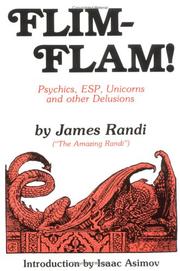
Phenomena: The Secret History of the U.S. Government's Invest...
Directly covers the rise and end of the Star Gate program.
The Men Who Stare At Goats
Rating: 3.5/5 from 11 Google Books ratings
Provides accessible background on military psychic programs.
The Demon-Haunted World: Science as a Candle in the Dark
Frames why extraordinary claims require extraordinary evidence.
eBay marketplace picks
Marketplace Samples
Live-tested eBay searches with available results related to this page.

Endnotes
1.
Source: time.com
Link:https://time.com/archive/6728288/the-vision-thing/
Source snippet
tollbit.time.com...
2.
Source: cia.gov
Link:https://www.cia.gov/readingroom/collection/stargate
3.
Source: cia.gov
Link:https://www.cia.gov/readingroom/docs/CIA-RDP96-00791R000200180005-5.pdf
4.
Source: cia.gov
Link:https://www.cia.gov/readingroom/docs/CIA-RDP96-00791R000200180006-4.pdf
5.
Source: cia.gov
Title: STARGAT E
Link:https://www.cia.gov/readingroom/docs/CIA-RDP96-00791R000100160003-8.pdf
6.
Source: cia.gov
Link:https://www.cia.gov/readingroom/document/cia-rdp96-00791r000200180006-4
7.
Source: cia.gov
Link:https://www.cia.gov/readingroom/docs/CIA-RDP96-00791R000100150005-7.pdf
8.
Source: cia.gov
Link:https://www.cia.gov/readingroom/document/cia-rdp96-00791r000200180005-5
9.
Source: cia.gov
Link:https://www.cia.gov/readingroom/docs/CIA-RDP96-00789R002200070001-0.pdf
10.
Source: cia.gov
Title: ADVANCE D THREAT TECHNIQUE ASSESSMENT (U)
Link:https://www.cia.gov/readingroom/document/cia-rdp96-00788r001300040001-4
11.
Source: cia.gov
Link:https://www.cia.gov/readingroom/document/cia-rdp96-00789r002700020001-0
12.
Source: cia.gov
Link:https://www.cia.gov/readingroom/docs/CIA-RDP96-00789R002800180001-2.pdf
13.
Source: cia.gov
Link:https://www.cia.gov/readingroom/docs/CIA-RDP96-00791R000200030040-0.pdf
14.
Source: cia.gov
Link:https://www.cia.gov/readingroom/document/cia-rdp96-00791r000200270001-7
15.
Source: cia.gov
Link:https://www.cia.gov/readingroom/docs/CIA-RDP96-00788R001300040001-4.pdf
16.
Source: cia.gov
Link:https://www.cia.gov/readingroom/document/cia-rdp96-00788r001500090010-7
17.
Source: cia.gov
Link:https://www.cia.gov/readingroom/document/cia-rdp96-00787r000500410001-3
18.
Source: cia.gov
Link:https://www.cia.gov/readingroom/document/cia-rdp96-00789r003200160001-9
19.
Source: cia.gov
Link:https://www.cia.gov/readingroom/document/cia-rdp96-00789r001001420001-3
20.
Source: cia.gov
Link:https://www.cia.gov/readingroom/docs/CIA-RDP96-00791R000200070001-9.pdf
21.
Source: cia.gov
Link:https://www.cia.gov/readingroom/collection/stargate?page=229
22.
Source: nsarchive2.gwu.edu
Title: National Security Archiveremote~1.PD F
Link:https://nsarchive2.gwu.edu/NSAEBB/NSAEBB438/docs/doc_57.pdf
23.
Source: ucdavis.edu
Title: UC Davis’[Psychic Spying]({{ ‘psychic-spying/’ | relative_url }})’ Research Produces Credible Evidence | UC Davis
Link:https://www.ucdavis.edu/news/psychic-spying-research-produces-credible-evidence
24.
Source: Wikipedia
Title: Remote viewing
Link:https://en.wikipedia.org/wiki/Remote_viewing
25.
Source: nsarchive2.gwu.edu
Title: DIA 21
Link:https://nsarchive2.gwu.edu/NSAEBB/NSAEBB534-DIA-Declassified-Sourcebook/documents/DIA-21.pdf
26.
Source: parapedia.fandom.com
Title: Remote Viewing
Link:https://parapedia.fandom.com/wiki/Remote_Viewing
27.
Source: huggingface.co
Link:https://huggingface.co/datasets/GotThatData/STARGATE
28.
Source: ics.uci.edu
Link:https://www.ics.uci.edu/~jutts/may.pdf
Additional References
29.
Source: youtube.com
Title: Project Stargate’s Strangest Findings Before It Was Shut Down | ARCHIVE FILE 004
Link:https://www.youtube.com/watch?v=4bMJkOENDew
Source snippet
Why project stargate was shut down remote viewing Disturbing Projects Remote Viewing & Unsettling Operations Greer Explains Project Starg...
30.
Source: youtube.com
Title: The Stargate Tapes
Link:https://www.youtube.com/watch?v=5LevzJZIKy0
Source snippet
Project Stargate's Strangest Findings Before It Was Shut Down | ARCHIVE FILE 004...
31.
Source: youtube.com
Title: Stargate Project: How Did the CIA Turn the Human Mind into a Weapon?
Link:https://www.youtube.com/watch?v=IDPlEXpzRoQ
Source snippet
Joe McMoneagle - CIA's Project Stargate | SRS #95...
32.
Source: youtube.com
Title: Uncovering the CIA’s Secret Weapon: Psychic Spies
Link:https://www.youtube.com/watch?v=cNJwV3Ksxa8
Source snippet
The Stargate Tapes - What The CIA Found Inside Human Consciousness...
33.
Source: academia.edu
Link:https://www.academia.edu/95285973/The_Star_Gate_Operational_Remote_Viewing_Program_A_Human_Intelligence_HUMINT_Collection_Platform
34.
Source: researchgate.net
Link:https://www.researchgate.net/publication/403178755_The_Star_Gate_Archives_Reports_of_the_United_States_Government_Sponsored_Psi_Program_1972-1995_Volume_4_Operational_Remote_Viewing_Memorandums_and_Reports
35.
Source: semanticscholar.org
Link:https://www.semanticscholar.org/paper/An-Assessment-of-the-Evidence-for-Psychic-Utts/3f64d1c2520cbd3082fe2dfa5eab9bd66eaa6b0d
36.
Source: researchgate.net
Link:https://www.researchgate.net/publication/333228024_An_Assessment_of_the_Evidence_for_Psychic_Functioning
37.
Source: reddit.com
Link:https://www.reddit.com/r/Psychic/comments/5ou8f7/cia_an_assessment_of_the_evidence_for_psychic/
38.
Source: reddit.com
Link:https://www.reddit.com/r/occult/comments/5ozm4i/cia_remote_viewing_sessions_documents/
Topic Tree
Follow this branch
Parent topic
Remote ViewingRelated pages 29
- Actionable Intel Why 'Actionable Intelligence' Became the Deciding Test
- AIR Review The Review That Made Star Gate Hard to Defend
- Contamination Did Background Clues Make Hits Look Better?
- Final Budget Why a Small Budget Still Needed Proof
- Signal Noise Why Correct Details Still Were Not Enough
- +1 more in sidebar