Within Remote Viewing
What Remote Viewing Sketches Can and Cannot Show
Remote viewing responses mix words, drawings, and impressions, which makes interpretation both useful and risky.
On this page
- Notes and Impressions
- Sketch Strengths
- Interpretation Risks
Page outline Jump by section
Introduction
Remote viewing responses are not neat predictions. They usually arrive as a mixture of single words, sensory fragments, sketches, spatial impressions, emotional tones and occasional confident labels. That mix is why sketches became so important: a rough drawing can preserve shape and layout before the viewer turns it into a misleading noun. But the same looseness also makes interpretation risky, because a curve, tower, pool, bridge or cluster of lines can be matched flexibly after the target is known.
The strongest lesson from the remote-viewing record is not that sketches prove or disprove the claimed phenomenon by themselves. It is that viewer responses only become meaningful inside a judging system: who saw the target, what decoys were used, whether the judge was blind, whether transcripts were edited, and whether misses were counted alongside hits. Declassified protocols, later research papers and sceptical critiques all converge on this point: the sketch is central, but the interpretation of the sketch is where much of the evidential weight is either earned or lost.[UC Davis+2Koestler Parapsychology Unit]ucdavis.eduUC Davis'Psychic Spying' Research Produces Credible Evidence | UC DavisUC Davis'Psychic Spying' Research Produces Credible Evidence | UC Davis
What Goes Into a Viewer Response
A remote-viewing session normally produces a “free response” rather than a forced-choice answer. Instead of choosing one card or one symbol, the viewer records whatever comes: “water”, “hard”, “arched”, “bright”, “open space”, “movement”, a quick outline of a structure, or a composite drawing at the end. In later judging, this response is compared with the actual target or with a set of possible targets. The U.S. government programme and related laboratory work often used written reports, transcripts and sketches as the raw material for evaluation.[CIA]cia.govOpen source on cia.gov.
That format is attractive because it gives viewers room to describe complex scenes. A photograph of a wind farm, a marshland bridge or a swimming-pool complex is not well captured by one multiple-choice word. In one public summary of the Stargate review, a viewer is described as drawing windmills when the sender was at Altamont Pass and a footbridge when the sender was at a San Francisco Bay Area wildlife refuge; in other trials, viewers drew targets selected from National Geographic photographs and judges ranked the target picture against decoys.[UC Davis]ucdavis.eduUC Davis'Psychic Spying' Research Produces Credible Evidence | UC DavisUC Davis'Psychic Spying' Research Produces Credible Evidence | UC Davis
The same freedom creates the central interpretive problem. A normal response may contain correct-seeming fragments, irrelevant fragments and overconfident guesses in the same packet. Remote-viewing practitioners often distinguish between low-level descriptors and high-level interpretation. “Wet”, “circular”, “metallic” or “vertical” are lower-level impressions; “water purification plant”, “factory chimney” or “submarine” are interpretive labels. In the culture of controlled remote viewing, the risk is often described as analytic overlay: the viewer’s ordinary reasoning mind builds a story around a fragment before enough data has been recorded. A training manual associated with coordinate remote viewing defines an ideogram as an initial bodily or kinesthetic response to the site, while later manuals describe analytic overlay as a subjective interpretation that may or may not be relevant.[CIA]cia.govOpen source on cia.gov.
This distinction matters because a viewer can be “right” at one level and wrong at another. A sketch may show a tall narrow form, while the viewer writes “chimney”. If the target is a lighthouse, an antenna or a minaret-like tower, the drawing may carry more useful information than the label. Conversely, a viewer may write a dramatic noun that attracts attention while the actual shape data are weak.
Amazon book picks
Further Reading
Books and field guides related to What Remote Viewing Sketches Can and Cannot Show. Use these as the next step if you want deeper reading beyond the article.
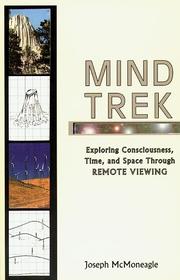
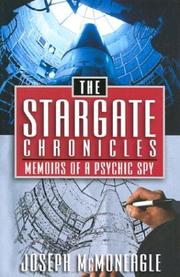
The Stargate chronicles
Provides operational examples of remote-viewing documentation.
eBay marketplace picks
Marketplace Samples
Live-tested eBay searches with available results related to this page.

Notes and Impressions
The most useful viewer responses tend to separate raw impressions from conclusions. Remote-viewing session records commonly include short descriptors, drawings, and sometimes a final summary. Contemporary associative remote viewing papers describe transcripts as consisting of “words and sketches”, with judges comparing that transcript against possible feedback images using a predetermined scale.[Koestler Parapsychology Unit]koestler-parapsychology.psy.ed.ac.ukKoestler Parapsychology Unit
In practice, the notes can be grouped into several kinds of material:
- Sensory descriptors: colours, textures, temperatures, sounds, brightness, movement or scale.
- Geometric impressions: lines, arcs, enclosures, angles, verticals, repeated forms or symmetry.
- Spatial relations: “above”, “beside”, “inside”, “long open area”, “central object”, “water near structure”.
- Affective impressions: busy, quiet, ceremonial, dangerous, abandoned, playful or mechanical.
- Named guesses: bridge, tower, ship, city, laboratory, temple, aircraft, pool.
The evidential value usually declines as the response moves from descriptor to named guess. That does not mean nouns are useless; sometimes a viewer’s label is the clearest part of the response. But nouns are easier to retrofit. A sketch of “round enclosure plus water” can be compared with a swimming pool, reservoir, fountain, moat or treatment tank. The more a response contains many broad elements, the easier it becomes to find something that matches.
The well-known Pat Price account of the Rinconada Park swimming-pool complex illustrates both the appeal and the danger of mixed responses. In a sympathetic account, Price reportedly described a circular pool, a rectangular pool and a concrete block building, and drew a diagram of the complex; he also interpreted the site as a water purification plant and included tanks and machinery that were not present at the target site during the session. The accurate-looking pool details make the case memorable, while the absent tanks show why interpretation cannot simply count every vivid element as a hit.[CIAO]ciaotest.cc.columbia.eduCIAOClairvoyant Remote Viewing: The US Sponsored Psychic SpyingCIAOClairvoyant Remote Viewing: The US Sponsored Psychic Spying
A careful reading therefore asks not only “Was there a striking match?” but also “How much was said, how specific was it, how many alternatives were available, and how were wrong elements treated?” A short response with a few precise correspondences is more interesting than a long response containing many vague details from which a judge can later select.
Sketch Strengths
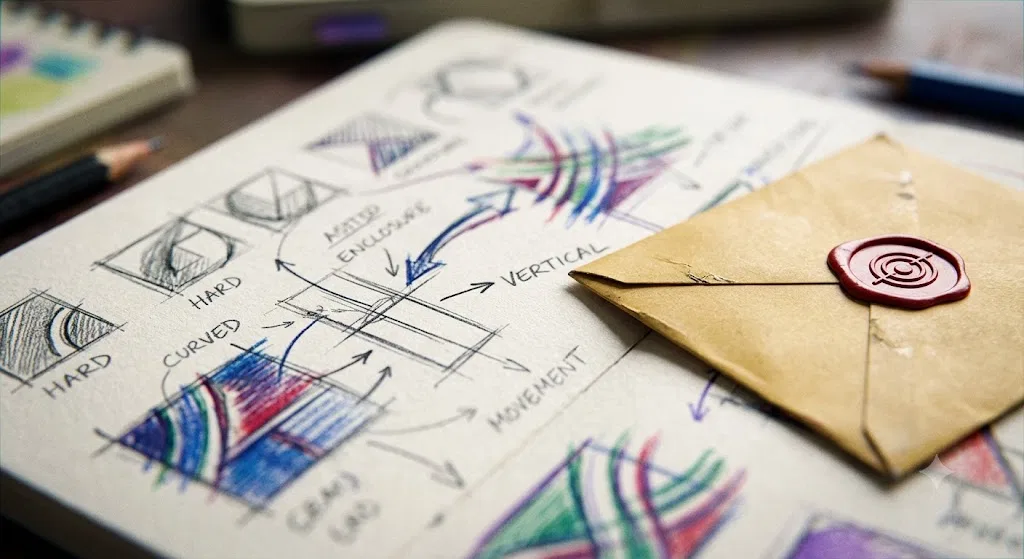
Sketches are valuable in remote viewing because they can record form before language hardens it into a story. A viewer may not know whether an impression is a bridge, gantry, pier, crane, ribbed roof or long deck, but a line drawing can preserve the arrangement for later comparison. This is why sketching is deeply embedded in remote-viewing practice, from early SRI examples to modern project guidelines. A recent expert-guidelines paper in the Journal of Scientific Exploration reports strong practitioner support for requiring sketches, arguing that sketches may match targets even when words are off and that otherwise judges must imagine what the viewer might have been picturing.[Journal of Scientific Exploration]journalofscientificexploration.orgJournal of Scientific Exploration
The practical strength of a sketch is that it can reduce one kind of ambiguity. A phrase such as “large structure near water” is broad; a drawing that places a long rectangular form beside a curved boundary gives the judge more to test. In applied remote viewing, that may help analysts compare several viewer sessions for repeated geometry: multiple viewers independently drawing vertical towers, concentric circles or water-adjacent structures would be more notable than one viewer using the word “industrial”.
Sketches can also reveal when the viewer’s own label is misleading. In the Rinconada Park example, the label “water purification plant” was not a good description of the target in 1974, but the drawn and verbal pool features were closer to the actual public swimming complex. In accounts of Pat Price’s Semipalatinsk session, supporters emphasise not only his words but his drawings of a large gantry crane and related site features, later compared with satellite imagery; sceptics remain cautious about the wider evidential chain, but the case shows why drawings became culturally powerful in remote-viewing lore.[CIAO]ciaotest.cc.columbia.eduCIAOClairvoyant Remote Viewing: The US Sponsored Psychic SpyingCIAOClairvoyant Remote Viewing: The US Sponsored Psychic Spying
Sketches also create a useful audit trail. A raw page made before feedback is harder to reinterpret silently than a later verbal story. That is why research protocols emphasise timestamps, transcripts, blinding and the preservation of original session material. A declassified standard procedure notes that tapes would be transcribed and edited only to remove information that might identify the remote viewer, monitor or target; the point of such controls is to keep the judging material from carrying ordinary clues while preserving the viewer’s response.[CIA]cia.govOpen source on cia.gov.

Why Sketches Can Mislead
The main weakness of a sketch is that simple marks are highly reusable. A circle can become a pool, dome, planet, wheel, arena, tunnel opening or radar dish. A vertical line can become a tower, tree, chimney, rocket, crane or person. A cluster of small rectangles can become windows, buildings, machinery, seating or storage units. This is not fraud; it is how visual interpretation works. Human judges are good at making patterns meaningful after they know what to look for.
That is why target pools and decoys matter. In laboratory remote viewing, the judge is often asked to compare one transcript against several possible targets and rank the best match. This can be more rigorous than simply showing the actual target and asking whether the sketch resembles it. But even ranking can be distorted if the decoys are poorly chosen. If one target is a waterfall and the decoys are all indoor rooms, any mention of “water” may look powerful. If both possible images contain red, circular forms and outdoor space, the same transcript may score high for both. Associative remote viewing researchers explicitly note this problem: even a simple word such as “red” can apply to both photos, forcing the rater into many small perceptual judgements.[Koestler Parapsychology Unit]koestler-parapsychology.psy.ed.ac.ukKoestler Parapsychology Unit
Another risk is non-independence in judging. If a judge sees one transcript as a strong match to one target, that may influence how the judge treats later transcripts or decoys. The 2021 associative remote viewing paper discusses how judgement dependencies can arise when the same judge compares multiple transcripts and targets, and why rater reliability is itself a major question rather than a minor administrative detail.[Koestler Parapsychology Unit]koestler-parapsychology.psy.ed.ac.ukKoestler Parapsychology Unit
The most serious historical critique concerns cueing. David Marks argued in Nature that sensory cues invalidated some early remote-viewing experiments, and later sceptical discussion focused on whether transcripts contained clues that could help judges identify targets without any paranormal information.[PubMed]pubmed.ncbi.nlm.nih.govOpen source on nih.gov. This criticism cuts directly into sketch interpretation: if a transcript contains accidental cues about date, order, travel, weather, experimenter comments or site context, the judge may be matching the target from those clues rather than from the viewer’s claimed perception.
Judging Is Where the Evidence Lives
Remote-viewing sketches do not interpret themselves. The crucial step is the scoring procedure. In the classic research pattern, a judge who does not know the correct answer compares the viewer’s response with a target set and ranks or scores the possible matches. A typical design used a target image plus several decoys; if the correct target was ranked better than chance expectation over many trials, proponents treated that as evidence for anomalous information transfer.[UC Davis]ucdavis.eduUC Davis'Psychic Spying' Research Produces Credible Evidence | UC DavisUC Davis'Psychic Spying' Research Produces Credible Evidence | UC Davis
This structure makes remote viewing different from a single dramatic anecdote. A striking drawing may be memorable, but the research question is whether many viewer responses match their targets more often than expected under controlled conditions. A 2023 systematic review and meta-analysis reported 36 studies and 40 effect sizes through December 2022, claiming a positive average effect; however, that conclusion sits within an ongoing dispute about study quality, independence, publication bias, protocol differences and interpretation of free-response data.[ResearchGate]researchgate.net374881423 Remote Viewing A 1974 2022 Systematic Review and Meta Analysis374881423 Remote Viewing A 1974 2022 Systematic Review and Meta Analysis
The Utts-Hyman review of the government programme captures the divide. Jessica Utts argued that the statistical case for psychic functioning had been established by ordinary scientific standards, while Ray Hyman accepted that the results looked better than earlier parapsychology but warned that statistical departures from chance were not yet compelling evidence for anomalous cognition. Both agreed that early research had serious methodological problems and that later protocols improved; they disagreed about whether remaining flaws and biases had been ruled out.[UC Davis]ucdavis.eduUC Davis'Psychic Spying' Research Produces Credible Evidence | UC DavisUC Davis'Psychic Spying' Research Produces Credible Evidence | UC Davis
For sketches, this means the reader should resist two opposite mistakes. The first is dismissing all drawings as meaningless doodles; some are specific enough to deserve careful comparison. The second is treating a resemblance as self-validating. A drawing becomes evidence only when the matching rules were set before feedback, decoys were fair, judges were blind, transcripts were clean, misses were counted and the result survives across repeated trials.

How to Read a Remote-Viewing Sketch Fairly
A fair interpretation starts with the raw record, not the later story. The original page should be dated, produced before feedback, and kept intact. Edited summaries can be useful for readability, but they should not replace the underlying notes and drawings. Modern project guidelines stress legible transcripts, typed summaries, high-resolution scans and role separation among viewers, managers, judges, randomisers and statisticians.[Journal of Scientific Exploration]journalofscientificexploration.orgJournal of Scientific Exploration
The next question is specificity. “Water” is weak if many targets contain water or if the target pool was full of outdoor scenes. “Two adjacent rectangular basins, one larger than the other, with a small block-like structure at the edge” is stronger. A sketch that captures spatial relations is usually more informative than a list of isolated attributes.
A third question is error accounting. Remote-viewing culture often highlights “good data”, but scientific interpretation must ask how much bad data came with it. If a viewer gives twenty impressions and three match, that means something different from a viewer giving four impressions and three match. Wrong but vivid elements should not be discarded merely because a later interpreter can explain them away.
A fourth question is independence. Multiple viewers drawing similar unusual features under blind conditions would be more interesting than one viewer producing a broad sketch. But if viewers shared information, saw each other’s transcripts, received frontloaded hints or were guided by a monitor who knew the target, the apparent convergence becomes much less persuasive. Expert guidance in the field itself recognises this risk, with contributors warning that viewers should remain blind to the target and that monitors should avoid cueing or guiding responses.[Journal of Scientific Exploration]journalofscientificexploration.orgJournal of Scientific Exploration
Finally, the target set must be considered. A sketch cannot be judged in isolation from the alternatives it had to beat. In associative remote viewing, researchers try to pair outcomes with photos that differ clearly, because similar photos can make judging ambiguous. If both targets contain mountains, water, people, circular objects or strong red elements, a transcript can look “right” for the wrong reason.[Koestler Parapsychology Unit]koestler-parapsychology.psy.ed.ac.ukKoestler Parapsychology Unit
What Sketches Can and Cannot Show
Remote-viewing sketches can show that a person produced a visual-spatial response before receiving feedback. They can preserve shapes that words might distort, reveal recurring motifs across sessions, and make judging more transparent. In the best cases, sketches create testable claims: not merely “something industrial”, but a specific arrangement of structures, water, roads, towers or repeated forms.
They cannot, by themselves, show that the information came from a paranormal source. A sketch may match because of chance, broad target pools, flexible interpretation, sensory leakage, judge expectation, selective reporting or ordinary inference. This is why sceptical critiques focus so heavily on transcripts, cue removal and judging, and why serious proponents place so much emphasis on blinding, randomisation, independent scoring and repeated trials.[PubMed+2Center for Inquiry]pubmed.ncbi.nlm.nih.govOpen source on nih.gov.
The most balanced reading is therefore neither “sketches prove remote viewing” nor “sketches are worthless”. They are the most vivid part of the practice and often the most useful part of a session, but they are also the easiest part to overread. A remote-viewing sketch is strongest when it is treated as a pre-registered piece of evidence inside a controlled comparison, not as a picture that becomes meaningful only after someone has already decided what it ought to show.
Endnotes
1.
Source: koestler-parapsychology.psy.ed.ac.uk
Title: Koestler Parapsychology Unit
Link:https://www.koestler-parapsychology.psy.ed.ac.uk/Documents/KPU_1034_Published_Results.pdf
2.
Source: journalofscientificexploration.org
Title: Journal of Scientific Exploration
Link:https://journalofscientificexploration.org/index.php/jse/article/view/3687/2559
3.
Source: cia.gov
Link:https://www.cia.gov/readingroom/docs/CIA-RDP96-00791R000200180005-5.pdf
4.
Source: cia.gov
Link:https://www.cia.gov/readingroom/docs/CIA-RDP96-00788R001000400001-7.pdf
5.
Source: ciaotest.cc.columbia.edu
Title: CIAOClairvoyant Remote Viewing: The US Sponsored [Psychic Spying]({{ ‘psychic-spying/’ | relative_url }})
Link:https://ciaotest.cc.columbia.edu/olj/sa/sa_jan02srm01.html
6.
Source: cia.gov
Link:https://www.cia.gov/readingroom/docs/CIA-RDP96-00788R002000240029-4.pdf
7.
Source: centerforinquiry.s3.amazonaws.com
Title: Center for Inquiry
Link:https://centerforinquiry.s3.amazonaws.com/wp-content/uploads/sites/29/1982/07/22165420/p20.pdf
8.
Source: researchgate.net
Title: 374881423 Remote Viewing A 1974 2022 Systematic Review and Meta Analysis
Link:https://www.researchgate.net/publication/374881423_Remote_Viewing_A_1974-2022_Systematic_Review_and_Meta-Analysis
9.
Source: cia.gov
Link:https://www.cia.gov/readingroom/document/cia-rdp96-00787r000500400001-4
10.
Source: cia.gov
Link:https://www.cia.gov/readingroom/document/cia-rdp96-00791r000200180006-4
11.
Source: cia.gov
Link:https://www.cia.gov/readingroom/docs/CIA-RDP96-00788R001300170001-0.pdf
12.
Source: cia.gov
Link:https://www.cia.gov/readingroom/docs/CIA-RDP96-00788R000901020001-0.pdf
13.
Source: cia.gov
Link:https://www.cia.gov/readingroom/document/cia-rdp96-00791r000200180005-5
14.
Source: cia.gov
Link:https://www.cia.gov/readingroom/docs/CIA-RDP96-00787R000100260003-2.pdf
15.
Source: cia.gov
Link:https://www.cia.gov/readingroom/document/cia-rdp96-00788r001300070003-9
16.
Source: cia.gov
Link:https://www.cia.gov/readingroom/docs/CIA-RDP96-00789R002200660001-5.pdf
17.
Source: cia.gov
Link:https://www.cia.gov/readingroom/docs/CIA-RDP96-00791R000200240001-0.pdf
18.
Source: cia.gov
Link:https://www.cia.gov/readingroom/document/cia-rdp96-00789r003800440001-2
19.
Source: cia.gov
Link:https://www.cia.gov/readingroom/docs/CIA-RDP96-00788R000700230001-0.pdf
20.
Source: cia.gov
Link:https://www.cia.gov/readingroom/docs/CIA-RDP96-00788R001300050001-3.pdf
21.
Source: researchgate.net
Link:https://www.researchgate.net/publication/342061969_What_Do_We_Know_About_Psi_The_First_Decade_of_Remote_Viewing_Research_and_Operations_at_Stanford_Research_Institute
22.
Source: researchgate.net
Link:https://www.researchgate.net/publication/333228024_An_Assessment_of_the_Evidence_for_Psychic_Functioning
23.
Source: researchgate.net
Title: 15839349 Information transmission in remote viewing experiments
Link:https://www.researchgate.net/publication/15839349_Information_transmission_in_remote_viewing_experiments
24.
Source: researchgate.net
Link:https://www.researchgate.net/publication/381233684_State_Trait_and_Target_Parameters_Associated_with_Accuracy_in_Two_Online_Tests_of_Precognitive_Remote_Viewing
25.
Source: researchgate.net
Title: 369604750 Remote Viewing a 1974 2022 systematic review and meta analysis
Link:https://www.researchgate.net/publication/369604750_Remote_Viewing_a_1974-2022_systematic_review_and_meta-analysis
26.
Source: nature.com
Link:https://www.nature.com/articles/319444e0.pdf
27.
Source: ucdavis.edu
Title: UC Davis’Psychic Spying’ Research Produces Credible Evidence | UC Davis
Link:https://www.ucdavis.edu/news/psychic-spying-research-produces-credible-evidence
28.
Source: pubmed.ncbi.nlm.nih.gov
Link:https://pubmed.ncbi.nlm.nih.gov/7242682/
29.
Source: ics.uci.edu
Link:https://www.ics.uci.edu/~jutts/hyman.html
30.
Source: academia.edu
Title: Remote Viewing A 1974 2022 Systematic Review and Meta Analysis
Link:https://www.academia.edu/108445581/Remote_Viewing_A_1974_2022_Systematic_Review_and_Meta_Analysis
31.
Source: pmc.ncbi.nlm.nih.gov
Link:https://pmc.ncbi.nlm.nih.gov/articles/PMC10275521/
32.
Source: Wikipedia
Title: Remote viewing
Link:https://en.wikipedia.org/wiki/Remote_viewing
Additional References
33.
Source: youtube.com
Title: Declassified [CIA files]({{ ‘cia-files/’ | relative_url }}) reveal psychic effort to locate the Ark of the Covenant
Link:https://www.youtube.com/watch?v=cFspoGak7tQ
Source snippet
This Remote Viewing Psychology discussion featuring Charles T. Tart is highly relevant because it covers his time as a consultant to the...
34.
Source: youtube.com
Title: Remote Viewing Aliens on the Moon (Ingo Swann’s Penetration)
Link:https://www.youtube.com/watch?v=FYhGQSRRfAc
Source snippet
Declassified CIA files reveal psychic effort to locate the Ark of the Covenant...
35.
Source: youtube.com
Title: Remote Viewing Psychology with Charles T. Tart
Link:https://www.youtube.com/watch?v=jPZwaicuiek
Source snippet
New Directions in Remote Viewing with Chase from Social-RV...
36.
Source: reddit.com
Link:https://www.reddit.com/r/Mars/comments/hpwnm9/cia_transcript/
37.
Source: reddit.com
Link:https://www.reddit.com/r/remoteviewing/comments/qrmn2c/can_someone_explain_remote_viewing_to_me_i_dont/
38.
Source: reddit.com
Link:https://www.reddit.com/r/remoteviewing/comments/1dazs09/creation_of_study_on_statistical_evidence_of/
39.
Source: facebook.com
Link:https://www.facebook.com/shawnryan762/posts/do-you-believe-in-remote-viewing-or-any-other-forms-of-parapsychology-shawnryans/1511586156155460/
40.
Source: facebook.com
Link:https://www.facebook.com/100090372200308/posts/during-the-[cold-war
41.
Source: instagram.com
Link:https://www.instagram.com/p/DV1H4HoDkp9/?hl=en
42.
Source: facebook.com
Link:https://www.facebook.com/groups/710805723530028/posts/1357377095539551/
Topic Tree