Within SAIC Tests
Did Moving Targets Help or Hurt?
SAIC's target-type results complicated the claim that remote viewing improves when targets are more vivid or moving.
On this page
- Why videos looked promising as targets
- The static target result that complicated the theory
- What inconsistent target effects meant for interpretation
Page outline Jump by section
Introduction
One of the more specific questions explored during the Science Applications International Corporation (SAIC) phase of the U.S. government’s remote-viewing programme was whether some kinds of targets were intrinsically easier to perceive than others. Researchers hypothesised that dynamic, information-rich targets—especially short video clips—might produce stronger results than still photographs or static scenes. The idea seemed plausible both intuitively and in light of earlier parapsychology research suggesting that emotionally engaging or rapidly changing targets could generate larger experimental effects. However, the SAIC findings did not produce the clear pattern that proponents expected. Instead, comparisons between static and dynamic targets yielded mixed and sometimes contradictory outcomes, complicating attempts to identify reliable conditions under which remote viewing might work. These inconsistent target-type effects became an important part of later debates over whether the reported statistical results reflected a genuine phenomenon or unstable experimental artefacts.[CIA+2UC Irvine Bren School]cia.govAN EVALUATION OF THE REMOTE VIEWING PROGRAMThey found that effect sizes were related to target complexity, with more dynamic targets s…
Did Moving Targets Help or Hurt?
Why videos looked promising as targets
The decision to compare static and dynamic targets was not arbitrary. During the late 1980s and early 1990s, several researchers proposed that remote viewing might depend on the “information content” or psychological salience of a target rather than simply its physical location. A short video clip contains movement, changing perspectives and often stronger emotional or perceptual cues than a single still image. If remote viewing reflected access to some form of anomalous information, dynamic scenes were expected to provide a richer signal.
Within the SAIC programme, targets could include photographs, physical objects, geographical locations and brief video sequences. Researchers explicitly designed experiments to examine whether target characteristics influenced performance rather than treating all targets as equivalent. The question became one of identifying possible “boundary conditions”—circumstances under which any anomalous effect might become stronger or weaker.[UC Irvine Bren School]ics.uci.eduIn these experiments, a viewer attempts to…Read more…
Some earlier analyses also suggested that more complex or dynamic targets might produce larger statistical effects, encouraging further investigation. Those observations motivated dedicated SAIC experiments instead of assuming that target choice was merely a procedural detail.[CIA]cia.govAN EVALUATION OF THE REMOTE VIEWING PROGRAMThey found that effect sizes were related to target complexity, with more dynamic targets s…
The static-target result that complicated the theory
One of the best-known SAIC investigations, reported by Lawrence Lantz, William Luke and Edwin May in 1994, directly compared static photographs with dynamic video targets while also examining whether the physical presence of a “sender” influenced performance. Participants completed sessions under four conditions combining static versus dynamic targets and sender versus no-sender protocols.[Koestler Unit]koestlerunit.wordpress.comKoestler Unit Experiment One of the SAIC Remote Viewing ProgramPrior to the study, Luke randomly selected 40 targets (20 static, 20 dynamic) for each participant. A copy…Read more…
The results did not match the original expectation. Rather than showing a straightforward advantage for moving targets, statistically significant performance appeared primarily in the static-target condition without a sender. The dynamic-target conditions failed to demonstrate the predicted improvement. In other words, adding movement did not reliably increase remote-viewing accuracy and, within that experiment, appeared less successful than ordinary photographs.[CIA]cia.govSAIC EXPERIMENT DATABASE | CIA FOIA (foia.cia.gov)Secondly, it is claimed in the Ganzfeld literature that dynamic targets (i.e., video…
This finding was surprising because it contradicted a growing assumption within parts of the field that higher “target entropy”—a concept later associated with more active, changing or complex targets—would naturally enhance anomalous cognition. Instead, the experiment suggested that if an effect existed, it was not simply driven by visual richness or motion.
The unexpected outcome also illustrated a broader methodological difficulty. Because remote-viewing experiments typically involved relatively small numbers of trials and experienced participants rather than large subject pools, an apparent advantage in one target category could easily disappear or reverse in later studies. That made it difficult to distinguish a genuine psychological mechanism from statistical fluctuation. UC Irvine Bren School+2UC Irvine Bren School[ics.uci.edu]ics.uci.eduThe remote viewer experimenters believe that external…
What inconsistent target effects meant for interpretation
The inconsistent findings had different implications for supporters and critics.
Supporters argued that the experiments demonstrated that remote viewing could not be reduced to simplistic assumptions such as “more vivid targets produce better results”. Instead, they suggested that unknown psychological or informational variables influenced performance, meaning that target motion alone was an inadequate explanatory variable. Some later theoretical work proposed broader concepts such as target complexity or informational novelty rather than movement itself.[CIA]cia.govAN EVALUATION OF THE REMOTE VIEWING PROGRAMThey found that effect sizes were related to target complexity, with more dynamic targets s…
Critics reached almost the opposite conclusion. They argued that if researchers could not consistently predict which target types improved performance, then post hoc explanations risked becoming unfalsifiable. When one experiment favoured video, another favoured photographs, and still others showed little difference, it became difficult to identify a stable experimental effect. Ray Hyman pointed to this broader problem in his evaluation of the SAIC programme, arguing that statistically significant outcomes alone were insufficient if they lacked robust, independently replicated patterns across laboratories and experimental variations.[UC Irvine Bren School]ics.uci.eduThe remote viewer experimenters believe that external…
The disagreement reflected different standards of evidence. For proponents, an inconsistent boundary condition did not necessarily invalidate the overall statistical findings. For sceptics, the absence of repeatable moderator effects weakened claims that the experiments were uncovering a genuine underlying phenomenon rather than chance variation or subtle methodological influences.
Why target type remained an unresolved question
The static-versus-dynamic comparison illustrates an important feature of the later SAIC programme: the research increasingly shifted from asking whether remote viewing existed to asking under what conditions it might appear. Target type became one candidate explanation, but the evidence never stabilised into a reproducible rule.
Subsequent discussions of target selection often continued to explore concepts such as complexity, emotional salience and informational richness, yet the SAIC experiments themselves did not establish that moving targets consistently outperformed static ones. Instead, they demonstrated that target characteristics could influence outcomes in ways that were neither straightforward nor reliably predictable. As a result, target type remained an unresolved variable rather than a validated optimisation strategy, and the mixed findings became part of the broader reason why the SAIC laboratory results, despite statistically interesting outcomes, did not produce scientific consensus regarding remote viewing. UC Irvine Bren School+2UC Irvine Bren School[ics.uci.edu]ics.uci.eduIn these experiments, a viewer attempts to…Read more…

Amazon book picks
Further Reading
Books and field guides related to Did Moving Targets Help or Hurt?. Use these as the next step if you want deeper reading beyond the article.
ESP Wars: East & West
Discusses experimental protocols including target characteristics.
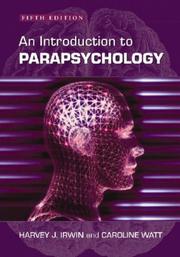
An introduction to parapsychology
Reviews controlled psi experiments and protocol design.
Parapsychology: A Handbook for the 21st Century
Explains experimental design issues relevant to target selection.
eBay marketplace picks
Marketplace Samples
Live-tested eBay searches with available results related to this page.
Endnotes
1.
Source: cia.gov
Link:https://www.cia.gov/readingroom/document/cia-rdp96-00791r000200180005-5
Source snippet
AN EVALUATION OF THE REMOTE VIEWING PROGRAMThey found that effect sizes were related to target complexity, with more dynamic targets s...
2.
Source: cia.gov
Link:https://www.cia.gov/readingroom/document/cia-rdp96-00791r000200190047-6
Source snippet
SAIC EXPERIMENT DATABASE | CIA FOIA (foia.cia.gov)Secondly, it is claimed in the [Ganzfeld]({{ 'ganzfeld/' | relative_url }}) literature that dynamic targets (i.e., video...
3.
Source: cia.gov
Link:https://www.cia.gov/readingroom/document/cia-rdp96-00791r000200180006-4
Source snippet
" or sender. A judge then examines the viewer's report.Read more...
4.
Source: ics.uci.edu
Link:https://www.ics.uci.edu/~jutts/air.pdf
Source snippet
In these experiments, a viewer attempts to...Read more...
5.
Source: ics.uci.edu
Link:https://www.ics.uci.edu/~jutts/hyman.html
Source snippet
The remote viewer experimenters believe that external...
6.
Source: koestlerunit.wordpress.com
Title: Koestler Unit Experiment One of the SAIC Remote Viewing Program
Link:https://koestlerunit.wordpress.com/wp-content/uploads/2015/06/wiseman-milton-1998.pdf
Source snippet
Prior to the study, Luke randomly selected 40 targets (20 static, 20 dynamic) for each participant. A copy...Read more...
7.
Source: ics.uci.edu
Link:https://www.ics.uci.edu/~jutts/air
Source snippet
vast majority of anomalous cognition experiments at both SRI and SAIC used a technique known as remote viewing. In these experiments, a v...
8.
Source: Wikipedia
Title: Remote viewing
Link:https://en.wikipedia.org/wiki/Remote_viewing
Source snippet
Remote viewingRemote viewing (RV) is the practice of seeking impressions about a distant or unseen subject, purportedly sensing with t...
Additional References
9.
Source: journalofscientificexploration.org
Link:https://journalofscientificexploration.org/index.php/jse/article/download/2273/1483
Source snippet
RESEARCH ARTICLEAbstract—Photographic images of physical objects are common targets in remote viewing projects today. This exploratory ex...
10.
Source: academia.edu
Link:https://www.academia.edu/9540484/Through_Time_and_Space_The_Evidence_for_Remote_Viewing
Source snippet
Through Time and Space: The Evidence for Remote ViewingThis paper discusses the evolution and methodology of nonlocal perception research...
11.
Source: youtube.com
Link:https://www.youtube.com/watch?v=YrwAiU2g5RU
Source snippet
Remote Viewing and Statistical ValidationJessica Utts, Professor of [Statistics]({{ 'statistics/' | relative_url }}) at UC Irvine, provides statistical validation and scientif...
12.
Source: richardwiseman.com
Link:https://www.richardwiseman.com/resources/SAICreply.pdf
Source snippet
leakage paths could not have accounted for the observed difference between performance in the static...Read mo...
13.
Source: researchgate.net
Title: An Assessment of the Evidence for Psychic Functioning
Link:https://www.researchgate.net/publication/333228024_An_Assessment_of_the_Evidence_for_Psychic_Functioning
Source snippet
Besides the ganzfield, the most prominent psi [protocol]({{ 'protocol/' | relative_url }}) is "remote viewing." In this, as described by Utts (1996) -in her aforementioned r...
14.
Source: scispace.com
Link:https://scispace.com/pdf/remote-viewing-of-concealed-target-pictures-under-light-and-229j8c3s0e.pdf
Source snippet
For example, Lantz, Luke, and May (1994) tested the effect of...Read more...
15.
Source: academia.edu
Link:https://www.academia.edu/38286031/Remote_Viewing_of_Concealed_Target_Pictures_Under_Light_and_Dark_Conditions
Source snippet
Remote Viewing of Concealed Target Pictures Under Light...Dark conditions marginally favored remote viewing performance, but differences...
16.
Source: psi-encyclopedia.spr.ac.uk
Title: Psi Encyclopedia Remote Viewing
Link:https://psi-encyclopedia.spr.ac.uk/articles/remote-viewing/
Source snippet
Psi EncyclopediaRemote Viewing - Psi Encyclopedia13 Jan 2017 — Remote viewing is an experimental form of ESP that emerged in the late 196...
17.
Source: scispace.com
Title: What Do We Know About Psi?
Link:https://scispace.com/pdf/what-do-we-know-about-psi-the-first-decade-of-remote-viewing-42m4cti21j.pdf
Source snippet
The First Decade of Remote...Remote viewing is a nonanalytic ability; describing a distant shape, form, or location on the planet is eas...
18.
Source: youtube.com
Title: Russell Targ on the Science of Remote Viewing
Link:http://www.youtube.com/watch?v=IDaFwLS6goU
Source snippet
Remote viewing "dynamic targets" experiments Rogerio Bonatti PhD Thesis Defense, Carnegie Mellon University Rogério Bonatti...
Topic Tree