Within Middle View
The Review That Split the Debate
The 1995 review found a possible laboratory anomaly but rejected remote viewing as useful intelligence work.
On this page
- What the AIR reviewers were asked to judge
- Why Utts and Hyman reached different conclusions
- How the review separated lab effects from intelligence value
Page outline Jump by section
Introduction
The 1995 American Institutes for Research (AIR) evaluation of the Star Gate programme remains the single most influential official assessment of remote viewing because it reached two conclusions that have often been conflated. On one hand, the review acknowledged that some laboratory experiments appeared to show statistically unusual results that could not easily be dismissed as chance alone. On the other, it concluded that those findings had not translated into reliable, actionable intelligence for government use. That distinction became the foundation of the modern middle position in the remote-viewing debate: laboratory anomalies, if genuine, are not the same as an operational capability.[CIA]cia.govAN EVALUATION OF THE REMOTE VIEWING PROGRAMTo achieve these goals, the CIA contracted with the American Institutes for Research to sup…
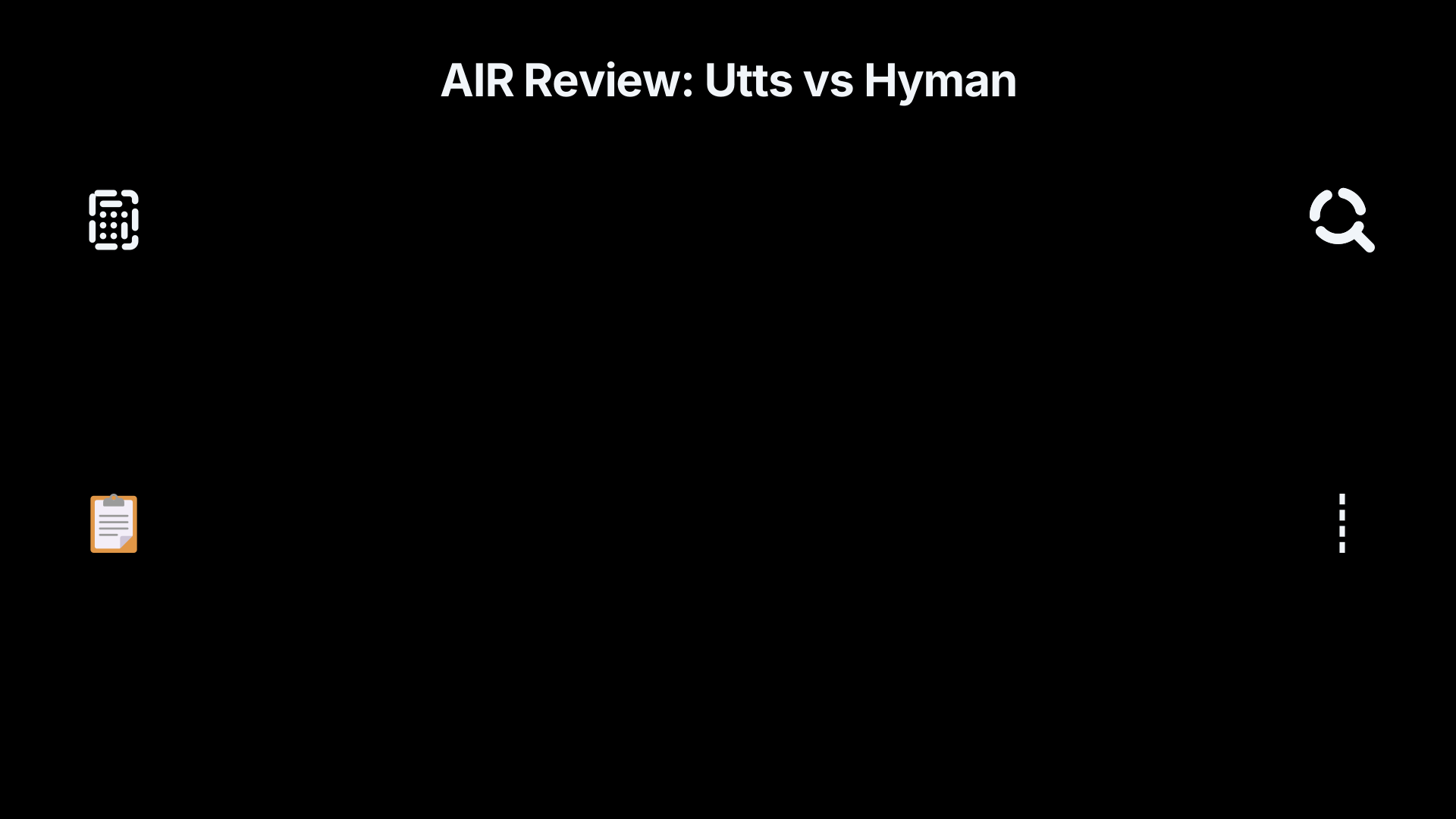
Rather than settling the controversy, the AIR review divided it into two separate questions. Jessica Utts argued that the research evidence supported the existence of an anomalous effect deserving scientific acceptance, while Ray Hyman accepted that the later experiments were methodologically stronger than earlier work but maintained that the evidence still fell short of demonstrating psychic functioning. The CIA’s policy decision ultimately rested less on whether a laboratory effect existed than on whether the programme had produced useful intelligence.[CIA]cia.govAN EVALUATION OF REMOTE VIEWINGHyman was selected to represent a more skeptical position. Both, however, are viewed as fair and open-m…
What the AIR reviewers were asked to judge
The AIR review was commissioned after Congress directed that responsibility for the programme be transferred to the CIA. Before deciding whether the work should continue, the CIA asked AIR to evaluate both the scientific research and the programme’s operational record. This dual remit is essential to understanding why the final assessment appears internally divided.[CIA]cia.govAN EVALUATION OF THE REMOTE VIEWING PROGRAMTo achieve these goals, the CIA contracted with the American Institutes for Research to sup…
The reviewers were not simply asked whether remote viewing existed. Instead, they considered two distinct questions:
- Did the laboratory experiments provide credible evidence of an anomalous information-gathering effect?
- Had that effect, if real, produced intelligence of practical value?
AIR examined government-sponsored laboratory studies conducted over roughly two decades alongside operational case material from intelligence activities. The review deliberately included Jessica Utts, who had published work supportive of paranormal interpretations, and Ray Hyman, a leading psychological sceptic, so that both favourable and critical interpretations would be represented within the same evaluation.[CIA]cia.govAN EVALUATION OF REMOTE VIEWINGHyman was selected to represent a more skeptical position. Both, however, are viewed as fair and open-m…
This structure meant that disagreement over scientific interpretation did not prevent agreement about operational performance.
Why Utts and Hyman reached different conclusions
The disagreement between Utts and Hyman was narrower than it is often portrayed. Both accepted that many early experiments suffered from methodological weaknesses. Both also agreed that later studies, particularly those conducted during the Scientific Applications International Corporation (SAIC) period, had improved experimental controls.[UC Davis]ucdavis.edupsychic spying research produces credible evidenceUC Davis'Psychic Spying' Research Produces Credible Evidence28 Nov 1995 — Utts found the results were consistent with the small- to mediu…
Their disagreement centred on what the improved studies justified concluding.
Utts’ interpretation
Utts argued that the cumulative statistical evidence exceeded what chance alone would predict. In her assessment, the consistency of the later experiments, combined with improved protocols, meant that anomalous cognition had been demonstrated sufficiently to warrant scientific acceptance. She argued that future work should shift from asking whether an effect exists to investigating its characteristics and limitations.[UC Davis]ucdavis.edupsychic spying research produces credible evidenceUC Davis'Psychic Spying' Research Produces Credible Evidence28 Nov 1995 — Utts found the results were consistent with the small- to mediu…
Importantly, Utts did not claim that remote viewing functioned perfectly or that every operational report was accurate. Her position was that the laboratory evidence met the standards normally applied to many other behavioural sciences.
Hyman’s interpretation
Hyman accepted that the reported statistical effects were not easily dismissed as random fluctuations and acknowledged that the better experiments avoided several classic flaws seen in earlier parapsychology research. Nevertheless, he argued that statistical significance alone could not establish paranormal functioning. Independent replication, elimination of alternative explanations and stronger methodological safeguards remained necessary before accepting such an extraordinary claim.[ResearchGate]researchgate.netEvaluation of Program on 'Anomalous Mental Phenomena'Jessica Utts and I were commissioned to evaluate the research on remote…
He also questioned whether subtle methodological issues, analytical flexibility or ordinary psychological processes could still account for the findings. From his perspective, the evidence justified further research rather than acceptance of psychic functioning.
How the review separated laboratory effects from intelligence value
The AIR report’s lasting importance lies in its refusal to treat laboratory findings and operational usefulness as the same issue.
The reviewers found that operational remote-viewing reports generally lacked the characteristics required for intelligence work. Information was frequently vague, difficult to verify before the fact, mixed correct details with substantial inaccuracies, and often depended on subjective interpretation after events had occurred. Such reports could rarely support real-time decision-making.[CIA]cia.govAN EVALUATION OF THE REMOTE VIEWING PROGRAMTo achieve these goals, the CIA contracted with the American Institutes for Research to sup…
The executive summary therefore reached a practical conclusion that differed from the scientific debate. It stated that there was no documented instance in which remote-viewing information had been used successfully to guide intelligence operations. Even if laboratory anomalies existed, they had not become a dependable intelligence collection method.[CIA]cia.govAN EVALUATION OF THE REMOTE VIEWING PROGRAMTo achieve these goals, the CIA contracted with the American Institutes for Research to sup…
This distinction explains why supporters and critics can both quote the same report accurately while appearing to describe different documents.
Why the CIA ended the programme
The CIA’s decision followed the operational rather than the statistical portion of the evaluation.
For an intelligence agency, the relevant question was whether the programme produced information that improved national security decisions. AIR concluded that the available evidence did not demonstrate consistent operational value, and the CIA subsequently terminated and declassified the programme.[CIA]cia.govAN EVALUATION OF THE REMOTE VIEWING PROGRAMTo achieve these goals, the CIA contracted with the American Institutes for Research to sup…
This decision should not be interpreted as an official declaration that every laboratory result was fraudulent or impossible. Instead, it reflected a governance judgement that the programme failed to satisfy the practical standards expected of an intelligence capability.
Why the AIR verdict still shapes the debate
Nearly three decades later, discussions of remote viewing continue to revolve around the framework established by the AIR review.
Supporters emphasise that an independent statistician appointed by the government concluded that the laboratory evidence pointed towards a genuine anomaly. They argue that the review acknowledged a measurable effect even if its mechanism remained unknown.[UC Davis]ucdavis.edupsychic spying research produces credible evidenceUC Davis'Psychic Spying' Research Produces Credible Evidence28 Nov 1995 — Utts found the results were consistent with the small- to mediu…
Sceptics point to Hyman’s critique and the CIA’s policy decision, arguing that extraordinary scientific claims require stronger independent confirmation and that operational failure weighs heavily against practical significance.[cdn.centerforinquiry.org]cdn.centerforinquiry.orgEvaluation of the Military's Twenty-Year Program on…by RAY HYMAN · 1996 · Cited by 8 — In 1995 the Central Intelligence Agency contrac…
The middle position adopts both observations simultaneously. It recognises that the AIR review did not dismiss every experimental result as worthless, yet it also recognises that the government found no convincing evidence that remote viewing functioned as a reliable intelligence tool. The report therefore remains the central reference because it separates two questions that are often merged in public discussion: whether laboratory studies detected an unusual statistical effect, and whether that effect ever became operationally useful.

Amazon book picks
Further Reading
Books and field guides related to The Review That Split the Debate. Use these as the next step if you want deeper reading beyond the article.
Phenomena
Explains the official programme context that led to later evaluations and controversy.
The Demon-Haunted World
Balances proponent claims with a broader framework for scientific scepticism.

Remote Viewers: The Secret History of America's Psychic Spies
Covers the programme’s history, claims, scepticism and intelligence-use questions.
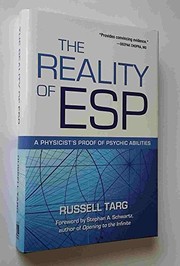
The Reality of ESP: A Physicist's Proof of Psychic Abilities
Represents the argument that remote-viewing data showed a real anomalous effect.
eBay marketplace picks
Marketplace Samples
Live-tested eBay searches with available results related to this page.




Endnotes
1.
Source: cia.gov
Link:https://www.cia.gov/readingroom/docs/CIA-RDP96-00791R000200180005-5.pdf
Source snippet
AN EVALUATION OF THE REMOTE VIEWING PROGRAMTo achieve these goals, the CIA contracted with the American Institutes for Research to sup...
2.
Source: cia.gov
Link:https://www.cia.gov/readingroom/docs/CIA-RDP96-00791R000200180006-4.pdf
Source snippet
AN EVALUATION OF REMOTE VIEWINGHyman was selected to represent a more skeptical position. Both, however, are viewed as fair and open-m...
3.
Source: cdn.centerforinquiry.org
Link:https://cdn.centerforinquiry.org/wp-content/uploads/sites/29/1996/03/22165045/p21.pdf
Source snippet
Evaluation of the Military's Twenty-Year Program on...by RAY HYMAN · 1996 · Cited by 8 — In 1995 the Central Intelligence Agency contrac...
4.
Source: researchgate.net
Link:https://www.researchgate.net/publication/267978941Evaluation_of_Program_on%27Anomalous_Mental_Phenomena%27
Source snippet
Evaluation of Program on 'Anomalous Mental Phenomena'Jessica Utts and I were commissioned to evaluate the research on remote...
5.
Source: cia.gov
Link:https://www.cia.gov/readingroom/document/cia-rdp96-00791r000200180005-5
Source snippet
DRAFT REPORT; Document Type: CREST; Collection: [STARGATE]({{ 'stargate/' | relative_url }}); Document Number (...Read more...
6.
Source: researchgate.net
Link:https://www.researchgate.net/publication/403178755_The_Star_Gate_Archives_Reports_of_the_United_States_Government_Sponsored_Psi_Program_1972-1995_Volume_4_Operational_Remote_Viewing_Memorandums_and_Reports
Source snippet
(PDF) The [Star Gate]({{ 'star-gate/' | relative_url }}) Archives: Reports of the United States...28 Mar 2026 — The Star Gate Archives: Reports of the United States Governme...
7.
Source: ucdavis.edu
Title: [psychic spying]({{ ‘psychic-spying/’ | relative_url }}) research produces credible evidence
Link:https://www.ucdavis.edu/news/psychic-spying-research-produces-credible-evidence
Source snippet
UC Davis'Psychic Spying' Research Produces Credible Evidence28 Nov 1995 — Utts found the results were consistent with the small- to mediu...
8.
Source: Wikipedia
Title: Remote viewing
Link:https://en.wikipedia.org/wiki/Remote_viewing
Source snippet
Remote viewingThe program ran from 1975 to 1995 and ended after evaluators concluded that remote viewers consistently failed to produc...
Additional References
9.
Source: reddit.com
Link:https://www.reddit.com/r/HighStrangeness/comments/14x6pu0/the_cias_remote_viewing_documents_are_confusing/
Source snippet
The CIAs remote viewing documents are confusing as hellThe Stargate project produced zero evidence of remote viewing and that it's not re...
10.
Source: slideshare.net
Link:https://www.slideshare.net/slideshow/an-evaluation-of-remote-viewing-research-and-applications-air1995pdf/257460594
Source snippet
summary of a program review conducted by the American Institutes for Research (AIR) that evaluated the research and...
11.
Source: academia.edu
Link:https://www.academia.edu/95285973/The_Star_Gate_Operational_Remote_Viewing_Program_A_Human_Intelligence_HUMINT_Collection_Platform
Source snippet
Goslin of the American Institutes of Research, the well-known skeptic Ray Hyman...Read more...
12.
Source: studocu.com
Link:https://www.studocu.com/es-mx/document/tecnologico-de-estudios-superiores-de-ecatepec/fisica-general/evaluation-of-the-remote-viewing-program-research-applications-draft/131886045
Source snippet
ational applications within the intelligence community...
13.
Source: Wikipedia
Title: Stargate Project (U.S. Army unit)
Link:https://en.wikipedia.org/wiki/Stargate_Project_%28U.S._Army_unit%29
Source snippet
Stargate Project (U.S. Army unit)The CIA commissioned a report by the American Institutes for Research (AIR)... An Evaluation of Remo...
14.
Source: researchonline.ljmu.ac.uk
Title: ljmu.ac.uk Follow‐up on the U.S
Link:https://researchonline.ljmu.ac.uk/id/eprint/23584/1/Follow-up%20on%20the%20U.S.%20Central%20Intelligence%20Agency%27s%20%28CIA%29%20remote%20viewing%20experiments%E2%98%86.pdf
Source snippet
Central Intelligence Agency's (CIA)...by Á Escolà-Gascón · 2023 · Cited by 10 — Reports on the declassified SRI and [SAIC experiments]({{ 'saic-tests/' | relative_url }}) wer...
15.
Source: youtube.com
Title: Inside The Military’s Secret Psychic Unit
Link:https://www.youtube.com/watch?v=9nY3hu76SyU
Source snippet
Remote Viewing and Statistical Validation directly covers the statistical arguments presented by Dr. Jessica Utts during the 1995 evaluat...
16.
Source: pmc.ncbi.nlm.nih.gov
Link:https://pmc.ncbi.nlm.nih.gov/articles/PMC10275521/
Source snippet
Central Intelligence Agency's (CIA...by Á Escolà‐Gascón · 2023 · Cited by 10 — Reports on the declassified SRI and SAIC experiments were...
17.
Source: youtube.com
Title: Stargate Project: How Did the CIA Turn the Human Mind into a Weapon?
Link:https://www.youtube.com/watch?v=IDPlEXpzRoQ
Source snippet
Remote Viewing and Statistical Validation...
18.
Source: youtube.com
Title: The History of Remote Viewing with Paul H. Smith
Link:https://www.youtube.com/watch?v=_bMDdBwjfY8
Source snippet
Stargate Project: How Did the CIA Turn the Human Mind into a Weapon?...
Topic Tree