Within Remote Viewing
What a Balanced View Actually Says
The most accurate view is neither simple debunking nor proof, but a split between disputed effects and failed application.

On this page
- What Believers Emphasize
- What Skeptics Emphasize
- The Careful Middle Ground
Page outline Jump by section
Introduction
The most balanced view of remote viewing is not that it has been cleanly proven, nor that the whole record is empty nonsense. A better reading is split: some laboratory studies have reported above-chance effects that serious statisticians have treated as worth explaining, but the claimed ability has not produced reliable, specific, operationally useful intelligence under real-world conditions. That distinction matters because believers often focus on the statistical signal, while sceptics focus on controls, replication, subjective judging and failed application. The careful middle position asks a narrower question: not “is remote viewing real or fake?”, but “what, exactly, has the evidence shown, and what has it failed to show?”[National Security Archive]nsarchive2.gwu.eduNational Security Archiveremote~1.PD FNational Security Archiveremote~1.PD F
Remote viewing is unusually contentious because it has a documented institutional history. The U.S. intelligence community funded research for decades, including work at Stanford Research Institute, Science Applications International Corporation and the Fort Meade programme later known as Star Gate. In 1995, the American Institutes for Research reviewed the programme for the CIA and deliberately included Jessica Utts, a statistician sympathetic to paranormal interpretations, and Ray Hyman, a psychologist known for sceptical analysis. Their disagreement still frames the debate today.[National Security Archive]nsarchive2.gwu.eduNational Security Archiveremote~1.PD FNational Security Archiveremote~1.PD F
What Believers Emphasise
Believers usually start with the fact that remote viewing was not only a fringe hobby. It received sustained government attention because intelligence officials thought, especially during the Cold War, that even a low-probability capability might be worth testing. That does not prove the ability exists, but it explains why the evidence record is richer than casual paranormal anecdotes. The AIR report described a programme with research, operational and foreign-assessment components, and reviewed approximately 80 publications or reports from the government-sponsored research stream.[National Security Archive]nsarchive2.gwu.eduNational Security Archiveremote~1.PD FNational Security Archiveremote~1.PD F
The strongest believer argument is statistical rather than cinematic. Utts argued that the later, better-controlled studies showed results beyond chance and that similar small-to-medium effects had appeared in other laboratories. UC Davis summarised her view in 1995 by saying that the later research, unlike the earliest era, had improved protocols and appeared consistent with a modest effect rather than with simple fraud or sloppiness.[UC Davis]ucdavis.eduUC Davis'Psychic Spying' Research Produces Credible Evidence | UC DavisUC Davis'Psychic Spying' Research Produces Credible Evidence | UC Davis
A recent pro-remote-viewing meta-analysis has strengthened that side of the conversation for believers. The 2023 Journal of Scientific Exploration review by Patrizio Tressoldi and Debra Katz examined studies through December 2022, selected 36 studies with 40 effect sizes, and reported an average effect size of.34 after excluding outliers, with raw-score differences estimated at 19.3% above chance. The authors concluded that remote-viewing protocols appeared comparatively efficient among extrasensory-perception methods.[Journal of Scientific Exploration]journalofscientificexploration.orgRemote Viewing: A 1974-2022 Systematic Review and Meta-Analysis | Journal of Scientific Exploration…
Believers also point out that sceptics and proponents did not disagree about everything. Utts and Hyman both accepted that the earliest research had serious weaknesses, and both agreed that some later protocols were more sophisticated than the early Stanford Research Institute work. The live dispute was not simply whether the later data contained anomalies; it was whether those anomalies justified saying that psychic functioning had been established.[UC Davis]ucdavis.eduUC Davis'Psychic Spying' Research Produces Credible Evidence | UC DavisUC Davis'Psychic Spying' Research Produces Credible Evidence | UC Davis
This is why remote-viewing believers often sound less like people defending a miracle and more like people defending an unresolved statistical anomaly. Their core claim is that the signal should not be dismissed merely because it conflicts with conventional assumptions. In that view, the proper next step would be more precise research into when the effect appears, which targets work best, whether feedback matters, and whether individual differences among viewers are real.
What Skeptics Emphasise
Sceptics begin from a different standard: extraordinary claims need more than interesting statistics. Remote viewing proposes information transfer without ordinary sensory contact, so sceptics ask whether the experiments exclude every mundane route by which information, expectations or judging bias could enter the result. That is why the debate repeatedly returns to randomisation, target selection, transcript handling, blinding, judging methods and independent replication.
The early Stanford Research Institute work remains a major cautionary example. David Marks argued in Nature that sensory cues invalidated some remote-viewing experiments, and the article’s title has become a shorthand for the sceptical critique: not that all reports are fabricated, but that small leaks in protocol can create impressive-looking matches. A related Marks and Kammann critique challenged information-transmission claims in the earlier Targ and Puthoff line of work.[Nature]nature.comSensory cues invalidate remote viewing experiments | NatureSensory cues invalidate remote viewing experiments | Nature
Later research was not immune from dispute. Richard Wiseman and Julie Milton re-examined “Experiment One” from the SAIC remote-viewing programme, a study Utts had treated as an example of adequate safeguards. Their paper argued that key procedural details were hard to reconstruct and that two possible flaws might account for the study’s result. That matters because a remote-viewing experiment can look rigorous in summary while still depending on small practical details: who handled which materials, what was faxed, what the judge saw, and whether the written record was complete enough for outside evaluation.[Koestler Unit]koestlerunit.wordpress.comKoestler Unit Microsoft WordKoestler Unit Microsoft Word
Hyman’s scepticism was not simply that he disliked paranormal claims. In the 1995 review, he argued that Utts’s conclusion was premature because the evidence had not reached the level of independent, decisive replication needed for a claim that would overturn normal assumptions about perception and information. UC Davis quoted his concern that the programme was hampered by secrecy because classified work cannot benefit from normal scientific scrutiny, peer review and open replication.[UC Davis]ucdavis.eduUC Davis'Psychic Spying' Research Produces Credible Evidence | UC DavisUC Davis'Psychic Spying' Research Produces Credible Evidence | UC Davis
The operational record is the sceptics’ strongest point. AIR found that remote-viewing reports were often broad, vague, inconsistent or inaccurate in specifics, and required substantial subjective interpretation. Its executive summary stated that no information from the programme had ever been used to guide intelligence operations and that remote viewing failed to produce actionable intelligence.[National Security Archive]nsarchive2.gwu.eduNational Security Archiveremote~1.PD FNational Security Archiveremote~1.PD F
This is not a minor failure. A laboratory effect can be statistically interesting while still being practically useless. Intelligence work needs timely, specific, checkable information: names, locations, quantities, routes, dates, objects, facilities or intentions. The AIR review argued that the conditions under which laboratory effects appeared did not translate well into intelligence settings, where feedback may be absent, targets are unconstrained, and analysts cannot rely on vague impressions when decisions have consequences.[National Security Archive]nsarchive2.gwu.eduNational Security Archiveremote~1.PD FNational Security Archiveremote~1.PD F
The Careful Middle Ground
The middle position begins by separating three claims that are often blurred together. First, remote-viewing experiments have sometimes produced above-chance results. Second, those results prove a paranormal faculty. Third, remote viewing can be used reliably for intelligence or practical decision-making. The evidence for the first claim is much stronger than the evidence for the second, and the evidence for the third is weak.
That split is visible in the AIR conclusion. The review acknowledged that a statistically significant laboratory effect had been observed, but said it remained unclear whether a paranormal phenomenon had been demonstrated. It also found that even if such a phenomenon could be shown under laboratory conditions, those conditions had limited relevance to intelligence operations. This is the core middle view: the research record is not empty, but the applied promise failed the test that mattered most to government users.[National Security Archive]nsarchive2.gwu.eduNational Security Archiveremote~1.PD FNational Security Archiveremote~1.PD F
A fair reading also distinguishes “failed application” from “no possible anomaly”. The Star Gate operational review did not prove that every laboratory result was worthless; it judged that the programme did not produce concrete, reliable intelligence. Conversely, positive meta-analytic results do not prove that remote viewers can identify hidden targets on demand. Statistical aggregation can suggest a pattern while leaving open questions about publication bias, methodological differences, subjective scoring, file-drawer effects, and whether the effect survives hostile or fully independent replication.[Journal of Scientific Exploration]journalofscientificexploration.orgRemote Viewing: A 1974-2022 Systematic Review and Meta-Analysis | Journal of Scientific Exploration…
The most useful comparison is to medical or psychological screening rather than to spy fiction. A test may perform slightly above chance in controlled conditions and still be unusable for high-stakes decisions because false positives, vague outputs and interpretation costs overwhelm its value. That is close to what AIR found: even where some broad background accuracy was reported, the outputs lacked the specificity and reliability that intelligence users needed.[National Security Archive]nsarchive2.gwu.eduNational Security Archiveremote~1.PD FNational Security Archiveremote~1.PD F
The middle position also resists a common rhetorical trap on both sides. Believers sometimes treat government funding as government validation, but the CIA review shows that funding can mean “worth investigating”, not “proven”. Sceptics sometimes treat failed intelligence use as a complete explanation of every laboratory anomaly, but operational failure and laboratory controversy are not identical questions. The strongest view keeps both facts in frame.
Why the Same Evidence Produces Opposite Camps
Remote viewing produces polarisation because each side weights risk differently. Believers worry that conventional science may ignore a small but real effect because it is anomalous. Sceptics worry that weak effects, flexible judging and motivated interpretation can make noise look meaningful. Both worries are rational in the abstract; the disagreement is over which worry is more justified by the record.
Judging is especially important. Remote-viewing responses are often sketches, impressions and loose descriptors rather than precise statements. A judge may compare a response with one target and several decoys, then rank the best match. This can be more structured than casual anecdote, but it still leaves room for subjective interpretation, especially when the response contains many possible matching elements. AIR’s description of laboratory protocols shows why judging design sits at the centre of the dispute.[National Security Archive]nsarchive2.gwu.eduNational Security Archiveremote~1.PD FNational Security Archiveremote~1.PD F
Secrecy also shaped the debate. Hyman’s criticism that classified work reduced the normal checks of open science is significant because remote viewing depends heavily on trust in protocols. If outside researchers cannot inspect full procedures, replicate designs independently, or review all results rather than selected successes, confidence is limited even when reported statistics look impressive.[UC Davis]ucdavis.eduUC Davis'Psychic Spying' Research Produces Credible Evidence | UC DavisUC Davis'Psychic Spying' Research Produces Credible Evidence | UC Davis
At the same time, dismissing every positive result as fraud is too crude. The better sceptical argument is more careful: modest anomalies can arise from ordinary methodological problems, unconscious cueing, scoring flexibility, selective reporting, incomplete documentation, or replication gaps. The better believer argument is also more careful: some later studies improved on early flaws and produced results that may deserve further scrutiny rather than reflexive ridicule.[UC Davis]ucdavis.eduUC Davis'Psychic Spying' Research Produces Credible Evidence | UC DavisUC Davis'Psychic Spying' Research Produces Credible Evidence | UC Davis
What a Balanced View Actually Says
A balanced view does not split the difference for politeness. It makes a sharper distinction than either extreme usually does. Remote viewing has a real research history, some positive statistical findings and a small group of serious defenders. It also has deep unresolved problems: weak mechanisms, contested replication, vulnerability to subjective matching, and poor performance as an operational intelligence tool.
The strongest concise verdict is this: remote viewing is historically real as a funded research programme, statistically disputed as a laboratory claim, and practically unproven as an intelligence method. That verdict explains why the topic keeps returning. It is not persuasive enough to be accepted as established science, but not empty enough to be understood as mere folklore.
For readers trying to judge new claims, the key questions are practical rather than ideological:
- Was the target chosen and sealed before the session? Loose target handling can make later matching too easy.
- Were judging and scoring blind? The judge should not know the correct target or receive cues from order, dates, labels or experimenter behaviour.
- Were all trials reported? Selective examples can turn ordinary misses into a story of dramatic hits.
- Was the result independently replicated? A claimed effect matters more when different teams can reproduce it with pre-specified methods.
- Did it produce specific, actionable information? A vague impression that fits after the fact is very different from a usable prediction or intelligence lead.
That is the middle position in its most practical form. Remote viewing should not be treated as proven psychic perception, and it should not be reduced to a cartoonish joke. The evidence record supports interest, caution and strict standards at the same time: disputed laboratory effects on one side, failed real-world application on the other, and a large gap between statistical anomaly and dependable knowledge.
Amazon book picks
Further Reading
Books and field guides related to What a Balanced View Actually Says. Use these as the next step if you want deeper reading beyond the article.
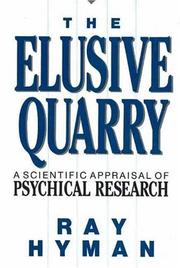
The Elusive Quarry: A Scientific Appraisal of Psychical Research
Provides the critical framework balancing positive claims.
Parapsychology: A Handbook for the 21st Century
Summarizes competing perspectives in the field.
eBay marketplace picks
Marketplace Samples
Live-tested eBay searches with available results related to this page.



Endnotes
1.
Source: journalofscientificexploration.org
Title: Journal of Scientific Exploration
Link:https://journalofscientificexploration.org/index.php/jse/article/view/2931
Source snippet
Remote Viewing: A 1974-2022 Systematic Review and Meta-Analysis | Journal of Scientific Exploration...
2.
Source: nature.com
Title: Sensory cues invalidate remote viewing experiments | Nature
Link:https://www.nature.com/articles/292177a0
3.
Source: nature.com
Link:https://www.nature.com/articles/284191a0
4.
Source: cia.gov
Link:https://www.cia.gov/readingroom/docs/CIA-RDP96-00791R000200180005-5.pdf
5.
Source: cia.gov
Link:https://www.cia.gov/readingroom/document/cia-rdp96-00791r000200180006-4
6.
Source: cia.gov
Link:https://www.cia.gov/readingroom/docs/CIA-RDP96-00791R000200180006-4.pdf
7.
Source: cia.gov
Link:https://www.cia.gov/readingroom/document/cia-rdp96-00791r000200180005-5
8.
Source: cia.gov
Link:https://www.cia.gov/readingroom/docs/CIA-RDP99-01448R000402150001-6.pdf
9.
Source: cia.gov
Link:https://www.cia.gov/readingroom/docs/CIA-RDP96-00791R000100080003-7.pdf
10.
Source: cia.gov
Link:https://www.cia.gov/readingroom/document/cia-rdp96-00789r002700010001-1
11.
Source: cia.gov
Link:https://www.cia.gov/readingroom/document/cia-rdp96-00789r003100030001-4
12.
Source: cia.gov
Link:https://www.cia.gov/readingroom/document/cia-rdp96-00789r002200390001-5
13.
Source: cia.gov
Link:https://www.cia.gov/readingroom/document/cia-rdp96-00789r002700020001-0
14.
Source: cia.gov
Link:https://www.cia.gov/readingroom/docs/CIA-RDP96-00787R000200090017-5.pdf
15.
Source: cia.gov
Link:https://www.cia.gov/readingroom/docs/CIA-RDP96-00789R002200070001-0.pdf
16.
Source: cia.gov
Link:https://www.cia.gov/readingroom/docs/CIA-RDP96-00791R000200070001-9.pdf
17.
Source: nickcanfield29.medium.com
Link:https://nickcanfield29.medium.com/can-remote-viewing-be-proven-a-modern-experiment-to-test-remote-viewing-project-[stargate
18.
Source: medium.com
Link:https://medium.com/%40thegaijin.wolfenstein/the-stargate-project-inside-americas-secret-psychic-spy-program-7ef5399d7b24
19.
Source: nsarchive2.gwu.edu
Title: National Security Archiveremote~1.PD F
Link:https://nsarchive2.gwu.edu/NSAEBB/NSAEBB438/docs/doc_57.pdf
20.
Source: ucdavis.edu
Title: UC Davis’Psychic Spying’ Research Produces Credible Evidence | UC Davis
Link:https://www.ucdavis.edu/news/psychic-spying-research-produces-credible-evidence
21.
Source: koestlerunit.wordpress.com
Title: Koestler Unit Microsoft Word
Link:https://koestlerunit.wordpress.com/wp-content/uploads/2015/06/wiseman-milton-1998.pdf
22.
Source: researchgate.net
Link:https://www.researchgate.net/figure/Results-summary-for-the-30-[ganzfeld
23.
Source: ics.uci.edu
Link:https://www.ics.uci.edu/~jutts/hyman.html
24.
Source: ics.uci.edu
Link:https://www.ics.uci.edu/~jutts/may.pdf
25.
Source: richardwiseman.wordpress.com
Link:https://richardwiseman.wordpress.com/research/parapsychology/
26.
Source: journalofscientificexploration.org
Link:https://journalofscientificexploration.org/index.php/jse/article/view/1371/841
27.
Source: Wikipedia
Title: Remote viewing
Link:https://en.wikipedia.org/wiki/Remote_viewing
Additional References
28.
Source: youtube.com
Title: Did the CIA Train Psychic Spies? | Stargate Project
Link:https://www.youtube.com/watch?v=4F5lH0SOqs0
Source snippet
Remote Viewing Explained: How the Mind Sees Without Eyes...
29.
Source: researchgate.net
Link:https://www.researchgate.net/publication/403178755_The_Star_Gate_Archives_Reports_of_the_United_States_Government_Sponsored_Psi_Program_1972-1995_Volume_4_Operational_Remote_Viewing_Memorandums_and_Reports
30.
Source: emmind.net
Link:https://emmind.net/openpapers_repos/Nonlocality_Fields/Nonlocal_Mind/Various/2014_Explicit_Anomalous_Cognition_A_Review_of_the_Best_Evidence_in_Ganzfeld%2C_Forced-choice_Remote_Viewing_and_Dream_Studies.pdf
31.
Source: researchgate.net
Link:https://www.researchgate.net/publication/333228024_An_Assessment_of_the_Evidence_for_Psychic_Functioning
32.
Source: slideshare.net
Link:https://www.slideshare.net/slideshow/an-evaluation-of-remote-viewing-research-and-applications-air1995pdf/257460594
33.
Source: skepsis.nl
Link:https://skepsis.nl/stargate/
34.
Source: reddit.com
Link:https://www.reddit.com/r/remoteviewing/comments/qrmn2c/can_someone_explain_remote_viewing_to_me_i_dont/
35.
Source: anomalist.com
Link:https://www.anomalist.com/commentaries/ciarv3.html
36.
Source: reddit.com
Link:https://www.reddit.com/r/HighStrangeness/comments/vv3020/dr_jessica_utts_is_convinced_that_psychic/
37.
Source: researchgate.net
Link:https://www.researchgate.net/publication/267978941Evaluation_of_Program_on%27Anomalous_Mental_Phenomena%27
Topic Tree