Within Remote Viewing
Why Remote Viewing Hits Can Mislead
Human pattern-seeking can make words like water, metal, or movement fit many different targets after feedback.

On this page
- Flexible Descriptions
- After the Fact Fit
- Separating Signal From Noise
Page outline Jump by section
Introduction
Remote viewing “hits” can be misleading because the match is often made after the answer is known. A viewer may write impressions such as water, metal, vertical shape, movement, coldness, people, enclosed space or bright area. Once the target is revealed, those words can be mapped onto a bridge, a ship, a factory, a monument, a hospital, a waterfall, a laboratory or a stadium. The problem is not that every hit is fake, but that flexible descriptions create many possible routes to a match.
This matters because remote viewing is usually judged from free-response material: sketches, phrases and sensory impressions rather than a single clear prediction. The more freedom a judge, believer, viewer or audience has to reinterpret the session after feedback, the easier it becomes to remember the apparent hits and overlook the misses. The core question is therefore not “Can any phrase be made to fit?” but “Was the match specific, pre-registered, independently judged and strong enough to beat chance without hindsight?”
Flexible Descriptions
Remote viewing reports often contain the kind of material that is naturally hard to score: fragments, textures, shapes, emotions and sensory impressions. In the U.S. government-commissioned evaluation of the remote viewing programme, the American Institutes for Research described many experiments as “free-response” tasks, meaning viewers were asked to describe a target rather than choose from a small fixed set of answers. A judge then compared the response with the real target or with decoys. That structure makes judging central to the claim, because the raw response rarely says only one thing.[National Security Archive]nsarchive2.gwu.eduOpen source on gwu.edu.
A phrase such as “large curved structure near water” sounds striking if the target is a bridge, dam, harbour, aquarium, riverfront stadium or coastal monument. It sounds less impressive if the target is a desert road, a library or a forest clearing, but those failed possibilities are often invisible once the correct answer has been shown. Remote viewing anecdotes therefore tend to become more persuasive when the audience sees the transcript beside the target photograph, because the photograph supplies the interpretive frame.
This is why “hits” are not all equal. A high-value hit is constrained before the answer is known: “a red suspension bridge over a wide bay” is more informative than “metal, open space, water, elevation”. The first description rules out many targets. The second can survive by partial matching. It can be attached to a bridge, a ship, an oil rig, a pier, a crane, a water tower or even an indoor scene with a metal railing and a fountain.
The same issue appears in remote viewing’s own research methods. A CIA-hosted remote viewing evaluation protocol describes blind matching, rank ordering and numerical procedures as ways to estimate whether transcript-target matches exceed chance. The need for such procedures is revealing: researchers understood that simply reading a transcript and saying “that fits” is too subjective to settle the question.[CIA]cia.govOpen source on cia.gov.
After-the-Fact Fit
The strongest-looking remote viewing anecdotes often depend on a quiet shift in timing. Before feedback, the session is a collection of uncertain impressions. After feedback, the viewer, judge or audience can search the transcript for words that resemble the target. This is after-the-fact fit: the answer turns vague material into apparently meaningful material.
Psychology has a well-known name for a related process: subjective validation. People often judge broad or ambiguous statements as personally meaningful once they are given a context that invites interpretation. The Barnum or Forer effect is usually discussed in relation to personality readings, astrology and fortune telling, but the same basic warning applies to remote viewing transcripts: broad statements can feel accurate because the reader supplies the missing specificity.[The Decision Lab]thedecisionlab.comOpen source on thedecisionlab.com.
In remote viewing, the danger is amplified by the target image. A photograph does not merely reveal the answer; it teaches the viewer how to read the session. “Movement” becomes traffic. “Cold” becomes snow. “Metal” becomes a railway line. “Rising form” becomes a tower. “Biological” becomes trees, animals, people, a hospital or a food market. None of these interpretations is necessarily dishonest. The risk is that normal pattern-seeking feels like recognition.
This is especially important when the transcript contains many impressions. A long session gives the judge more chances to find overlap. If twenty details are wrong and three can be made to fit, the story may later be told around the three hits. A fair assessment has to preserve the whole denominator: how many claims were made, how precise they were, how many were wrong, and whether the same language would also have matched the decoy targets.
Why Judging Is the Battleground
Remote viewing differs from a simple prediction because the result is often not self-scoring. If someone predicts “the coin will land heads”, judging is straightforward. If someone writes “bright, tall, hard, hollow, people moving, echo, grey surface”, the score depends on comparison. That is why remote viewing experiments use judges, target pools, decoys and rank ordering.
Supporters have argued that formal judging can reduce the problem. In some protocols, an independent judge who does not know the correct target compares the viewer’s response against several possible targets and ranks the best match. If the correct target is ranked first more often than chance would predict, proponents argue that something more than subjective enthusiasm may be happening. The Psi Encyclopedia, a pro-parapsychology source, presents remote viewing as a field where controlled protocols and statistical judging are central to the case made by researchers such as Jessica Utts.[Psi Encyclopedia]psi-encyclopedia.spr.ac.ukPsi Encyclopedia Remote Viewing – Psi EncyclopediaPsi Encyclopedia Remote Viewing – Psi Encyclopedia
Critics reply that judging is exactly where ambiguity enters. Ray Hyman’s review for the 1995 evaluation stressed that the usefulness of operational remote viewing was often decided by subjective validation, and he objected to treating apparent matches as decisive when the material was vague, general or mixed with errors.[UC Irvine Bren School]ics.uci.eduOpen source on uci.edu.
The disagreement is not merely philosophical. It affects what counts as evidence. A believer may see a sketch resembling a target and treat it as a hit. A critic asks whether the sketch would also resemble several other targets, whether the judge saw accidental clues, whether misses were counted with the same seriousness, and whether the scoring rule was fixed before the match was inspected.
Sensory Cues and the False Hit Problem
Pattern matching is not the only way a hit can mislead. Some early remote viewing controversies involved possible sensory cues: ordinary clues in transcripts, dates, ordering, handling or context that could help a judge match responses to targets without any paranormal information.
David Marks and Richard Kammann became central critics of the early Stanford Research Institute work. In Nature, Marks argued that sensory cues invalidated some remote viewing experiments; later summaries of the dispute note that cues in transcripts, including order-related clues, could help judges make correct matches.[Nature]nature.comOpen source on nature.com.
This matters for the “problem of hits” because a hit can be produced by two different routes. One route is interpretive flexibility: the transcript is vague, and the target makes it seem meaningful. The other is leakage: the judging process contains ordinary clues that help connect a transcript with a target. Both routes can produce a persuasive-looking match, but neither requires remote perception.
Marks’s broader critique, published in Skeptical Inquirer, framed remote viewing as vulnerable to exactly this problem: well-controlled experiments did not find the same effect, while poorly controlled ones seemed to. The article describes the basic remote viewing set-up and argues that control quality changes how impressive the results appear.[Center for Inquiry]centerforinquiry.s3.amazonaws.comCenter for Inquiry
The Appeal of the Hit
Remote viewing hits are memorable because they are visual. A viewer sketches a shape; the target contains a similar shape. A viewer says “water”; the target has a river. A viewer says “metal framework”; the target is a bridge. The human mind is good at recognising resemblance, and resemblance feels more direct than a statistical table.
The problem is that resemblance is not the same as information. A curved line can resemble a hill, arch, tunnel, wave, road, roof, bridge or animal back. A vertical rectangle can become a tower, doorway, cliff, chimney, bookshelf, skyscraper or machine. The simpler the mark or word, the larger the family of possible matches.
Remote viewing communities sometimes try to manage this by distinguishing raw impressions from “analytic overlay”: the viewer’s attempt to turn a sensation into a named object. That distinction can be useful in practice, because “cool, wet, echoing” may be less overcommitted than “submarine”. But from an evidence perspective it creates a scoring challenge. Raw impressions are easier to preserve as data, yet they are also easier to retrofit.
Separating Signal From Noise
The fairest way to assess a remote viewing hit is to ask how much freedom was available after the target was known. The less freedom, the stronger the hit. The more freedom, the more likely the hit reflects normal pattern matching.
A useful credibility test asks five questions:
- Was the response recorded before feedback? A timestamped transcript is stronger than a later recollection.
- Were scoring rules set in advance? Predefined criteria reduce the temptation to count only favourable overlaps.
- Were decoy targets used? A response that fits the correct target better than several plausible decoys is more informative than a response shown only beside the answer.
- Were misses counted fully? A persuasive example should show what was wrong, vague or irrelevant, not just what matched.
- Was the judge blind? The person scoring the session should not know which target is correct or what result is desired.
These safeguards do not prove remote viewing works. They simply reduce the ways a normal human judge can manufacture a hit. That distinction is important: better controls move the discussion away from “this feels accurate” and towards “this was more accurate than chance under conditions that limited flexible matching”.
Why Anecdotes Often Outrun Experiments
Anecdotes are the natural habitat of the remote viewing hit. They allow the best sessions, best phrases and most striking sketches to travel far beyond the full record. Experiments are less flattering because they force the misses, ambiguities and decoy comparisons back into view.
The 1995 government evaluation captured this tension. Utts argued that the statistical evidence for psychic functioning was stronger than critics allowed, while Hyman argued that the conclusions were premature and that methodological and interpretive issues remained. Both sides treated judging and evaluation as central, not incidental.[CIA]cia.govOpen source on cia.gov.
For a reader trying to make sense of remote viewing, this is the key lesson: do not judge the claim by the most cinematic hit. Judge it by the full scoring environment. A transcript that looks astonishing beside one target may look ordinary when placed beside five decoys. A phrase that feels exact after feedback may have seemed shapeless before the answer. A sketch that resembles a building may also resemble many other buildings.
What a Strong Hit Would Need to Show
A genuinely strong remote viewing hit would not merely contain a few words that can be attached to the target. It would sharply reduce the field of possible answers before feedback. It would include unusual, target-specific details; it would be recorded in advance; it would survive blind comparison with decoys; and it would not depend on ignoring a large body of contradictory material.
For example, “water, metal, movement” is weak because it fits too many scenes. “A white arched pedestrian bridge over a narrow canal, with red boats moored on the left and a clock tower in the background” would be much stronger, especially if decoys included other waterfront scenes and blind judges still selected the correct target. The value lies not in the presence of a match, but in the amount of ambiguity removed.
This is why the problem of hits is not a side issue in remote viewing. It is the centre of the evidential dispute. Remote viewing claims live or die on whether impressions can be matched to targets in a way that is stricter than ordinary hindsight, pattern-seeking and selective memory. Without that discipline, hits can become stories about how well humans find meaning after they know where to look.
Amazon book picks
Further Reading
Books and field guides related to Why Remote Viewing Hits Can Mislead. Use these as the next step if you want deeper reading beyond the article.
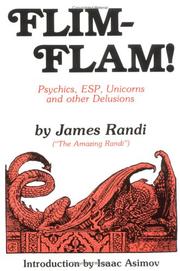
The Demon-Haunted World
Explains confirmation bias and pattern matching behind apparent hits.
eBay marketplace picks
Marketplace Samples
Live-tested eBay searches with available results related to this page.



Endnotes
1.
Source: cia.gov
Link:https://www.cia.gov/readingroom/docs/CIA-RDP96-00791R000200180005-5.pdf
2.
Source: cia.gov
Link:https://www.cia.gov/readingroom/docs/CIA-RDP96-00788R001800090001-4.pdf
3.
Source: cia.gov
Link:https://www.cia.gov/readingroom/document/cia-rdp96-00788r001800080001-5
4.
Source: nature.com
Link:https://www.nature.com/articles/292177a0
5.
Source: centerforinquiry.s3.amazonaws.com
Title: Center for Inquiry
Link:https://centerforinquiry.s3.amazonaws.com/wp-content/uploads/sites/29/1982/07/22165420/p20.pdf
6.
Source: cia.gov
Link:https://www.cia.gov/readingroom/docs/CIA-RDP96-00787R000200090017-5.pdf
7.
Source: cia.gov
Link:https://www.cia.gov/readingroom/docs/CIA-RDP96-00788R001300050001-3.pdf
8.
Source: cia.gov
Link:https://www.cia.gov/readingroom/docs/CIA-RDP96-00789R002200070001-0.pdf
9.
Source: cia.gov
Link:https://www.cia.gov/readingroom/docs/CIA-RDP96-00791R000200180006-4.pdf
10.
Source: nsarchive2.gwu.edu
Link:https://nsarchive2.gwu.edu/NSAEBB/NSAEBB438/docs/doc_57.pdf
11.
Source: thedecisionlab.com
Link:https://thedecisionlab.com/biases/barnum-effect
12.
Source: psi-encyclopedia.spr.ac.uk
Title: Psi Encyclopedia Remote Viewing – Psi Encyclopedia
Link:https://psi-encyclopedia.spr.ac.uk/articles/remote-viewing/
13.
Source: ics.uci.edu
Link:https://www.ics.uci.edu/~jutts/hyman.html
14.
Source: Wikipedia
Title: Remote viewing
Link:https://en.wikipedia.org/wiki/Remote_viewing
15.
Source: journalofscientificexploration.org
Link:https://journalofscientificexploration.org/index.php/jse/article/view/3687/2559
16.
Source: journalofscientificexploration.org
Link:https://journalofscientificexploration.org/index.php/jse/article/view/1371/841
Additional References
17.
Source: youtube.com
Title: [Stargate]({{ ‘stargate/’ | relative_url }}) Project Transcripts and Pareidolia in Free-Response Data
Link:https://www.youtube.com/watch?v=lGenw1l8rjk
Source snippet
This collection of videos examines how free-response data in remote viewing sessions is evaluated, covering statistical validation method...
18.
Source: youtube.com
Title: Scoring and Judging Variables in Remote Viewing Protocols
Link:https://www.youtube.com/watch?v=jIK6UOnmRbk
Source snippet
Stargate Project Transcripts and Pareidolia in Free-Response Data...
19.
Source: youtube.com
Title: Deciphering Hits and Subjective Judging in Remote Viewing
Link:https://www.youtube.com/watch?v=OZvu3I992xM
Source snippet
Scoring and Judging Variables in Remote Viewing Protocols...
20.
Source: researchgate.net
Link:https://www.researchgate.net/publication/381233684_State_Trait_and_Target_Parameters_Associated_with_Accuracy_in_Two_Online_Tests_of_Precognitive_Remote_Viewing
21.
Source: researchgate.net
Link:https://www.researchgate.net/publication/403178755_The_Star_Gate_Archives_Reports_of_the_United_States_Government_Sponsored_Psi_Program_1972-1995_Volume_4_Operational_Remote_Viewing_Memorandums_and_Reports
22.
Source: researchgate.net
Link:https://www.researchgate.net/publication/333228024_An_Assessment_of_the_Evidence_for_Psychic_Functioning
23.
Source: academia.edu
Link:https://www.academia.edu/61485193/Associative_Remote_Viewing_Projects_Assessing_Rater_Reliability_and_Factors_Affecting_Successful_Predictions
24.
Source: equalture.com
Link:https://www.equalture.com/bias-overview/barnum-effect/
25.
Source: study.com
Link:https://study.com/academy/lesson/the-barnum-effect-in-psychology.html
26.
Source: ebsco.com
Link:https://www.ebsco.com/research-starters/psychology/barnum-effect
Topic Tree
Follow this branch
Parent topic
Remote ViewingRelated pages 29
- After Fit How Target Photos Create After the Fact Hits
- Barnum Hits The Psychology Behind Flexible Remote Viewing Hits
- Blind Judging Can Blind Judges Separate Hits From Hindsight?
- Counting Misses Why Misses Matter as Much as Hits
- Sensory Cues When Ordinary Clues Create Psychic Looking Hits
- +1 more in sidebar