Within Remote Viewing
The Experiments That Made Remote Viewing Famous
The Stanford Research Institute experiments created the best-known remote viewing claims and many later disputes.
On this page
- Targ and Puthoff's Role
- Targets and Viewer Responses
- Why the Claims Endured
Page outline Jump by section
Introduction
The Stanford Research Institute experiments are the reason remote viewing became more than a fringe parapsychology claim. In the early 1970s, physicists Russell Targ and Harold Puthoff reported that selected subjects could describe distant or hidden targets under “sensory shielding”, and their 1974 Nature paper gave the work a level of scientific visibility that later claims never fully lost. The most famous cases involved Ingo Swann, Pat Price, local target sites around the San Francisco Bay Area, and alleged descriptions of intelligence targets such as a Soviet research facility.[Nature+2CIA]nature.comInformation transmission under conditions of sensory shielding | NatureInformation transmission under conditions of sensory shielding | Nature…
The balanced reading is that SRI created the template for modern remote viewing: a viewer, a hidden target, a written or sketched response, and later judging. It also created the enduring dispute. Supporters point to striking individual examples and statistically unusual matching results. Critics argue that the early protocols were not tight enough, that judging could be influenced by accidental cues, and that later government review did not find reliable intelligence value.[SciSpace+2Nature]scispace.comSci Space Information transmission in remote viewing experimentsSci Space Information transmission in remote viewing experiments
Why SRI Became the Origin Story
SRI, later SRI International, was not a mystical retreat; it was a major research institute in Menlo Park, California. That setting mattered. Remote viewing became famous partly because the claims were presented not as séance-room impressions but as laboratory experiments run by physicists, written up in technical language, and eventually linked to U.S. intelligence interest during the Cold War. Targ and Puthoff’s 1974 Nature article, “Information transmission under conditions of sensory shielding”, stated that their results suggested one or more perceptual channels through which people obtained environmental information not presented to the known senses.[Nature]nature.comInformation transmission under conditions of sensory shielding | NatureInformation transmission under conditions of sensory shielding | Nature…
The SRI work also arrived at a moment when intelligence agencies were worried about Soviet research into psychic phenomena. Declassified records and later programme summaries show that U.S. government remote-viewing activity began in this SRI-centred period and later fed into the broader set of projects remembered under names such as Grill Flame, Sun Streak and Stargate. The key point is not that the CIA or military proved remote viewing worked, but that they treated the possibility seriously enough to fund tests and examine whether it could have intelligence use.[CIA]cia.govOpen source on cia.gov.
That institutional setting explains why SRI remains central in remote-viewing debates. Claims made in a small private circle can fade quickly; claims attached to Nature, CIA records, named scientists and Cold War intelligence needs acquire a much longer afterlife.

Targ and Puthoff’s Role
Russell Targ and Harold Puthoff were the public scientific faces of the SRI work. They framed remote viewing as an experimental problem: could a person describe a distant place, object or scene while ordinary sensory information was blocked? Their 1974 paper did not merely report anecdotes. It argued that such claimed abilities could be studied under laboratory conditions, which was an important rhetorical shift from older terms such as clairvoyance or telepathy.[Nature]nature.comInformation transmission under conditions of sensory shielding | NatureInformation transmission under conditions of sensory shielding | Nature…
Their method became recognisable. A target was selected, a viewer was kept away from normal information about it, and the viewer produced verbal descriptions or drawings. Later, a judge compared the response with possible targets. The SRI “local targets” protocol, preserved in document archives, shows how the work developed into a repeatable experimental format rather than a single informal demonstration.[documentcloud.org]documentcloud.orgOpen source on documentcloud.org.
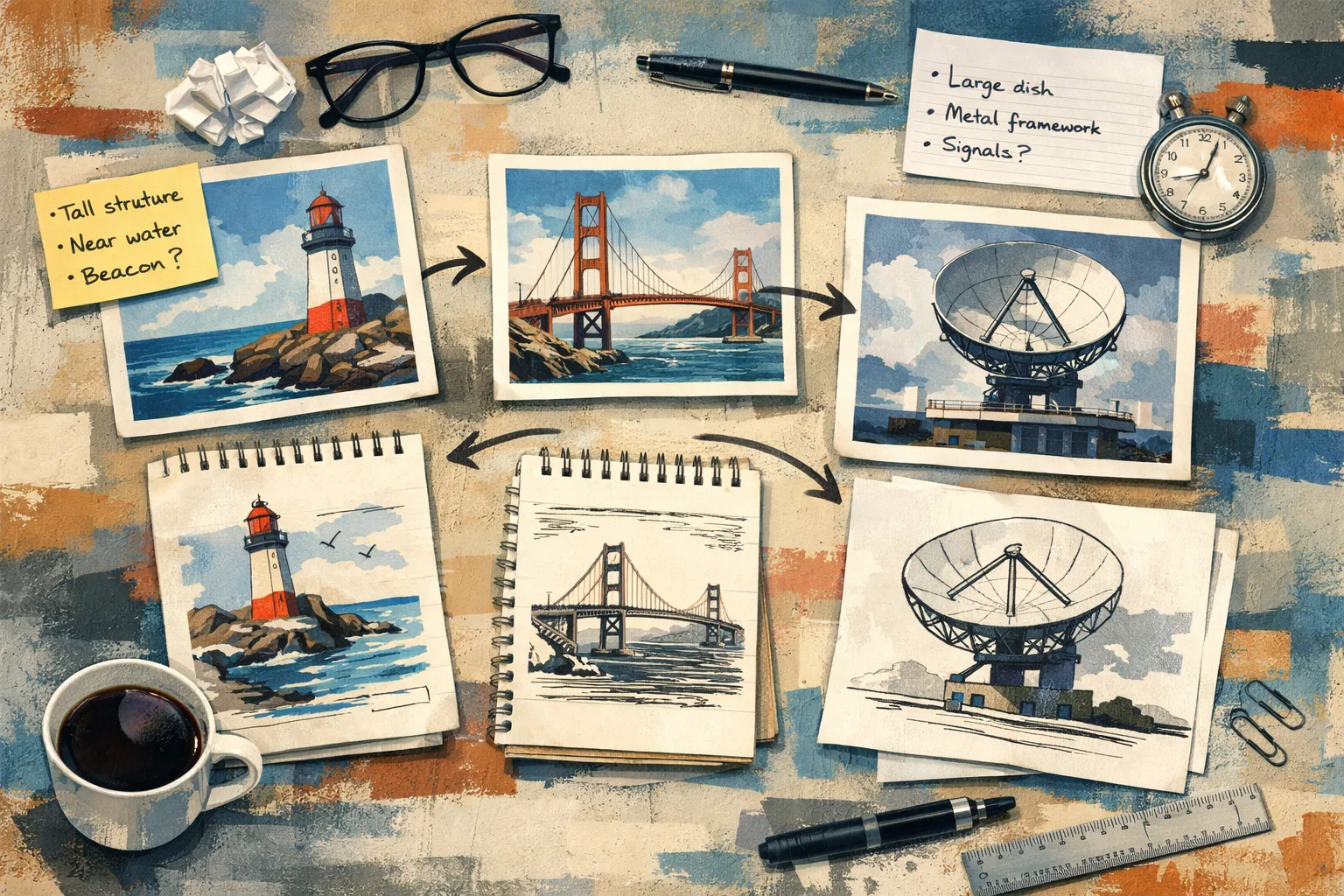
The controversy begins here too. In remote viewing, the impressive part is often not the raw transcript but the later comparison. A viewer may say “water”, “tower”, “open space”, “metallic structure” or “circular shape”; a judge then decides whether those words fit the target better than alternatives. That judging stage is essential, but it is also vulnerable. If the judge sees clues about trial order, dates, previous targets or other contextual details, the experiment can look successful for reasons unrelated to any anomalous perception.
Targ and Puthoff defended their findings against critics and continued to argue that the early SRI data could not be dismissed as ordinary cueing. In 1980, Charles Tart, Puthoff and Targ published a reanalysis of the first Price series in Nature, reporting that after transcripts were edited to remove alleged cues and judged again, seven of nine were correctly matched, with highly significant results.[SciSpace]scispace.comSci Space Information transmission in remote viewing experimentsSci Space Information transmission in remote viewing experiments In 1981, Puthoff and Targ published a formal rebuttal to David Marks’s criticisms in Nature, showing that the dispute was not a casual sceptical aside but a direct scientific argument over protocol and interpretation.[Nature]nature.comRebuttal of criticisms of remote viewing experiments | NatureRebuttal of criticisms of remote viewing experiments | Nature
Targets and Viewer Responses
The SRI claims endured because they were not all abstract statistical tables. They came with memorable cases: local sites, vivid sketches, named viewers and alleged intelligence relevance.
One central SRI format involved “natural” or local targets. A person or team would go to a randomly chosen site, while the remote viewer, elsewhere, described impressions of the location. The resulting accounts might include sketches, sensory words and spatial layouts. A CIA-hosted SRI paper describes such experiments as asking a subject to describe a remote site chosen by experimenters and unknown to the subject.[CIA]cia.govREMOTE VIEWING OF NATURAL TARGETS. SRI….This paper presents a series of experiments in which a subject is asked to describe a remot…
Pat Price became one of the most famous SRI viewers. In the early published Price series, his transcripts were later judged against target sites. Supporters saw some of the results as striking enough to suggest information transfer. Critics focused on whether the transcripts contained clues that could help judges match them without paranormal information. The later Tart-Puthoff-Targ reanalysis claimed that, even after cue removal, seven of nine transcripts were correctly matched; Marks and other critics remained unconvinced that this settled the problem.[SciSpace]scispace.comSci Space Information transmission in remote viewing experimentsSci Space Information transmission in remote viewing experiments
The best-known intelligence-flavoured claim concerns Price’s viewing of URDF-3, often associated in remote-viewing literature with Semipalatinsk in the former Soviet Union. CIA document entries describe summaries and analyses of Price’s attempt, including discussion of sketches and a rail-mounted gantry crane. One CIA-linked summary says the data were “inconclusive” for validating Price’s remote-viewing capability, while another later analysis states that the URDF-3 experiment was unsuccessful after review of tape recordings.[CIA+2CIA]cia.govSUMMARY OF REMOTE-VIEWING OF URDF-3 - FOIA… remote-viewing experiment with his sketch of the rail-mounted gantry crane…. Price's… This is precisely why the case remains contested: the public legend often highlights the dramatic crane match, while the declassified evaluative language is much more cautious.
Ingo Swann supplied a different kind of fame. He became associated with the term “remote viewing” and with early SRI work, and his name appears in later accounts of the programme’s origins. One especially persistent claim is his 1973 “remote viewing” of Jupiter, sometimes said to have anticipated features later observed by spacecraft. A CIA-hosted document concerns a “probe” of Jupiter dated 27 April 1973, and University of West Georgia archival records identify Swann Jupiter-probe materials in the Ingo Swann papers.[CIA]cia.govOpen source on cia.gov. The case is memorable, but it is not as clean as a laboratory target photograph: planetary descriptions are broad, later confirmation can be selective, and the judging problem becomes harder when the feedback arrives years later through complex scientific findings.

The Cueing Dispute That Shaped the Evidence
The strongest criticism of the early SRI experiments was not simply “psychic powers are impossible”. It was more concrete: the transcripts and judging procedures may have allowed sensory cueing. Sensory cueing means that information leaks through ordinary routes, often unintentionally. In a remote-viewing experiment, even a date, trial sequence, reference to an earlier session, or the order in which materials are handed to a judge can matter.
David Marks and Richard Kammann attempted to replicate Targ and Puthoff’s remote-viewing work and did not confirm their conclusions. Marks later argued in Nature that sensory cues invalidated the experiments. The Nature record shows the dispute clearly: Marks’s “Sensory cues invalidate remote viewing experiments” appeared in 1981, followed by Puthoff and Targ’s rebuttal two weeks later.[Nature]nature.comSensory cues invalidate remote viewing experiments | NatureSensory cues invalidate remote viewing experiments | Nature
The issue was especially important because remote viewing depends heavily on judging. If a judge knows, even indirectly, that one transcript came after another, or sees clues that correspond to the target order, the judge may match materials correctly without using any anomalous signal. That would produce apparently impressive hit rates while leaving the core claim unproved.
Supporters replied that cueing could not explain all the results. The Tart-Puthoff-Targ reanalysis said alleged cue phrases were removed, transcripts and target lists were randomised, and an independent judge still matched seven of nine correctly.[SciSpace]scispace.comSci Space Information transmission in remote viewing experimentsSci Space Information transmission in remote viewing experiments Critics countered that the underlying record was still too messy, the protocols insufficiently transparent, and the early work too vulnerable to post hoc interpretation. The dispute therefore did not end with a single decisive experiment. It became a standing lesson in why later remote-viewing protocols emphasised blinding, randomisation, independent judging and full documentation.
Why the Famous Claims Endured
The SRI claims endured because they occupy an unusual middle ground. They are not merely folklore, because there are papers, declassified documents, named investigators and real government funding. They are not accepted science either, because the evidence did not become robust, repeatable and theoretically clear enough to convince mainstream psychology or physics.
Several features kept the story alive.
First, the claims had vivid human anchors. Pat Price was not just “Subject 1”; he was a named viewer associated with dramatic sketches and alleged intelligence targets. Ingo Swann was not just an anonymous participant; he became a central figure in remote-viewing culture and archives. These personalities made the experiments easier to remember than a conventional statistical controversy.
Second, some individual examples sounded more precise than the wider evidence base could justify. The alleged gantry crane at URDF-3, the Jupiter descriptions, and successful local-target matches are the kinds of details that travel well in books, documentaries and online retellings. Yet when checked against primary or evaluative records, they often become more ambiguous: some details are impressive, some are wrong or vague, and some depend on how generously a response is matched to a target.[CIA+2CIA]cia.govSUMMARY OF REMOTE-VIEWING OF URDF-3 - FOIA… remote-viewing experiment with his sketch of the rail-mounted gantry crane…. Price's…
Third, the later government evaluation did not give either side a perfectly simple ending. The American Institutes for Research review concluded that remote viewing had no real intelligence value at the time and questioned whether further applications could be justified without major theoretical and practical developments.[National Security Archive]nsarchive2.gwu.edudoc 57doc 57 At the same time, the broader evaluation debate included disagreement between Jessica Utts, who argued for statistically significant laboratory effects, and Ray Hyman, who argued that the evidence did not justify concluding that psychic functioning had been demonstrated.[CIA]cia.govOpen source on cia.gov.
That split helped preserve the SRI story. Believers could say that some qualified reviewers saw real statistical anomalies. Sceptics could say that even after decades, the programme produced no reliable intelligence tool and no accepted mechanism.
What the SRI Experiments Actually Proved
The careful conclusion is narrower than either the strongest believer or the strongest debunker may prefer. SRI proved that remote viewing could be turned into a structured experimental and operational procedure. It proved that some sessions produced descriptions that judges or later readers found striking. It also proved that judging, documentation and sensory leakage are not side issues; they are the heart of the matter.
What SRI did not prove, to mainstream scientific standards, was that people can reliably obtain distant hidden information by paranormal means. The early experiments were influential, but they became entangled in disputes over cueing, selective interpretation, judging procedures and replication. Later reviews of the government programme found insufficient operational value, even where some reviewers thought laboratory anomalies deserved further study.[Nature+2SciSpace]nature.comSensory cues invalidate remote viewing experiments | NatureSensory cues invalidate remote viewing experiments | Nature
The fairest way to read the famous SRI claims is as historically important but evidentially unsettled. They made remote viewing famous because they joined Cold War intelligence interest, scientific presentation and memorable cases. They remain disputed because the best-known examples are exactly the kind of evidence that can look extraordinary when retold, yet become much harder to evaluate when the reader asks how the target was chosen, what the viewer knew, what the judge saw, which misses were ignored, and whether the result can be repeated under tighter controls.
Amazon book picks
Further Reading
Books and field guides related to The Experiments That Made Remote Viewing Famous. Use these as the next step if you want deeper reading beyond the article.
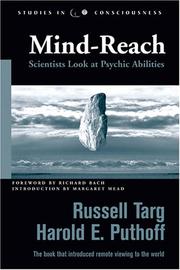
The Men Who Stare At Goats
Rating: 3.5/5 from 11 Google Books ratings
Covers the legacy of SRI-related military research.
eBay marketplace picks
Marketplace Samples
Live-tested eBay searches with available results related to this page.

Endnotes
1.
Source: nature.com
Title: Information transmission under conditions of sensory shielding | Nature
Link:https://www.nature.com/articles/251602a0
Source snippet
Information transmission under conditions of sensory shielding | Nature...
2.
Source: cia.gov
Link:https://www.cia.gov/readingroom/document/cia-rdp96-00787r000500410001-3
Source snippet
REMOTE VIEWING OF NATURAL TARGETS. SRI....This paper presents a series of experiments in which a subject is asked to describe a remot...
3.
Source: cia.gov
Link:https://www.cia.gov/readingroom/document/cia-rdp96-00787r000700050003-9
Source snippet
SUMMARY OF REMOTE-VIEWING OF URDF-3 - FOIA... remote-viewing experiment with his sketch of the rail-mounted gantry crane.... Price's...
4.
Source: scispace.com
Title: Sci Space Information transmission in remote viewing experiments
Link:https://scispace.com/pdf/information-transmission-in-remote-viewing-experiments-4jd6pdendv.pdf
5.
Source: nature.com
Title: Sensory cues invalidate remote viewing experiments | Nature
Link:https://www.nature.com/articles/292177a0
6.
Source: cia.gov
Link:https://www.cia.gov/readingroom/docs/CIA-RDP96-00789R002800180001-2.pdf
7.
Source: cia.gov
Link:https://www.cia.gov/readingroom/docs/CIA-RDP96-00791R000200180005-5.pdf
8.
Source: documentcloud.org
Link:https://www.documentcloud.org/documents/23069961-standard-remote-viewing-protocol-local-targets-sri-harold-e-puthoff-and-russell-targ/
9.
Source: nature.com
Title: Rebuttal of criticisms of remote viewing experiments | Nature
Link:https://www.nature.com/articles/292388a0
10.
Source: cia.gov
Link:https://www.cia.gov/readingroom/docs/CIA-RDP96-00791R000100500001-2.pdf
11.
Source: cia.gov
Link:https://www.cia.gov/readingroom/docs/CIA-RDP96-00791R000200240001-0.pdf
12.
Source: cia.gov
Link:https://www.cia.gov/readingroom/docs/NSA-RDP96X00790R000100040010-3.pdf
13.
Source: nature.com
Link:https://www.nature.com/articles/284191a0
14.
Source: cia.gov
Link:https://www.cia.gov/readingroom/document/cia-rdp96-00787r000100220001-8
15.
Source: cia.gov
Link:https://www.cia.gov/readingroom/docs/CIA-RDP96-00791R000200180006-4.pdf
16.
Source: cia.gov
Link:https://www.cia.gov/readingroom/docs/CIA-RDP79-00999A000200010002-3.pdf
17.
Source: cia.gov
Link:https://www.cia.gov/readingroom/document/cia-rdp96-00791r000200240001-0
18.
Source: cia.gov
Link:https://www.cia.gov/readingroom/document/cia-rdp96-00791r000100500001-2
19.
Source: cia.gov
Link:https://www.cia.gov/readingroom/docs/CIA-RDP96-00788R001700210010-1.pdf
20.
Source: cia.gov
Link:https://www.cia.gov/readingroom/docs/CIA-RDP96-00787R000200090017-5.pdf
21.
Source: cia.gov
Link:https://www.cia.gov/readingroom/docs/CIA-RDP99-01448R000402150001-6.pdf
22.
Source: scispace.com
Link:https://scispace.com/pdf/what-do-we-know-about-psi-the-first-decade-of-remote-viewing-42m4cti21j.pdf
23.
Source: scispace.com
Link:https://scispace.com/pdf/rebuttal-of-criticisms-of-remote-viewing-experiments-1j3arh0xxi.pdf
24.
Source: youtube.com
Title: Mind and Matter with Russell Targ (4K Reboot)
Link:https://www.youtube.com/watch?v=EhZ_ty3f4-M
Source snippet
Russell Targ - Remote Viewing & [Third Eye Spies]({{ 'third-eye-spies/' | relative_url }})...
25.
Source: youtube.com
Title: Russell Targ
Link:https://www.youtube.com/watch?v=E_cLp15CaPE
Source snippet
Scientific and Spiritual Implications of Psychic Abilities - Russell Targ...
26.
Source: nsarchive2.gwu.edu
Title: doc 57
Link:https://nsarchive2.gwu.edu/NSAEBB/NSAEBB438/docs/doc_57.pdf
27.
Source: Wikipedia
Title: Ingo Swann
Link:https://en.wikipedia.org/wiki/Ingo_Swann
28.
Source: Wikipedia
Title: Remote viewing
Link:https://en.wikipedia.org/wiki/Remote_viewing
29.
Source: Wikipedia
Title: Sensory leakage
Link:https://en.wikipedia.org/wiki/Sensory_leakage
30.
Source: ics.uci.edu
Link:https://www.ics.uci.edu/~jutts/may.pdf
31.
Source: sixthsensereader.org
Title: remote viewing
Link:https://sixthsensereader.org/about-the-book/abcderium-index/remote-viewing/
32.
Source: nsarchive2.gwu.edu
Title: DIA 21
Link:https://nsarchive2.gwu.edu/NSAEBB/NSAEBB534-DIA-Declassified-Sourcebook/documents/DIA-21.pdf
Additional References
33.
Source: youtube.com
Title: Inside Operation Stargate: The CIA’s Psychic Spy Experiment
Link:https://www.youtube.com/watch?v=oasTnsLw_n8
Source snippet
Third Eye Spies Interview provides an in-depth discussion with Russell Targ regarding his pioneering remote viewing experiments at the St...
34.
Source: reddit.com
Link:https://www.reddit.com/r/remoteviewing/comments/1t2z7xa/found_something_interesting_in_the_declassified/
35.
Source: academia.edu
Link:https://www.academia.edu/74804595/Information_transmission_under_conditions_of_sensory_shielding
36.
Source: researchgate.net
Link:https://www.researchgate.net/publication/248497861_Remote_viewing_as_applied_to_futures_studies
37.
Source: researchgate.net
Link:https://www.researchgate.net/publication/370491006_Follow-up_on_the_US_Central_Intelligence_Agency%27s_CIA_remote_viewing_experiments
38.
Source: researchgate.net
Link:https://www.researchgate.net/publication/333228024_An_Assessment_of_the_Evidence_for_Psychic_Functioning
39.
Source: slideshare.net
Link:https://www.slideshare.net/slideshow/an-evaluation-of-remote-viewing-research-and-applications-air1995pdf/257460594
40.
Source: e-space.mmu.ac.uk
Link:https://e-space.mmu.ac.uk/631983/3/Brain%20and%20Behavior%20-%202023%20-%20Escol%20%E2%80%90Gasc%20n%20-%20Follow%E2%80%90up%20on%20the%20U%20S%20%20Central%20Intelligence%20Agency%20s%20%20CIA%20%20remote%20viewing.pdf
41.
Source: skepsis.nl
Link:https://skepsis.nl/stargate/
42.
Source: bazaarmodel.net
Link:https://bazaarmodel.net/Onderwerpen/remoteviewingCIA/CIA-InitiatedRV.html
Topic Tree