Within Statistics
Can Remote Viewing Ever Be Actionable?
For remote viewing to be useful, it must move beyond ranked targets and produce specific details people can verify and act on.
On this page
- What actionable information means outside the lab
- Why false leads and vague details matter
- Tests that would better mimic real decisions
Page outline Jump by section
Introduction
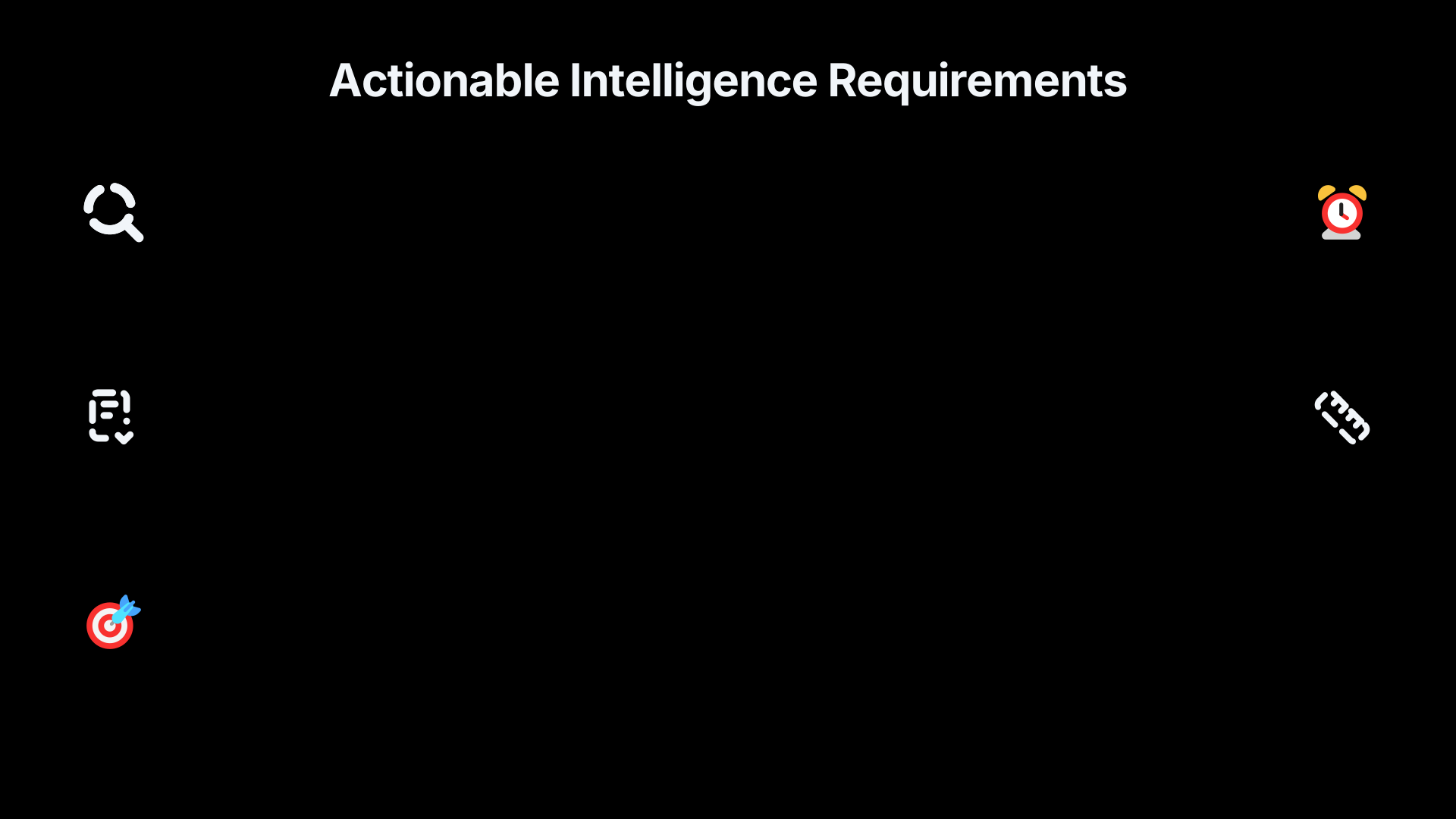
A remote-viewing experiment can produce results that are statistically above chance without producing information that anyone can confidently use. That distinction is crucial. In research, an above-chance score means that, across many trials, the results differ from what a specified chance model predicts. In practice, however, decision-makers need information that is specific, timely, independently verifiable and reliable enough to justify action. Those are much higher standards.
This gap between statistical performance and operational usefulness has been central to debates about remote viewing for decades. Even researchers who regarded some laboratory findings as statistically interesting acknowledged that practical use depends on whether individual sessions consistently deliver accurate, actionable details rather than broad impressions or post hoc matches. The 1995 external review commissioned for the U.S. intelligence community illustrates this distinction: it separated discussion of laboratory findings from the much harder question of operational value and concluded that the programme had not demonstrated actionable intelligence.[CIA+2National Security Archive]cia.govAN EVALUATION OF THE REMOTE VIEWING PROGRAMJessica Utts, Remote viewing failed to produce actionable intelligence. Conclusions researc…
What makes information actionable outside the laboratory?
Outside an experiment, information becomes actionable only if it helps someone make a better decision than they otherwise would. Whether the context is intelligence, search and rescue, criminal investigations or commercial forecasting, useful information normally has several characteristics:
- Specificity: identifiable people, places, objects or events rather than broad descriptions.
- Timeliness: available early enough to influence a decision.
- Accuracy: more correct than incorrect in ways that matter.
- Independent verification: capable of being checked before major action is taken.
- Consistency: reliable across repeated cases rather than occasional successes.
Laboratory remote-viewing studies often ask a different question. A participant may produce a narrative that is later compared with one correct target and several decoys. If independent judges rank the correct target unusually highly across many sessions, the experiment may register a statistically significant effect. That scoring system measures discrimination under experimental conditions, not whether a commander, investigator or emergency manager could safely act on the information in real time.[CIA]cia.govAN EVALUATION OF THE REMOTE VIEWING PROGRAMJessica Utts, Remote viewing failed to produce actionable intelligence. Conclusions researc…
The distinction matters because practical decisions usually involve many possible alternatives, uncertain consequences and limited opportunities for reinterpretation after the outcome is known.
Why vague descriptions create false confidence
One of the recurring criticisms in operational assessments is that remote-viewing reports frequently contain mixtures of correct, incorrect and ambiguous statements. A report may include impressions such as “water”, “metal structure”, “movement” or “large building”. Such elements can appear meaningful after a target is revealed because many locations or situations contain similar features.
This creates two related problems.
First, subjective interpretation becomes unavoidable. Analysts may disagree over which statements matter, which are metaphorical and which should be ignored. Different readers can reach different conclusions from the same report.
Second, confirmation bias becomes more likely. Once the true target is known, people naturally notice successful correspondences while discounting misses or contradictions. This retrospective matching is much easier than making a correct prediction before independent evidence is available.
The American Institutes for Research review repeatedly highlighted these operational concerns, noting that reports often required substantial interpretation and lacked the specificity needed for intelligence use, even where some laboratory findings appeared statistically interesting.[National Security Archive]nsarchive2.gwu.edudoc 57National Security ArchiveAn Evaluation of Remote Viewing: Research and…by MD Mumford · 1995 · Cited by 76 — Remote viewing failed to p…
Why false leads matter more than occasional hits
Decision-makers rarely judge information by whether it is sometimes correct. They judge it by the balance between useful hits and costly mistakes.
A remote-viewing report that correctly mentions one feature while incorrectly identifying five others can still receive a respectable laboratory score if judges consider the overall similarity to the target. In operational settings, however, each incorrect detail carries a cost.
False leads may:
- divert personnel and resources;
- delay investigation of more promising evidence;
- increase financial costs;
- reduce confidence in genuinely valuable intelligence;
- encourage decisions based on chance correspondences.
For this reason, operational users require not merely above-chance performance but an error rate low enough to improve outcomes compared with existing methods.
The 1995 intelligence review concluded that there was no documented case in which remote-viewing information had guided intelligence operations successfully. Rather than focusing solely on whether anomalous effects existed, the review evaluated whether the information actually improved operational decisions and answered that question negatively.[CIA]cia.govAN EVALUATION OF REMOTE VIEWINGIn no case had the information provided ever been used to guide intelligence operations. Thus, remote v…
Why laboratory scoring may overestimate practical usefulness
Many experimental scoring systems intentionally simplify the judging task.
For example, a judge may compare one viewing transcript with four or five candidate targets. Even modest differences in average rankings can become statistically significant after many trials.
Real-world decisions rarely resemble this structure.
Instead, analysts may face:
- hundreds or thousands of possible locations;
- incomplete or changing information;
- no predefined list of candidate targets;
- pressure to decide before outcomes are known;
- serious consequences for false positives.
Success in a constrained ranking exercise therefore does not automatically predict success in open-ended operational environments.
This does not mean the experimental findings are meaningless. It means they answer a narrower question than practical users typically care about.
What would count as convincing operational evidence?
If remote viewing were to demonstrate practical value, stronger tests would resemble genuine decision environments rather than simplified laboratory exercises.
Useful operational designs would include:
- Prospective testing: predictions recorded before outcomes are known.
- Predefined success criteria: objective scoring rules published in advance.
- Independent evaluation: analysts unaware of the intended targets or hypotheses.
- Comparison with conventional methods: showing improvement over existing investigative techniques.
- Decision-based outcomes: measuring whether choices made using remote-viewing information outperform choices made without it.
The most informative question is therefore not simply whether descriptions resemble targets more often than chance predicts, but whether those descriptions measurably improve real decisions.
The continuing debate
Supporters of remote-viewing research often argue that statistically significant laboratory effects deserve further investigation and that operational failures should not automatically invalidate the experimental findings. Jessica Utts, for example, argued that the statistical evidence warranted serious scientific attention, while also recognising that scientific and operational questions are distinct.[UC Davis]ucdavis.eduintelligence agencies. The firm was contracted byUC Davis'Psychic Spying' Research Produces Credible Evidence28 Nov 1995 — Utts and Hyman evaluated a 20-year, $20 million basic research…
Critics respond that operational usefulness is the decisive test. Ray Hyman argued that interesting statistical departures from chance do not establish paranormal functioning or demonstrate practical reliability, particularly when independent replication, theoretical explanation and real-world predictive performance remain uncertain.[ResearchGate]researchgate.netEvaluation of Program on 'Anomalous Mental Phenomena'Jessica Utts and I were commissioned to evaluate the research on remote…
The practical disagreement therefore extends beyond whether above-chance effects exist. It concerns whether those effects are large, stable and precise enough to produce information that consistently changes decisions for the better.
The practical threshold is much higher than statistical significance
The central lesson is that statistical significance and actionable information answer different questions.
An above-chance laboratory result asks whether a collection of trials differs from random expectation under specified experimental rules. Actionable information asks whether a single report provides sufficiently accurate, specific and timely guidance to justify real-world action.
Until remote-viewing evidence demonstrates that kind of consistent decision-making advantage under realistic operational conditions, positive laboratory scores alone cannot establish practical usefulness. The history of formal evaluations, particularly those conducted for intelligence applications, shows that crossing the statistical threshold has not yet been enough to cross the operational one.[National Security Archive+2CIA]nsarchive2.gwu.edudoc 57National Security ArchiveAn Evaluation of Remote Viewing: Research and…by MD Mumford · 1995 · Cited by 76 — Remote viewing failed to p…
Amazon book picks
Further Reading
Books and field guides related to Can Remote Viewing Ever Be Actionable?. Use these as the next step if you want deeper reading beyond the article.
Thinking, Fast and Slow
Explains judgment, bias, and decision quality relevant to actionable evidence.
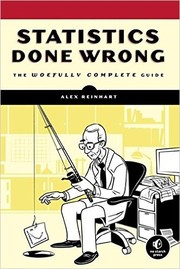
Statistics Done Wrong
Explains why statistical findings do not automatically translate into practical usefulness.

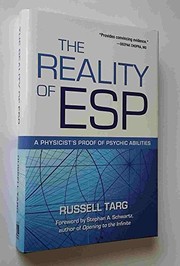
The Reality of ESP: A Physicist's Proof of Psychic Abilities
Represents the pro-ESP interpretation being evaluated.
eBay marketplace picks
Marketplace Samples
Live-tested eBay searches with available results related to this page.



Endnotes
1.
Source: cia.gov
Link:https://www.cia.gov/readingroom/docs/CIA-RDP96-00791R000200180005-5.pdf
Source snippet
AN EVALUATION OF THE REMOTE VIEWING PROGRAMJessica Utts, Remote viewing failed to produce actionable intelligence. Conclusions researc...
2.
Source: researchgate.net
Link:https://www.researchgate.net/publication/267978941Evaluation_of_Program_on%27Anomalous_Mental_Phenomena%27
Source snippet
Evaluation of Program on 'Anomalous Mental Phenomena'Jessica Utts and I were commissioned to evaluate the research on remote...
3.
Source: cia.gov
Link:https://www.cia.gov/readingroom/docs/CIA-RDP96-00791R000200180006-4.pdf
Source snippet
AN EVALUATION OF REMOTE VIEWINGIn no case had the information provided ever been used to guide intelligence operations. Thus, remote v...
4.
Source: researchgate.net
Link:https://www.researchgate.net/publication/403178755_The_Star_Gate_Archives_Reports_of_the_United_States_Government_Sponsored_Psi_Program_1972-1995_Volume_4_Operational_Remote_Viewing_Memorandums_and_Reports
Source snippet
(PDF) The [Star Gate]({{ 'star-gate/' | relative_url }}) Archives: Reports of the United States...26 Apr 2026 — The second component was a review of the operational applicat...
5.
Source: nsarchive2.gwu.edu
Title: doc 57
Link:https://nsarchive2.gwu.edu/NSAEBB/NSAEBB438/docs/doc_57.pdf
Source snippet
National Security ArchiveAn Evaluation of Remote Viewing: Research and...by MD Mumford · 1995 · Cited by 76 — Remote viewing failed to p...
6.
Source: ucdavis.edu
Title: intelligence agencies. The firm was contracted by
Link:https://www.ucdavis.edu/news/psychic-spying-research-produces-credible-evidence
Source snippet
UC Davis'Psychic Spying' Research Produces Credible Evidence28 Nov 1995 — Utts and Hyman evaluated a 20-year, $20 million basic research...
7.
Source: Wikipedia
Title: Ray Hyman
Link:https://en.wikipedia.org/wiki/Ray_Hyman
8.
Source: Wikipedia
Title: Remote viewing
Link:https://en.wikipedia.org/wiki/Remote_viewing
Source snippet
Remote viewingThe program ran from 1975 to 1995 and ended after evaluators concluded that remote viewers consistently failed to produc...
9.
Source: ics.uci.edu
Link:https://www.ics.uci.edu/~jutts/may.pdf
Source snippet
review of the departmentby C EDwIN · 1996 — "Evaluating the Utility of Remote Viewing in Intelligence Operations," they list a number of...
Additional References
10.
Source: reddit.com
Link:https://www.reddit.com/r/remoteviewing/comments/1dazs09/creation_of_study_on_statistical_evidence_of/
11.
Source: reddit.com
Title: the cias 1995 remote viewing evaluation didnt say
Link:https://www.reddit.com/r/StargateFiles/comments/1rjdnpn/the_cias_1995_remote_viewing_evaluation_didnt_say/
Source snippet
The CIA's 1995 “Remote Viewing” Evaluation Didn't Say It Was...The CIA's 1995 “Remote Viewing” Evaluation Didn't Say It Was Fake — It Sa...
12.
Source: pmc.ncbi.nlm.nih.gov
Title: Follow‐up on the U.S
Link:https://pmc.ncbi.nlm.nih.gov/articles/PMC10275521/
Source snippet
Central Intelligence Agency's (CIA...by Á Escolà‐Gascón · 2023 · Cited by 10 — Programs addressed remote viewing (RV), that is, determin...
13.
Source: youtube.com
Link:http://www.youtube.com/watch?v=QaJqpwQvTsQ
Source snippet
The Complete File: Ingo Swann and Project [Stargate]({{ 'stargate/' | relative_url }}) — The CIA's Secret Psychic Program...
14.
Source: youtube.com
Title: Remote Viewing: The Secrets of the Stargate Project
Link:http://www.youtube.com/watch?v=wn3fkBU1JQ4
Source snippet
Remote viewing Stargate project intelligence analysis Project Stargate Declassified — Psychic Spies, Secret Budgets & the Mind Wars of th...
15.
Source: slideshare.net
Link:https://www.slideshare.net/slideshow/an-evaluation-of-remote-viewing-research-and-applications-air1995pdf/257460594
Source snippet
actionable intelligence. The program review...
16.
Source: youtube.com
Link:http://www.youtube.com/watch?v=05waNF8_QWI
Source snippet
Remote Viewing: The Secrets of the Stargate Project...
17.
Source: youtube.com
Title: Uncovering the CIA’s Secret Weapon: Psychic Spies
Link:http://www.youtube.com/watch?v=cNJwV3Ksxa8
Source snippet
Project Stargate Declassified — Psychic Spies, Secret Budgets & the Mind Wars of the CIA...
18.
Source: skeptics.stackexchange.com
Title: Is this true?Read more
Link:https://skeptics.stackexchange.com/questions/17741/have-remote-viewing-tests-shown-a-positive-effect-5-15-above-chance
Source snippet
remote viewing tests shown a positive effect, 5-15%...14 Sept 2013 — Utts maintained that there had been a statistically significant pos...
19.
Source: koestlerunit.wordpress.com
Title: wiseman milton 1998
Link:https://koestlerunit.wordpress.com/wp-content/uploads/2015/06/wiseman-milton-1998.pdf
Source snippet
(Utts, 1995a; Hyman, 1995a) and a concluding section that outlined the main points of.Read more...
Topic Tree