Within Statistics
Why the Government Still Walked Away
The AIR evaluation treated laboratory statistics and intelligence usefulness as separate questions, with very different answers.
On this page
- What AIR accepted and what it rejected
- Why vague outputs failed intelligence users
- How operational standards differ from lab scoring
Page outline Jump by section
Introduction
The 1995 review conducted by the American Institutes for Research (AIR) is the clearest example of the distinction between statistical evidence and practical proof in the history of remote viewing. Commissioned after more than two decades of U.S. government-funded research, the review did not simply ask whether laboratory experiments produced above-chance results. It asked a more demanding question: did remote viewing provide intelligence that decision-makers could reliably use?
The answer turned out to be divided. Statistician Jessica Utts concluded that the laboratory evidence was strong enough to reject chance as the sole explanation for the reported results. Psychologist Ray Hyman accepted that some experiments showed statistically unusual outcomes but argued that the evidence was insufficient to establish paranormal functioning. AIR’s broader programme evaluation then reached a separate operational judgement: regardless of the laboratory findings, there was no convincing evidence that remote viewing had delivered intelligence of practical value. That distinction shaped the CIA’s decision to end the programme.[CIA+2National Security Archive]cia.govAN EVALUATION OF THE REMOTE VIEWING PROGRAMThe panel included two noted experts in the area of parapsychology: Dr. Jessica Utts, a Pro…
What AIR accepted and what it rejected
The AIR review was commissioned after the CIA assumed responsibility for the long-running Stargate programme in 1995. Rather than relying on anecdotes, the reviewers examined both the experimental research conducted primarily at Stanford Research Institute (SRI) and later at Science Applications International Corporation (SAIC), as well as records of operational use.[CIA]cia.govAN EVALUATION OF THE REMOTE VIEWING PROGRAMThe panel included two noted experts in the area of parapsychology: Dr. Jessica Utts, a Pro…
A key feature of the review was that it deliberately separated two questions that are often conflated:
- Did some laboratory experiments produce statistically significant results?
- Did those results translate into useful intelligence capability?
Jessica Utts answered the first question positively. After reviewing controlled experiments, she argued that the statistical evidence exceeded what would normally be accepted in many scientific fields and that an anomalous effect deserved recognition as genuine. She maintained that the observed deviations from chance were too consistent to dismiss as coincidence alone.[CIA]cia.govAN EVALUATION OF THE REMOTE VIEWING PROGRAMThe panel included two noted experts in the area of parapsychology: Dr. Jessica Utts, a Pro…
Ray Hyman reached a narrower conclusion. He acknowledged that the more recent SAIC experiments appeared methodologically stronger than many earlier studies and that some statistical effects could not simply be dismissed as random fluctuations. However, he argued that methodological uncertainties, incomplete independent replication, and the absence of a convincing explanatory framework prevented the evidence from establishing psychic functioning as a scientific fact. He viewed the findings as grounds for further research rather than confirmation.[PhilPapers]philpapers.orgEvaluation of Program on Anomalous Mental Phenomena.by R Hyman · Cited by 74 — Professor Jessica Utts and I were given the task…
Importantly, these differing scientific interpretations did not determine AIR’s overall recommendation. The programme review incorporated operational evidence alongside laboratory research.
Why vague outputs failed intelligence users
The operational question proved far more difficult than the statistical one.
Intelligence agencies require information that is not merely interesting but actionable. Reports must help answer concrete questions, distinguish among competing hypotheses, and support decisions under uncertainty. They must also be sufficiently reliable that analysts know when to trust them.
AIR concluded that remote-viewing products generally failed this standard. The review found no documented evidence that the information generated had provided intelligence value commensurate with the programme’s cost or justified continued operational use.[National Security Archive]nsarchive2.gwu.eduNational Security ArchiveAn Evaluation of Remote Viewing: Research and…by MD Mumford · 1995 · Cited by 75 — The part of the program re…
Several recurring problems limited operational usefulness:
- Descriptions were frequently vague. Reports often contained broad imagery or symbolic impressions rather than precise, verifiable facts.
- Accurate details were mixed with incorrect ones. Even when sessions appeared to contain striking correspondences, these were embedded among numerous errors and irrelevant statements.
- Analysts lacked objective confidence measures. Users had no reliable way to distinguish unusually accurate sessions from ordinary failures before independent verification.
- Interpretation depended heavily on hindsight. Many apparent successes became convincing only after the target or event was already known, reducing prospective intelligence value.[National Security Archive]nsarchive2.gwu.eduNational Security ArchiveAn Evaluation of Remote Viewing: Research and…by MD Mumford · 1995 · Cited by 75 — The part of the program re…
These shortcomings reflect a practical problem rather than a purely statistical one. Intelligence consumers need information that reduces uncertainty before decisions are made. Information that can only be recognised as meaningful afterwards offers little operational advantage.
How operational standards differ from laboratory scoring
The AIR review highlighted an important mismatch between laboratory success criteria and intelligence requirements.
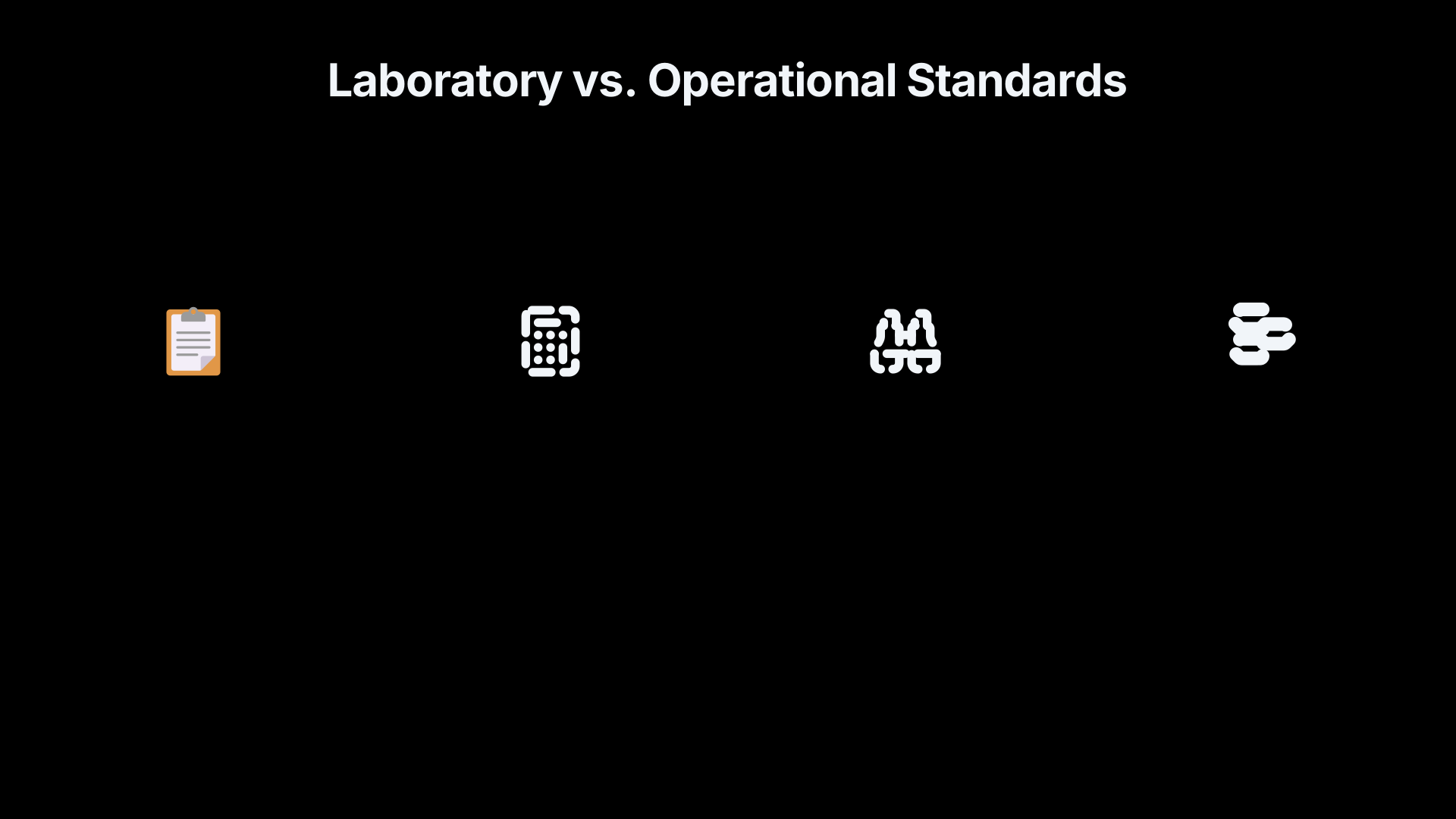
In laboratory remote-viewing experiments, judges often compared a participant’s description against a small set of possible targets. A response could earn a favourable ranking because it resembled one target more closely than several alternatives. Statistical analysis then examined aggregate performance across many trials.[CIA]cia.govAN EVALUATION OF THE REMOTE VIEWING PROGRAMThe panel included two noted experts in the area of parapsychology: Dr. Jessica Utts, a Pro…
Operational intelligence works differently.
Instead of selecting among four or five known alternatives, analysts face an effectively unlimited number of possibilities. Information must identify real-world locations, people or events without benefiting from constrained comparisons. Success therefore requires much greater specificity than laboratory scoring systems demand.
This difference creates several practical challenges:
- Laboratory scoring can reward partial similarities across many trials.
- Intelligence work requires individual reports to be sufficiently detailed for immediate use.
- Small statistical effects accumulated across experiments do not automatically produce dependable single-case predictions.
- An intelligence agency must evaluate both accuracy and consistency, not merely whether performance averages slightly above chance.
The AIR reviewers effectively argued that the second standard is substantially higher than the first.[National Security Archive]nsarchive2.gwu.eduNational Security ArchiveAn Evaluation of Remote Viewing: Research and…by MD Mumford · 1995 · Cited by 75 — The part of the program re…
Why the government still walked away
The CIA’s decision to discontinue the programme is often described as a rejection of the laboratory evidence. The historical record is more nuanced.
The review did not produce unanimous agreement that remote-viewing experiments had failed statistically. Indeed, one reviewer interpreted the evidence as persuasive, while the other regarded it as intriguing but inconclusive. Instead, the decisive issue became operational performance.
AIR’s executive assessment concluded that there was no convincing documentation showing that remote viewing had generated intelligence with sufficient practical utility to justify continued government investment. Even if some laboratory anomalies existed, they had not matured into a dependable intelligence capability after more than twenty years of research and operational testing.[National Security Archive]nsarchive2.gwu.eduNational Security ArchiveAn Evaluation of Remote Viewing: Research and…by MD Mumford · 1995 · Cited by 75 — The part of the program re…
This distinction explains why debates about statistical significance have continued in parapsychology while the U.S. intelligence community largely closed the operational chapter. Government agencies ultimately evaluate programmes according to mission outcomes rather than statistical curiosities. A small but genuine laboratory effect, if it exists, is not enough unless it consistently improves real-world decision-making.

The lasting significance of the AIR review
The 1995 AIR review remains central to discussions of remote viewing because it separated two questions that are often treated as identical.
One concerns whether carefully controlled experiments produce results that differ from chance expectations. The other concerns whether those results can be transformed into a reliable operational tool.
The review showed that these questions can receive different answers. It is possible to debate the interpretation of statistical findings while simultaneously concluding that the evidence falls short of the reliability, precision and consistency required for intelligence work. That distinction remains one of the most important lessons from the government’s evaluation and continues to frame discussions of remote viewing in both scientific and policy contexts.[CIA+2National Security Archive]cia.govAN EVALUATION OF THE REMOTE VIEWING PROGRAMThe panel included two noted experts in the area of parapsychology: Dr. Jessica Utts, a Pro…
Amazon book picks
Further Reading
Books and field guides related to Why the Government Still Walked Away. Use these as the next step if you want deeper reading beyond the article.
Statistics Done Wrong
Helps readers understand why evidence may fail operational tests.
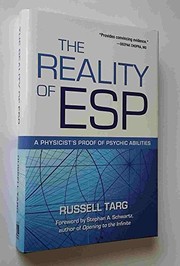
The Reality of ESP: A Physicist's Proof of Psychic Abilities
Offers the perspective contrasted with the AIR conclusions.

Reading the Enemy's Mind : Inside Star Gate
Provides context for operational military remote viewing.
eBay marketplace picks
Marketplace Samples
Live-tested eBay searches with available results related to this page.



Endnotes
1.
Source: cia.gov
Link:https://www.cia.gov/readingroom/docs/CIA-RDP96-00791R000200180005-5.pdf
Source snippet
AN EVALUATION OF THE REMOTE VIEWING PROGRAMThe panel included two noted experts in the area of parapsychology: Dr. Jessica Utts, a Pro...
2.
Source: philpapers.org
Link:https://philpapers.org/rec/HYMEOP
Source snippet
Evaluation of Program on Anomalous Mental Phenomena.by R Hyman · Cited by 74 — Professor Jessica Utts and I were given the task...
3.
Source: cia.gov
Link:https://www.cia.gov/readingroom/docs/CIA-RDP96-00791R000200180006-4.pdf
Source snippet
AN EVALUATION OF REMOTE VIEWINGHyman was selected to represent a more skeptical position. Both, however, are viewed as fair and open-mind...
4.
Source: nsarchive2.gwu.edu
Link:https://nsarchive2.gwu.edu/NSAEBB/NSAEBB438/docs/doc_57.pdf
Source snippet
National Security ArchiveAn Evaluation of Remote Viewing: Research and...by MD Mumford · 1995 · Cited by 75 — The part of the program re...
5.
Source: Wikipedia
Title: Remote viewing
Link:https://en.wikipedia.org/wiki/Remote_viewing
Source snippet
Remote viewingIn 1995, the CIA hired the American Institutes for Research (AIR) to perform... Reviewers included Ray Hyman and Jessic...
6.
Source: Wikipedia
Title: Jessica Utts
Link:https://en.wikipedia.org/wiki/Jessica_Utts
Source snippet
Jessica UttsInvestigation of remote viewing. edit. In 1995, the American Institutes for Research (AIR) appointed a panel consisting pr...
Additional References
7.
Source: reddit.com
Title: The CIAs remote viewing documents are confusing as hell
Link:https://www.reddit.com/r/HighStrangeness/comments/14x6pu0/the_cias_remote_viewing_documents_are_confusing/
Source snippet
July 11, 2023 — The Stargate project produced zero evidence of remote viewing and that it's not real, because reddit has a heavy ma...
Published: July 11, 2023
8.
Source: researchgate.net
Link:https://www.researchgate.net/publication/267978941Evaluation_of_Program_on%27Anomalous_Mental_Phenomena%27
Source snippet
related phenomena which was carried out at Stanford Re-search Institute...Read more...
9.
Source: ucdavis.edu
Title: [psychic spying]({{ ‘psychic-spying/’ | relative_url }}) research produces credible evidence
Link:https://www.ucdavis.edu/news/psychic-spying-research-produces-credible-evidence
Source snippet
'Psychic Spying' Research Produces Credible Evidence28 Nov 1995 — The main psychic ability tested in the research program is called "remo...
10.
Source: facebook.com
Link:https://www.facebook.com/Central.Intelligence.Agency/posts/has-cia-ever-studied-psychic-phenomena-or-remote-viewingits-a-question-we-get-as/5058607874154178/
Source snippet
concluded that while some accurate remote viewing experiences...Read more...
11.
Source: skeptics.stackexchange.com
Title: have remote viewing tests shown a positive effect 5 15 above chance
Link:https://skeptics.stackexchange.com/questions/17741/have-remote-viewing-tests-shown-a-positive-effect-5-15-above-chance
Source snippet
Utts maintained that there had been a statistically significant positive effect, with some...Read more...
12.
Source: pmc.ncbi.nlm.nih.gov
Title: PMCFollow‐up on the U.S
Link:https://pmc.ncbi.nlm.nih.gov/articles/PMC10275521/
Source snippet
Central Intelligence Agency's (CIA...by Á Escolà‐Gascón · 2023 · Cited by 10 — Reports on the declassified SRI and SAIC experiments were...
13.
Source: e-space.mmu.ac.uk
Title: Manuscript Symplectic system Explore
Link:https://e-space.mmu.ac.uk/632411/3/Manuscript_Symplectic_system_Explore.pdf
Source snippet
on Escolà-Gascón et al.'s (2023) remote viewing...by Á Escolà-Gascón · 2024 · Cited by 1 — Central Intelligence Agency (CIA) hired two s...
14.
Source: Wikipedia
Title: Stargate Project (U.S. Army unit)
Link:https://en.wikipedia.org/wiki/Stargate_Project_%28U.S._Army_unit%29
Source snippet
Stargate Project (U.S. Army unit)The Stargate Project was terminated and declassified in 1995 after a commissioned review by the CIA c...
15.
Source: youtube.com
Title: Project Stargate’s Strangest Findings Before It Was Shut Down | ARCHIVE FILE 004
Link:http://www.youtube.com/watch?v=4bMJkOENDew
Source snippet
The CIA's Psychic Spies: The Declassified History of Remote Viewing (Project [STAR GATE]({{ 'star-gate/' | relative_url }}))...
16.
Source: researchgate.net
Title: involving Utts and Ray
Link:https://www.researchgate.net/publication/333228024_An_Assessment_of_the_Evidence_for_Psychic_Functioning
Source snippet
An Assessment of the Evidence for Psychic Functioning"remote viewing," in which people try to gain a sense of distant or unseen targets...
Topic Tree