Within Pop Culture
How Goats Turned Psychic Spies Mainstream
Jon Ronson's book and the later film made psychic spying memorable by mixing real military curiosity with satire and exaggeration.

On this page
- What Ronson investigated versus what the film fictionalized
- Why comedy made the subject more memorable
- How military weirdness reshaped public perception
Page outline Jump by section
Introduction
The Men Who Stare at Goats did more than popularise remote viewing. Jon Ronson’s 2004 investigative book, and the 2009 satirical film it inspired, introduced mainstream audiences to a wider world of Cold War military experiments, New Age ideas and extraordinary claims about psychic warfare. For many readers and viewers, this was their first encounter with stories of “psychic spies”, soldiers attempting remote viewing, officers interested in altered states of consciousness, and rumours that military researchers explored abilities ranging from telepathy to walking through walls.[Wikipedia]WikipediaThe Men Who Stare at GoatsThe Men Who Stare at Goats

The lasting appeal of the story lies in its unusual balance of fact and exaggeration. Ronson investigated real people, genuine military documents and authentic Cold War programmes, but he also documented anecdotes whose truth remains disputed. The later film amplified the absurdity for comic effect, creating a cultural image in which remote viewing became inseparable from military eccentricity.
How Jon Ronson Found the Story
Rather than setting out to write a history of remote viewing alone, Ronson followed a chain of interviews with retired soldiers, intelligence veterans and unconventional military thinkers. His investigation expanded into a broader examination of how sections of the US military, particularly during the late 1970s and 1980s, experimented with ideas borrowed from the Human Potential Movement and New Age culture.[Wikipedia]WikipediaThe Men Who Stare at GoatsThe Men Who Stare at Goats
One recurring figure was retired Lieutenant Colonel Jim Channon, whose proposal for a “First Earth Battalion” imagined soldiers who combined conventional military skills with meditation, intuition, non-lethal conflict resolution and heightened mental awareness. Channon’s manual blended serious organisational reform with concepts that many readers found bizarre, including psychic perception and unconventional battlefield techniques. Although the proposal was never adopted as official military doctrine, parts of it circulated among officers interested in alternative approaches after the Vietnam War.[Wikipedia]WikipediaFirst Earth BattalionFirst Earth Battalion
Ronson also interviewed figures connected with military intelligence, including officers associated with remote viewing programmes and paranormal research. These interviews revealed a complicated picture: genuine government interest in anomalous phenomena existed, but the boundaries between documented projects, personal belief and anecdotal storytelling were often blurred.[Wikipedia]WikipediaThe Men Who Stare at GoatsThe Men Who Stare at Goats
What the Book Investigated Versus What the Film Fictionalised
The book is investigative journalism. The film is a satirical comedy inspired by real events.
Ronson’s book follows interviews, historical documents and personal recollections, often leaving readers uncertain where established fact ends and legend begins. Rather than presenting a single conspiracy, it explores how unusual ideas moved through military institutions, sometimes attracting influential supporters despite limited evidence.[Wikipedia]WikipediaThe Men Who Stare at GoatsThe Men Who Stare at Goats
The 2009 film simplifies this complexity into a narrative centred on fictional characters loosely based on several real individuals. George Clooney’s Lyn Cassady combines traits from multiple people connected to psychic military stories rather than portraying a single historical figure. Jeff Bridges’ Bill Django is inspired by Jim Channon, while Ewan McGregor’s journalist resembles Ronson himself. Events from different decades are compressed into a single adventure set during the Iraq War.[Wikipedia]WikipediaThe Men Who Stare at Goats (filmThe Men Who Stare at Goats (film
Several elements became more fantastical on screen:
- The film suggests psychic abilities might genuinely work, although always with comic ambiguity.
- Separate historical personalities were merged into composite characters.
- Timelines spanning decades were condensed into one mission.
- Dramatic action replaced much of the book’s investigative uncertainty.
The famous promotional line—”More of this is true than you would believe”—captures the film’s approach. It acknowledges a factual foundation while encouraging audiences to enjoy the absurdity rather than distinguish carefully between verified events and speculation.[Wikipedia]WikipediaThe Men Who Stare at Goats (filmThe Men Who Stare at Goats (film
Why Comedy Made Remote Viewing More Memorable
The success of The Men Who Stare at Goats illustrates how humour can shape public understanding of unusual historical subjects.
Remote viewing had previously appeared mostly in specialist books, documentaries or discussions of intelligence history. Ronson instead presented the material as an investigation into institutional eccentricity. Readers encountered stories about officers attempting to influence animals mentally, experimenting with meditation or believing that extraordinary mental abilities could transform warfare. Even when these claims were presented sceptically, they were memorable because they were funny.[Wikipedia]WikipediaThe Men Who Stare at GoatsThe Men Who Stare at Goats
The film amplified this effect. Rather than asking audiences to decide whether psychic spying worked, it invited them to laugh at the strange mixture of idealism, bureaucracy and Cold War anxiety that allowed such projects to receive attention.
Comedy also lowered the barrier to engagement. Viewers who might never have read intelligence histories or parapsychology research could enjoy an entertaining story while absorbing the surprising fact that genuine government programmes had investigated phenomena including remote viewing. In this way, satire became an unexpected form of historical education, even if many details were simplified.
How Military Weirdness Changed Public Perception
Before Ronson’s work reached a wide audience, remote viewing was often discussed within paranormal communities or in specialist accounts of intelligence programmes. Afterwards, it became associated with a broader cultural image of “military weirdness”.
This label encompasses more than psychic spying. It includes stories about unconventional weapons research, altered states of consciousness, attempts to improve soldier performance through meditation, experiments with non-lethal technologies and various fringe proposals that circulated during the Cold War. Some of these projects were documented and officially funded; others remained proposals, rumours or isolated anecdotes. Ronson’s central insight was that these different strands often intersected through networks of individuals rather than forming a single secret master programme.[Wikipedia]WikipediaThe Men Who Stare at GoatsThe Men Who Stare at Goats
As a result, public discussion of remote viewing shifted. Instead of being viewed solely as a paranormal claim, it became part of a larger narrative about how governments sometimes investigate improbable ideas during periods of strategic uncertainty. The story therefore became less about whether psychic abilities exist and more about why institutions with enormous resources occasionally pursue unconventional possibilities.
The Goat Story as Cultural Symbol
Ironically, the goat itself became more famous than remote viewing.
The title refers to claims that specially trained personnel attempted to stop a goat’s heart through concentrated mental effort. Whether particular demonstrations occurred exactly as later retold remains disputed, and historians have noted that many versions rely heavily on anecdotal testimony rather than independently verified documentation. Nevertheless, the image proved unforgettable because it distilled the wider story into a single absurd question: could serious military organisations ever believe something so extraordinary?[Wikipedia]WikipediaThe Men Who Stare at GoatsThe Men Who Stare at Goats
That symbolic power explains why the title continues to appear whenever discussions turn to psychic warfare, Cold War experimentation or government interest in paranormal research. Even people who know little about remote viewing often recognise the phrase “the men who stare at goats”.
The Lasting Legacy
More than two decades after the book’s publication, The Men Who Stare at Goats remains one of the principal gateways through which the public encounters remote viewing. It did not persuade most audiences that psychic spying works, nor did it dismiss every historical claim as pure fantasy. Instead, it highlighted a stranger reality: documented military institutions genuinely explored ideas that today often sound like satire.[Wikipedia]WikipediaThe Men Who Stare at GoatsThe Men Who Stare at Goats
That balance between documented history and comic storytelling explains the work’s enduring influence. It transformed remote viewing from an obscure Cold War intelligence topic into a widely recognised cultural reference point, while permanently linking psychic spies with the broader mythology of military experimentation at the edges of conventional science.
Amazon book picks
Further Reading
Books and field guides related to How Goats Turned Psychic Spies Mainstream. Use these as the next step if you want deeper reading beyond the article.
The Men Who Stare At Goats
Rating: 3.5/5 from 11 Google Books ratings
Directly inspired the cultural phenomenon discussed on the page.
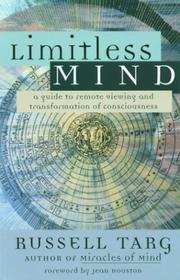
Limitless Mind
Adds historical background to the ideas popularized in the book and film.
Phenomena
From the author of Nuclear War: A Scenario, this is the gripping story of how a select group of scientists, under the watchful eye of the...
eBay marketplace picks
Marketplace Samples
Live-tested eBay searches with available results related to this page.




Endnotes
1.
Source: Wikipedia
Title: The Men Who Stare at Goats
Link:https://en.wikipedia.org/wiki/The_Men_Who_Stare_at_Goats
2.
Source: Wikipedia
Title: First Earth Battalion
Link:https://en.wikipedia.org/wiki/First_Earth_Battalion
3.
Source: Wikipedia
Title: Jon Ronson
Link:https://en.wikipedia.org/wiki/Jon_Ronson
4.
Source: Wikipedia
Title: The Men Who Stare at Goats (film)
Link:https://en.wikipedia.org/wiki/The_Men_Who_Stare_at_Goats_%28film%29
5.
Source: cloudappreciationsociety.org
Title: the men who stare at goats
Link:https://cloudappreciationsociety.org/the-men-who-stare-at-goats/
Source snippet
4 Dec 2009 — Parts of their psychic training included “cloud busting” by staring at clouds, and stopping the hearts of goats by staring a...
6.
Source: panmacmillan.com
Title: the men who stare at goats
Link:https://www.panmacmillan.com/authors/jon-ronson/the-men-who-stare-at-goats/9781035039227
Source snippet
Often funny...Read more...
Additional References
7.
Source: reddit.com
Link:https://www.reddit.com/r/remoteviewing/comments/1fc25hr/men_who_stare_at_goats/
Source snippet
Men Who Stare At Goats: r/remoteviewingIn his book, Ronson clearly describes how he interviewed many people (Lyn Buchanan, Glenn Wheaton...
8.
Source: thetedkarchive.com
Link:https://www.thetedkarchive.com/library/jon-ronson-the-men-who-stare-at-goats
Source snippet
The Men Who Stare At GoatsHe didn't mention the goat-staring, nor the wall-walking, nor the First Earth Battalion, but he spoke with reli...
9.
Source: reddit.com
Link:https://www.reddit.com/r/remoteviewing/comments/g8dthq/the_men_who_stare_at_goats/
10.
Source: theultimaterabbit.com
Title: underseen movie the men who stare at goats a highly unusual war movie
Link:https://theultimaterabbit.com/2022/07/15/underseen-movie-the-men-who-stare-at-goats-a-highly-unusual-war-movie/
Source snippet
Movies Based on Real Life Events New Age Overture Films Satire Smokehouse Pictures The Men Who Stare At Goats War Movies Winchester Capit...
11.
Source: dove.org
Link:https://dove.org/review/8115-the-men-who-stare-at-goats/
Source snippet
satire is marred by some rather extreme and profane...Read more...
12.
Source: youtube.com
Title: the movie claims it’s based on a true story. In this audio
Link:https://www.youtube.com/watch?v=ahLYHxJLvZw
Source snippet
History vs the movie 'The Men Who Stare at Goats' (an audio...In The Men Who Stare at Goats, we learn about the remote viewing program i...
13.
Source: theidlewoman.net
Title: the men who stare at goats john ronson
Link:https://theidlewoman.net/2019/07/28/the-men-who-stare-at-goats-john-ronson/
Source snippet
The Men Who Stare At Goats (2004): John Ronson28 Jul 2019 — Jon Ronson travels in search of evidence of this secret psychic battalion, in...
14.
Source: acampbell.org.uk
Link:https://acampbell.org.uk/bookreviews/r/ronson.html
Source snippet
Book Review by Anthony Campbell: The men who stare at goatsThe "goat staring" alluded to in the title refers to attempts to kill goats by...
15.
Source: moriareviews.com
Title: men who stare at goats 2009
Link:https://moriareviews.com/sciencefiction/men-who-stare-at-goats-2009.htm
Source snippet
The Men Who Stare at Goats (2009) - Moria ReviewsFeb 5, 2026 — The Men Who Stare at Goats was based on Ronson's true-life investigation i...
16.
Source: theguardian.com
Title: men who stare at goats1
Link:https://www.theguardian.com/film/2009/nov/02/men-who-stare-at-goats1
Source snippet
My First Earth Battalion comes to life in The Men Who Stare...2 Nov 2009 — Jim Channon is the author of the First Earth Battalion manual...
Topic Tree