Within Remote Viewing
Why Unusual Results Were Not Enough
Ray Hyman argued that unusual statistics were not enough without strong independent replication and better controls.

On this page
- Hyman's Core Objections
- Replication Standards
- Mechanism and Proof
Page outline Jump by section
Introduction
Ray Hyman’s role in the 1995 remote-viewing review was not to deny that the laboratory data looked unusual. His central point was sharper: unusual statistics are not enough to establish remote viewing unless the results survive independent judging, independent replication, better public scrutiny and a clearer account of what is supposedly being measured. That distinction is why Hyman’s critique remains central to mainstream doubts about remote viewing. The 1995 American Institutes for Research review found statistically significant laboratory effects, but it also concluded that those effects did not unambiguously prove a paranormal phenomenon and had not shown practical intelligence value.[National Security Archive]nsarchive2.gwu.eduNational Security Archiveremote~1.PD FNational Security Archiveremote~1.PD F
The lasting importance of Hyman’s review is that it shifted the argument away from “Were any results above chance?” and towards “What would count as reliable proof?” In remote viewing, where descriptions can be vague, judging can be subjective and ordinary cueing can be hard to exclude, that change in standard matters. Hyman accepted that the later SAIC experiments were better than the earlier Stanford Research Institute work, but he argued that a stronger claim required more than a promising internal research record.[National Security Archive]nsarchive2.gwu.eduNational Security Archiveremote~1.PD FNational Security Archiveremote~1.PD F
Hyman’s Core Objections
Hyman reviewed the U.S. government-backed programme on “anomalous mental phenomena” after work at Stanford Research Institute and Science Applications International Corporation had become part of the CIA’s retrospective evaluation. The review focused mainly on ten SAIC experiments from 1992 to 1994 because these were the most recent studies and, crucially, the ones for which the evaluators had adequate documentation.[National Security Archive]nsarchive2.gwu.eduNational Security Archiveremote~1.PD FNational Security Archiveremote~1.PD F
His critique was not the simplest sceptical position. He did not say that every result was worthless, nor did he claim to have found a single devastating flaw that explained everything. In fact, he and Jessica Utts agreed that the SAIC work had improved on earlier remote-viewing research, avoided some major known flaws and produced effects too large and consistent to dismiss casually as mere statistical flukes.[National Security Archive]nsarchive2.gwu.eduNational Security Archiveremote~1.PD FNational Security Archiveremote~1.PD F
The disagreement was over interpretation. Utts argued that the accumulated evidence supported the reality of psychic functioning. Hyman argued that rejecting chance is not the same as identifying a cause. A statistically significant result can arise from many sources: hidden procedural bias, judging artefacts, flawed assumptions in the probability model, selective handling of data, unnoticed sensory information or a genuine anomaly. Hyman’s point was that the research had not yet narrowed those possibilities enough to justify the conclusion that remote viewing had been demonstrated.[National Security Archive]nsarchive2.gwu.eduNational Security Archiveremote~1.PD FNational Security Archiveremote~1.PD F
This is the core of the Hyman standard: a remote-viewing experiment must not merely produce a low probability value. It must show that the result follows from a repeatable phenomenon rather than from the particular people, target set, judge, scoring method or laboratory culture involved.
Why “Above Chance” Did Not Settle the Case
Remote-viewing experiments often ask a viewer to produce free-form impressions of a hidden target, after which a judge compares the response with possible targets. That creates a difficult evidential problem. The output may be a mixture of sketches, shapes, impressions and general descriptors, and the judge must decide how well those impressions fit. The room for judgement is much larger than in a simple forced-choice test.
The AIR report captured the problem clearly. It found that a statistically significant effect had been observed in recent laboratory remote-viewing experiments, but it also stated that this did not amount to an unequivocal demonstration that remote viewing exists. The result could reflect a paranormal phenomenon, but it could also reflect artefacts or alternative explanations.[National Security Archive]nsarchive2.gwu.eduNational Security Archiveremote~1.PD FNational Security Archiveremote~1.PD F
Hyman was especially concerned that much of the significant SAIC work depended on a tightly connected research system: the same experienced viewers, the same judge, the same target set and the same scoring procedures. AIR described this as a possible “monomethod bias”, meaning that a method can generate a pattern that looks stable without proving that the intended phenomenon is real.[National Security Archive]nsarchive2.gwu.eduNational Security Archiveremote~1.PD FNational Security Archiveremote~1.PD F
That concern is not a technical quibble. In remote viewing, the judge’s role can become part of the experimental apparatus. If one highly familiar judge repeatedly assesses responses from familiar viewers against familiar target materials, then above-chance matching may partly reflect learned conventions, interpretive habits or subtle criterion shifts. Hyman therefore wanted to know whether independent judges, blind to the target and less embedded in the research culture, would reach the same conclusions.[National Security Archive]nsarchive2.gwu.eduNational Security Archiveremote~1.PD FNational Security Archiveremote~1.PD F
Replication Standards
For Hyman, replication meant more than repeating a statistical pattern inside the same research lineage. The key question was whether the claimed effect could survive changes in judge, laboratory, experimenter, target set and viewer pool. He argued that independent judges should first rejudge the SAIC materials blind to the actual targets; if those results remained above chance, then genuinely independent laboratories should attempt replications with new target sets and preferably several independent judges.[National Security Archive]nsarchive2.gwu.eduNational Security Archiveremote~1.PD FNational Security Archiveremote~1.PD F
This matters because remote viewing was often defended through “conceptual replication”: related experiments in different settings appeared to show similar above-chance effects. Utts argued that remote viewing and related anomalous-cognition studies had shown consistent effects across laboratories. Hyman’s reply was that similar effect sizes do not by themselves prove the same underlying cause. A standardised departure from chance can be produced by many different factors, so replication has to show that the same phenomenon is recurring under clearly specified conditions.[National Security Archive]nsarchive2.gwu.eduNational Security Archiveremote~1.PD FNational Security Archiveremote~1.PD F
The AIR panel ultimately sided with the need for stronger replication before strong claims could be made. It stated that both reviewers stressed independent replication and that the use of one principal-investigator judge created a serious interpretive limitation. Until independent judges agreed, and similar effects appeared in studies using independent judges, the report concluded that adequate evidence for the existence of remote viewing had not been provided.[National Security Archive]nsarchive2.gwu.eduNational Security Archiveremote~1.PD FNational Security Archiveremote~1.PD F
Hyman’s replication standard can be summarised in three tests:
- Blind rejudging: can people outside the original judging system match responses to targets above chance?
- Independent laboratory replication: can a separate team reproduce the effect without relying on the same research culture?
- Method variation: does the effect persist when target sets, judges, viewers and procedures change?
Without those tests, Hyman saw remote viewing as an intriguing but unproven anomaly rather than an established ability.
The Judging Problem Became the Pressure Point
The most concrete weakness in the 1995 assessment was the judging system. AIR noted that only one judge, apparently the principal investigator, had been used in assessing matches across the experimental studies. That meant there was no evidence that independent judges would agree about the accuracy of the remote viewings.[National Security Archive]nsarchive2.gwu.eduNational Security Archiveremote~1.PD FNational Security Archiveremote~1.PD F
This issue became even more significant after Richard Wiseman and Julie Milton re-examined “Experiment One” of the SAIC remote-viewing programme. Their paper noted that Utts and Hyman had focused heavily on the SAIC studies partly because those experiments were documented better than earlier SRI work, and that both reviewers had agreed Experiment One did not contain obvious flaws. But Wiseman and Milton then tried to reconstruct the protocol in detail and found several uncertainties.[Koestler Unit]koestlerunit.wordpress.comKoestler Unit Microsoft WordKoestler UnitMicrosoft Word - RVPAPERfinaljp…
Their re-evaluation identified problems in reconstructing exactly who knew target identities, who handled responses, how much contact there was between experimenters and the judge, and whether judging order could have created cues. They concluded that two possible pathways for sensory leakage remained and that the experiment’s statistically significant result was not robust enough to make those flaws implausible as explanations.[Koestler Unit]koestlerunit.wordpress.comKoestler Unit Microsoft WordKoestler UnitMicrosoft Word - RVPAPERfinaljp…
This later critique strengthened the practical force of Hyman’s caution. The point was not that fraud had occurred. It was that in free-response remote-viewing work, small ambiguities in handling, judging and documentation can matter. If a judge may receive subtle cues, or if records cannot be reconstructed with confidence, a striking statistical result becomes less decisive.
Earlier Cueing Critiques Shaped the Review
Hyman’s caution also reflected the history of remote-viewing criticism before 1995. Early SRI experiments had been attacked for statistical and methodological weaknesses, including target-selection and judging problems. Even Utts, the more favourable 1995 reviewer, acknowledged that early SRI experiments had suffered from some methodological problems, while arguing that later SRI and SAIC work had become more rigorous.[UC Irvine Bren School]ics.uci.eduUC Irvine Bren School AIR.RT FUC Irvine Bren School AIR.RT F
One influential earlier line of criticism came from David Marks, who argued in Nature that sensory cues invalidated some remote-viewing experiments. Marks’s 1981 paper is frequently cited in later discussions because it showed how apparently impressive matches could be threatened by ordinary information leakage rather than paranormal perception.[Nature]nature.comSensory cues invalidate remote viewing experimentsby D MARKS · 1981 · Cited by 25 — Sensory cues invalidate remote viewing experime…
The relevance to Hyman is direct. His review did not treat remote viewing as a clean body of evidence with one unresolved mystery. It treated the field as a sequence of research programmes in which each promising generation had to be scrutinised for flaws that might not be obvious at first. Hyman explicitly warned that past parapsychology paradigms had often seemed persuasive to their designers and contemporary supporters, only for later criticism to reveal weaknesses.[National Security Archive]nsarchive2.gwu.eduNational Security Archiveremote~1.PD FNational Security Archiveremote~1.PD F
That historical memory shaped his standard of proof. A new, better-controlled experiment was not enough by itself. It needed time in the public arena, independent attempts to reproduce it, and enough procedural transparency for critics to reconstruct what had actually happened.

Mechanism and Proof
Hyman’s most philosophical objection was also one of his most important. He argued that remote viewing lacked a positive theory: a model that predicts when the effect should appear, when it should disappear, how strong it should be, and what variables should change it. Without that, remote viewing was being inferred mainly from departures from a null hypothesis — in plain terms, from results that seemed unlikely under chance.[National Security Archive]nsarchive2.gwu.eduNational Security Archiveremote~1.PD FNational Security Archiveremote~1.PD F
That is a weak position for a claim as extraordinary as remote viewing. If researchers cannot specify boundary conditions, then failures can be explained away as bad viewers, wrong targets, poor feedback, unsuitable judging or unknown psychological conditions. Successes can be counted as evidence, while failures may not clearly disconfirm the claim. Hyman’s demand for mechanism was therefore not a demand for a complete physics of psychic perception before any result could matter. It was a demand for testable structure.
The AIR report reached a similar conclusion in its own language. It said that both reviewers agreed no compelling explanation had been provided for the observed effects, and that without identifying causal mechanisms and investigating competing explanations, it was premature to assume a convincing demonstration of a paranormal phenomenon.[National Security Archive]nsarchive2.gwu.eduNational Security Archiveremote~1.PD FNational Security Archiveremote~1.PD F
This is why Hyman’s critique remains more durable than a simple “debunking” claim. It addresses the evidential architecture of the field. For remote viewing to move from anomaly to accepted phenomenon, it would need to become predictable enough that researchers could say, in advance, what should happen under specified conditions — and then show it happening repeatedly outside the original research group.
Why the CIA Review Did Not Vindicate Remote Viewing
The 1995 review is sometimes remembered as if it produced a clean split: Utts said remote viewing was real, Hyman said it was not. The actual result was more nuanced, but less favourable to remote-viewing claims than many popular accounts suggest. AIR found statistically significant laboratory effects, yet concluded that the experimental research did not unambiguously support a paranormal interpretation. It also concluded that adequate experimental and theoretical evidence for remote viewing as a parapsychological phenomenon had not been provided by the programme.[National Security Archive]nsarchive2.gwu.eduNational Security Archiveremote~1.PD FNational Security Archiveremote~1.PD F
The operational conclusion was even less supportive. AIR found that remote-viewing information tended to be vague and ambiguous, that it was difficult to obtain consistently accurate information across targets, and that user interviews found the material too broad for actionable intelligence. The report concluded that remote viewing, as used in the programme, had not been shown to have value in intelligence operations.[National Security Archive]nsarchive2.gwu.eduNational Security Archiveremote~1.PD FNational Security Archiveremote~1.PD F
Hyman’s review helps explain why those two conclusions fit together. Even if laboratory effects were interesting, intelligence work requires concrete, specific, reliable and interpretable information. A method that depends on constrained targets, feedback, familiar judging systems and uncertain boundary conditions is poorly suited to real-world intelligence problems, where targets are variable and feedback may be unavailable.[National Security Archive]nsarchive2.gwu.eduNational Security Archiveremote~1.PD FNational Security Archiveremote~1.PD F
The Lasting Skeptical Takeaway
Hyman’s 1995 review remains central to mainstream doubts about remote viewing because it offers a disciplined middle position. It does not require dismissing every reported effect as nonsense. It does require separating statistical anomaly from established ability.
The strongest version of his critique is this: the SAIC results were interesting enough to justify careful scrutiny, but not strong enough to establish remote viewing. They depended too heavily on a narrow research system, lacked adequate independent judging, had not been replicated in the right way, and were not supported by a positive theory capable of predicting when the phenomenon should occur.[National Security Archive+2National Security Archive]nsarchive2.gwu.eduNational Security Archiveremote~1.PD FNational Security Archiveremote~1.PD F
That standard still frames the debate. Remote-viewing advocates often point to above-chance results and the fact that even sceptical reviewers did not simply dismiss the SAIC data. Critics answer, following Hyman, that science does not stop at “something unusual happened”. It asks whether the same thing happens again, under independent controls, for reasons that can be specified in advance. On that test, the 1995 review left remote viewing unproven.
Amazon book picks
Further Reading
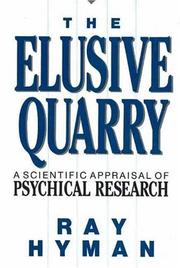
Books and field guides related to Why Unusual Results Were Not Enough. Use these as the next step if you want deeper reading beyond the article.
eBay marketplace picks
Marketplace Samples
Live-tested eBay searches with available results related to this page.


Endnotes
1.
Source: nature.com
Link:https://www.nature.com/articles/292177a0
Source snippet
Sensory cues invalidate remote viewing experimentsby D MARKS · 1981 · Cited by 25 — Sensory cues invalidate remote viewing experime...
2.
Source: cia.gov
Link:https://www.cia.gov/readingroom/docs/CIA-RDP96-00791R000200180005-5.pdf
3.
Source: cia.gov
Link:https://www.cia.gov/readingroom/docs/CIA-RDP96-00791R000200180006-4.pdf
4.
Source: cia.gov
Link:https://www.cia.gov/readingroom/document/cia-rdp96-00789r003100030001-4
5.
Source: cia.gov
Link:https://www.cia.gov/readingroom/document/cia-rdp96-00791r000200180006-4
6.
Source: nature.com
Link:https://www.nature.com/articles/378525a0.pdf
7.
Source: nature.com
Link:https://www.nature.com/articles/284191a0
8.
Source: youtube.com
Title: Ray Hyman
Link:https://www.youtube.com/watch?v=-8VAOzcXGc4
Source snippet
The Life of an Expert Skeptic, Part 2...
9.
Source: youtube.com
Title: Ray Hyman
Link:https://www.youtube.com/watch?v=2olEw13NxUs
Source snippet
A Brief History of the Skeptical Movement...
10.
Source: nsarchive2.gwu.edu
Title: National Security Archiveremote~1.PD F
Link:https://nsarchive2.gwu.edu/NSAEBB/NSAEBB438/docs/doc_57.pdf
11.
Source: koestlerunit.wordpress.com
Title: Koestler Unit Microsoft Word
Link:https://koestlerunit.wordpress.com/wp-content/uploads/2015/06/wiseman-milton-1998.pdf
Source snippet
Koestler UnitMicrosoft Word - RVPAPERfinaljp...
12.
Source: ics.uci.edu
Title: UC Irvine Bren School AIR.RT F
Link:https://www.ics.uci.edu/~jutts/air.pdf
13.
Source: Wikipedia
Title: Remote viewing
Link:https://en.wikipedia.org/wiki/Remote_viewing
14.
Source: Wikipedia
Title: Jessica Utts
Link:https://en.wikipedia.org/wiki/Jessica_Utts
15.
Source: ics.uci.edu
Link:https://www.ics.uci.edu/~jutts/hyman.html
Additional References
16.
Source: youtube.com
Title: Inside The Military’s Secret Psychic Unit
Link:https://www.youtube.com/watch?v=9nY3hu76SyU
Source snippet
This interview with Ray Hyman covers his extensive history as a parapsychology critic, detailing his views on the [Ganzfeld]({{ 'ganzfeld/' | relative_url }}) controversies...
17.
Source: researchgate.net
Link:https://www.researchgate.net/publication/251752421_Precognitive_Remote_Perception_Replication_of_Remote_Viewing
18.
Source: researchgate.net
Link:https://www.researchgate.net/publication/403178755_The_Star_Gate_Archives_Reports_of_the_United_States_Government_Sponsored_Psi_Program_1972-1995_Volume_4_Operational_Remote_Viewing_Memorandums_and_Reports
19.
Source: researchgate.net
Link:https://www.researchgate.net/publication/333228024_An_Assessment_of_the_Evidence_for_Psychic_Functioning
20.
Source: slideshare.net
Link:https://www.slideshare.net/slideshow/an-evaluation-of-remote-viewing-research-and-applications-air1995pdf/257460594
21.
Source: e-space.mmu.ac.uk
Link:https://e-space.mmu.ac.uk/631983/3/Brain%20and%20Behavior%20-%202023%20-%20Escol%20%E2%80%90Gasc%20n%20-%20Follow%E2%80%90up%20on%20the%20U%20S%20%20Central%20Intelligence%20Agency%20s%20%20CIA%20%20remote%20viewing.pdf
22.
Source: reddit.com
Link:https://www.reddit.com/r/remoteviewing/comments/1dazs09/creation_of_study_on_statistical_evidence_of/
23.
Source: facebook.com
Link:https://www.facebook.com/shawnryan762/posts/do-you-believe-in-remote-viewing-or-any-other-forms-of-parapsychology-shawnryans/1511586156155460/
24.
Source: facebook.com
Link:https://www.facebook.com/100090372200308/posts/during-the-[cold-war
25.
Source: researchgate.net
Link:https://www.researchgate.net/publication/267978941Evaluation_of_Program_on%27Anomalous_Mental_Phenomena%27
Topic Tree