Did Psychic Spying Ever Really Work?
Remote viewing is the claimed ability to describe a distant, hidden or future target without using the ordinary senses.

Page outline Jump by section
Introduction
The balanced answer is straightforward but not simplistic. Remote viewing has a real documentary history, including U.S. government-funded programmes at Stanford Research Institute, Science Applications International Corporation and Fort Meade. Some researchers and later meta-analyses argue that experiments show above-chance results. But the strongest institutional reviews found no reliable intelligence value, critics identified weaknesses such as sensory cueing and subjective judging, and remote viewing remains outside mainstream science because it has not produced robust, independently repeatable evidence under tight controls.[CIA+2Nature]cia.govAN EVALUATION OF THE REMOTE VIEWING PROGRAMTo evaluate the research program, a "blue ribbon" panel was assembled. The panel included t…
What remote viewing actually means
Remote viewing is not simply “imagining a place”. In its research setting, it usually means an attempt to obtain information about a target that is shielded from normal perception. The target might be a geographical location, a sealed photograph, an object, or sometimes a future-selected image. The viewer typically writes or draws impressions before receiving feedback. The point of the protocol is to separate any claimed information transfer from ordinary clues, memory, inference or chance matching.[Nature]preview-nature.comNatureInformation transmission under conditions of sensory…18 Oct 1974 — WE present results of experiments suggesting the existence of…
The term became associated with the work of physicists Russell Targ and Harold Puthoff at Stanford Research Institute in the 1970s. Their 1974 paper in Nature, “Information transmission under conditions of sensory shielding”, reported experiments suggesting that people could obtain information not available to the known senses. That publication helped give remote viewing a scientific-sounding framework and a durable public identity.[Nature]preview-nature.comNatureInformation transmission under conditions of sensory…18 Oct 1974 — WE present results of experiments suggesting the existence of…
A typical session has three moving parts:
- The target: the hidden place, image or object the viewer is meant to describe.
- The viewer’s response: written notes, spoken impressions or sketches made before feedback.
- The judging process: a later comparison between the response and possible targets, ideally by a judge who does not know which target is correct.
Those details matter because much of the controversy is not about whether people can produce evocative descriptions. They can. The dispute is whether those descriptions contain verifiable information that cannot be explained by chance, loose matching, cueing, selective reporting or ordinary inference.

Why the CIA and military took it seriously enough to test
Remote viewing became famous because parts of the U.S. intelligence community funded it during the Cold War. The programme later known as Stargate grew from earlier code names and contracts involving Stanford Research Institute, the Defense Intelligence Agency and other military or intelligence bodies. Declassified CIA material describes a line of work centred on “remote viewing” and “anomalous mental phenomena”, with the hope that such methods might have intelligence applications.[CIA]cia.govOpen source on cia.gov.
The context was important. During the Cold War, U.S. officials were concerned about Soviet interest in psychic research and did not want to ignore a possible intelligence tool, however unlikely it seemed. This did not mean the CIA had proven psychic spying worked. It meant that, for a time, some officials considered the possibility worth testing.
Stargate and its predecessors are often described as a roughly two-decade, multimillion-dollar effort. The CIA’s later evaluation records that a panel was assembled to assess the remote viewing programme, including statistician Jessica Utts and psychologist Ray Hyman, who were asked to prepare independent reviews.[CIA]cia.govAN EVALUATION OF THE REMOTE VIEWING PROGRAMTo evaluate the research program, a "blue ribbon" panel was assembled. The panel included t…
The most important practical finding was negative. The American Institutes for Research evaluation concluded that remote viewing had not produced documented value for intelligence operations. Even where laboratory results appeared statistically interesting, the operational material was judged too vague, inconsistent or non-actionable for intelligence use.[nsarchive2.gwu.edu]nsarchive2.gwu.eduOpen source on gwu.edu.
The best-known experiments and the problem of “hits”
The early SRI experiments are the core historical example. Targ and Puthoff reported that some participants described remote locations or hidden targets with striking correspondences. Supporters saw these as evidence that an unknown perceptual channel might exist. Critics saw a different problem: if a judging process is loose enough, almost any rich description can later be made to seem meaningful.
This is the central difficulty in remote viewing. A viewer might say “water, metal, vertical structure, open space, movement”. If the target is a bridge, a dock, a factory, a stadium or a city street, parts of that response may appear to fit. Human beings are very good at finding patterns after the fact. That does not make every match worthless, but it means that scoring rules and blinding procedures have to be exceptionally strict.
David Marks and Richard Kammann challenged the early SRI claims in Nature in 1978, reporting that they could not verify the original conclusions and arguing that procedural cues could explain apparent successes. Later sceptical discussions focused on details such as dates, ordering clues and transcript information that might have helped judges match responses to targets without any paranormal process.[ResearchGate]researchgate.netResearch Gate Information transmission in remote viewing experimentsResearch Gate Information transmission in remote viewing experiments
This is why remote viewing debates often become debates about method rather than belief. Supporters point to statistical deviations from chance. Critics ask whether those deviations survive when targets are randomised cleanly, all judging is blind, transcripts are stripped of accidental cues, results are pre-registered, and independent teams can repeat the outcome.
What the 1995 evaluation really said
The 1995 review is the hinge point in modern remote viewing history because it brought together two sharply different expert interpretations. Jessica Utts argued that the accumulated laboratory evidence showed statistically significant effects and should not be dismissed as chance. Ray Hyman accepted that some results appeared statistically unusual, but argued that proof of paranormal functioning was premature, especially without independent replication and a well-supported mechanism.[nsarchive2.gwu.edu]nsarchive2.gwu.eduOpen source on gwu.edu.
That disagreement is often flattened online into “the CIA proved remote viewing” or “the CIA debunked remote viewing”. Neither phrase is careful enough. The review did not show that intelligence agencies had a reliable psychic tool. It also did not say every laboratory result was a simple statistical accident. It said, in effect, that the programme had generated disputed experimental claims but had not demonstrated useful operational intelligence value.[CIA]cia.govAN EVALUATION OF THE REMOTE VIEWING PROGRAMTo evaluate the research program, a "blue ribbon" panel was assembled. The panel included t…
The distinction matters. A laboratory effect, even if real, would still have to be accurate, timely, specific and reliable enough to help real decisions. Intelligence work cannot use impressions that are only meaningful after the answer is known. A report that contains one suggestive detail among many wrong or vague statements is not necessarily useful intelligence.
The U.S. government therefore ended the programme in the mid-1990s. Declassification later made the archive available to researchers and the public, which is why remote viewing continues to circulate in documentaries, books, online forums and conspiracy-leaning discussions. The archive is real; the strongest claim people make from it is still contested.[WIRED]wired.comOpen source on wired.com.
Why mainstream science remains unconvinced
Mainstream scientific scepticism about remote viewing rests on several connected concerns. The first is repeatability. A claimed phenomenon becomes scientifically persuasive when independent researchers can reproduce it under conditions that remove ordinary explanations. Remote viewing has not achieved that level of robust, widely accepted replication. The National Research Council’s 1988 review of paranormal phenomena was sceptical of using such methods for human-performance enhancement, reflecting the broader scientific unease around the evidence base.[National Academies]nationalacademies.orgNational AcademiesChapter: 9 Paranormal PhenomenaSuggested Citation: "9 Paranormal Phenomena." National Research Council. 1988. Enhancing…
The second concern is sensory leakage, meaning that information can slip into an experiment through ordinary channels. This can be as obvious as a poorly sealed target or as subtle as marks on a transcript, sequence clues, experimenter expectations or feedback patterns. In remote viewing, small cues can matter because the judging process often involves matching a response to one of several possible targets.[ResearchGate]researchgate.netResearch Gate Information transmission in remote viewing experimentsResearch Gate Information transmission in remote viewing experiments
The third concern is subjective validation. People naturally notice matches and downplay misses. A remote viewing transcript may contain dozens of statements. If only the best-fitting fragments are highlighted after the target is revealed, the result can look more impressive than a full, pre-specified scoring system would justify.
The fourth concern is lack of mechanism. Science can sometimes accept effects before mechanisms are fully understood, but the more extraordinary the claim, the more important reliable evidence becomes. Remote viewing proposes information transfer without a known sensory channel, across distance and sometimes across time. That is a much stronger claim than an ordinary psychological effect, so the evidential threshold is high.

What newer research adds, and what it does not settle
Remote viewing did not disappear after Stargate. Researchers sympathetic to parapsychology have continued to publish studies, reviews and meta-analyses. A 2023 systematic review and meta-analysis in the Journal of Scientific Exploration reported 36 studies and 40 effect sizes up to December 2022, concluding that remote viewing tasks showed a positive average effect after excluding outliers and did not show clear signs of publication bias.[journalofscientificexploration.org]journalofscientificexploration.orgThis is the first meta-analysis of all studies related to remote-viewing tasks conducted up to December 2022.Read more…
A 2023 paper in Brain and Behavior revisited remote viewing in relation to emotional variables, describing new statistical evidence and framing the work as a follow-up to questions raised by the declassified CIA programmes. The paper is useful because it shows that remote viewing remains an active niche research topic rather than merely a Cold War curiosity.[PMC]pmc.ncbi.nlm.nih.govOpen source on nih.gov.
These newer studies do not, by themselves, move remote viewing into the scientific mainstream. Meta-analysis can identify patterns across studies, but it cannot fully solve weaknesses in the underlying literature: variable protocols, small samples, publication practices, judging subjectivity, researcher allegiance and difficulty in independent replication. In a field where effects are controversial and methods are delicate, the quality of each experiment matters as much as the pooled result.
The fairest reading is that recent pro-remote-viewing research keeps the question alive within parapsychology, while the broader scientific community remains unconvinced. A reader should treat claims of “statistical evidence” as different from claims of a dependable ability that can locate missing people, predict markets, guide intelligence operations or reveal hidden facts on demand.
Why remote viewing is easy to overstate
Remote viewing is unusually easy to overstate because its examples are often vivid. A sketch seems to match a target. A viewer names a surprising feature. A declassified document includes dramatic language. A former participant tells a compelling story. These are memorable, but they are not the same as a controlled demonstration.
Three traps recur:
- Archive inflation: because a CIA document exists, readers assume the claim inside it was validated. Declassification proves historical interest, not truth.
- Best-case storytelling: striking sessions are retold while failed or ambiguous sessions fade into the background.
- After-the-fact matching: descriptions are interpreted generously once the target is known.
The same caution applies to popular accounts of Stargate. Journalism and entertainment often focus on the strangeness of “psychic spies”, secret programmes and Cold War intrigue. That angle is understandable, but it can blur the distinction between “the government investigated this” and “the government proved this works”. Reputable coverage of the programme usually notes both the unusual history and the eventual conclusion that the results were not reliable enough for intelligence use.[SFGATE]sfgate.comA gruesome murder rocked Northern California. Then came the CIA's psychic armyA gruesome murder rocked Northern California. Then came the CIA's psychic army
How to read remote viewing claims responsibly
A useful way to assess any remote viewing claim is to ask what would have been known before the answer was revealed. The strongest claims are not the most colourful ones; they are the ones with clean procedures, dated records, pre-specified scoring, independent judging and full reporting of misses as well as hits.
A responsible assessment should ask:
- Was the target chosen randomly and securely? If not, ordinary inference may explain more than it seems.
- Was the viewer fully blind to the target? Any hint, context or expectation can shape a response.
- Was the judge blind? Judging is a major source of bias if the correct target is known.
- Were all sessions reported? Selective examples can make weak results look strong.
- Was the scoring decided before feedback? Post-hoc interpretation is the enemy of reliable evidence.
- Has an independent team repeated the result? Replication is more persuasive than a single impressive case.
This approach does not require hostility to the subject. It simply treats remote viewing like any extraordinary empirical claim. If it works, it should survive good controls. If it only works when judging is loose, feedback is rich and failures are forgotten, then the safer explanation is human pattern-finding rather than paranormal perception.
What remote viewing is best understood as today
Remote viewing is best understood as a historically important, scientifically disputed practice within parapsychology. It is not just internet folklore: it has peer-reviewed papers, declassified government records, named researchers, formal protocols and decades of argument behind it. But it is also not an established scientific ability. The most consequential official review found no documented intelligence value, and mainstream science remains unconvinced because the evidence has not met the standards of reliable, independently repeatable demonstration.[nsarchive2.gwu.edu+2National Academies]nsarchive2.gwu.eduOpen source on gwu.edu.
Its enduring appeal is not hard to understand. Remote viewing promises that the mind might reach beyond the body’s normal limits. It also offers a rare case where secret-state history overlaps with claims usually found at the edges of science. That combination makes it fascinating even for sceptics.
The careful position is neither credulous nor dismissive of the historical record. Remote viewing was seriously investigated, especially during the Cold War. Some researchers continue to report anomalous statistical results. Yet the practical and scientific burden remains unmet: no remote viewing method has been shown, to mainstream standards, to deliver consistently accurate information beyond ordinary sensory channels.
Amazon book picks
Further Reading
Books and field guides related to Did Psychic Spying Ever Really Work?. Use these as the next step if you want deeper reading beyond the article.
Phenomena: The Secret History of the U.S. Government's Invest...
Covers the history of U.S. government psychic research including remote viewing.
Phenomena
Covers the military and intelligence context behind remote viewing and the lab-to-operations gap.
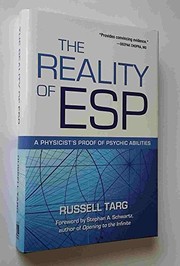
The Reality of ESP: A Physicist's Proof of Psychic Abilities
Summarizes the evidence claimed for ESP and remote viewing.
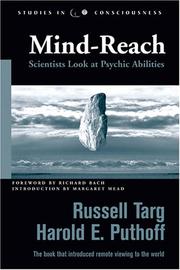
Mind-Reach: Scientists Look at Psychic Ability
Foundational account by key early researchers.
Endnotes
1.
Source: cia.gov
Link:https://www.cia.gov/readingroom/docs/CIA-RDP96-00791R000200180005-5.pdf
Source snippet
AN EVALUATION OF THE REMOTE VIEWING PROGRAMTo evaluate the research program, a "blue ribbon" panel was assembled. The panel included t...
2.
Source: journalofscientificexploration.org
Link:https://journalofscientificexploration.org/index.php/jse/article/view/2931
Source snippet
This is the first meta-analysis of all studies related to remote-viewing tasks conducted up to December 2022.Read more...
Published: December 2022
3.
Source: cia.gov
Link:https://www.cia.gov/readingroom/docs/CIA-RDP96-00789R002800180001-2.pdf
4.
Source: cia.gov
Link:https://www.cia.gov/readingroom/document/cia-rdp96-00789r002700010001-1
5.
Source: cia.gov
Link:https://www.cia.gov/readingroom/document/cia-rdp96-00791r000200180005-5
6.
Source: nsarchive2.gwu.edu
Link:https://nsarchive2.gwu.edu/NSAEBB/NSAEBB438/docs/doc_57.pdf
7.
Source: researchgate.net
Title: Research Gate Information transmission in remote viewing experiments
Link:https://www.researchgate.net/publication/15839349_Information_transmission_in_remote_viewing_experiments
8.
Source: wired.com
Link:https://www.wired.com/story/the-cia-just-dumped-13-million-declassified-pages-online
9.
Source: journalofscientificexploration.org
Title: acm sig proceedings
10.
Source: pmc.ncbi.nlm.nih.gov
Link:https://pmc.ncbi.nlm.nih.gov/articles/PMC10275521/
11.
Source: sfgate.com
Title: A gruesome murder rocked Northern California. Then came the CIA’s psychic army
Link:https://www.sfgate.com/bayarea/article/project-stargate-cia-psychic-spies-california-20063511.php
12.
Source: researchgate.net
Title: 369604750 Remote Viewing a 1974 2022 systematic review and meta analysis
Link:https://www.researchgate.net/publication/369604750_Remote_Viewing_a_1974-2022_systematic_review_and_meta-analysis
13.
Source: researchgate.net
Link:https://www.researchgate.net/publication/342061969_What_Do_We_Know_About_Psi_The_First_Decade_of_Remote_Viewing_Research_and_Operations_at_Stanford_Research_Institute
14.
Source: researchgate.net
Link:https://www.researchgate.net/publication/403178755_The_Star_Gate_Archives_Reports_of_the_United_States_Government_Sponsored_Psi_Program_1972-1995_Volume_4_Operational_Remote_Viewing_Memorandums_and_Reports
15.
Source: researchgate.net
Link:https://www.researchgate.net/publication/267978941Evaluation_of_Program_on%27Anomalous_Mental_Phenomena%27
16.
Source: researchgate.net
Title: 374881423 Remote Viewing A 1974 2022 Systematic Review and Meta Analysis
Link:https://www.researchgate.net/publication/374881423_Remote_Viewing_A_1974-2022_Systematic_Review_and_Meta-Analysis
17.
Source: cia.gov
Link:https://www.cia.gov/readingroom/docs/CIA-RDP96-00787R000500120001-5.pdf
18.
Source: cia.gov
Link:https://www.cia.gov/readingroom/docs/CIA-RDP96-00791R000100440001-9.pdf
19.
Source: cia.gov
Link:https://www.cia.gov/readingroom/docs/CIA-RDP96-00791R000200180006-4.pdf
20.
Source: cia.gov
Link:https://www.cia.gov/readingroom/document/cia-rdp96-00791r000200180006-4
21.
Source: cia.gov
Link:https://www.cia.gov/readingroom/document/cia-rdp96-00791r000200160001-9
22.
Source: cia.gov
Link:https://www.cia.gov/readingroom/docs/CIA-RDP99-01448R000402150001-6.pdf
23.
Source: cia.gov
Link:https://www.cia.gov/readingroom/document/cia-rdp96-00789r002700020001-0
24.
Source: cia.gov
Link:https://www.cia.gov/readingroom/document/cia-rdp96-00789r003100030001-4
25.
Source: cia.gov
Link:https://www.cia.gov/readingroom/document/cia-rdp96-00791r000200280002-5
26.
Source: cia.gov
Link:https://www.cia.gov/readingroom/docs/CIA-RDP96-00787R000200090017-5.pdf
27.
Source: cia.gov
Link:https://www.cia.gov/readingroom/document/cia-rdp96-00788r001100010002-8
28.
Source: journalofscientificexploration.org
Link:https://journalofscientificexploration.org/index.php/jse/article/view/3865/2573
29.
Source: journalofscientificexploration.org
Link:https://journalofscientificexploration.org/index.php/jse/article/view/3687/2559
30.
Source: nsarchive2.gwu.edu
Title: DIA 21
Link:https://nsarchive2.gwu.edu/NSAEBB/NSAEBB534-DIA-Declassified-Sourcebook/documents/DIA-21.pdf
31.
Source: history.com
Title: cia esp espionage soviet union cold war
Link:https://www.history.com/articles/cia-esp-espionage-soviet-union-cold-war
32.
Source: preview-nature.com
Link:https://preview-www.nature.com/articles/251602a0
Source snippet
NatureInformation transmission under conditions of sensory...18 Oct 1974 — WE present results of experiments suggesting the existence of...
33.
Source: nationalacademies.org
Link:https://www.nationalacademies.org/read/1025/chapter/13
Source snippet
National AcademiesChapter: 9 Paranormal PhenomenaSuggested Citation: "9 Paranormal Phenomena." National Research Council. 1988. Enhancing...
34.
Source: Wikipedia
Title: Remote viewing
Link:https://en.wikipedia.org/wiki/Remote_viewing
35.
Source: Wikipedia
Title: Russell Targ
Link:https://en.wikipedia.org/wiki/Russell_Targ
36.
Source: Wikipedia
Title: Sensory leakage
Link:https://en.wikipedia.org/wiki/Sensory_leakage
37.
Source: chrbutler.com
Title: Remote Viewing
Link:https://www.chrbutler.com/remote-viewing
38.
Source: pubmed.ncbi.nlm.nih.gov
Link:https://pubmed.ncbi.nlm.nih.gov/7360248/
39.
Source: pmc.ncbi.nlm.nih.gov
Link:https://pmc.ncbi.nlm.nih.gov/articles/PMC8174709/
40.
Source: pmc.ncbi.nlm.nih.gov
Link:https://pmc.ncbi.nlm.nih.gov/articles/PMC12157872/
41.
Source: irp.fas.org
Link:https://irp.fas.org/program/collect/stargate.htm
42.
Source: ics.uci.edu
Link:https://www.ics.uci.edu/~jutts/may.pdf
43.
Source: huggingface.co
Link:https://huggingface.co/datasets/GotThatData/STARGATE
44.
Source: churchofgnome.org
Title: remote viewing
Link:https://www.churchofgnome.org/post/remote-viewing
Additional References
45.
Source: youtube.com
Link:https://www.youtube.com/watch?v=5NHQBoEmYBo
Source snippet
Stargate Project: How Did the CIA Turn the Human Mind into a Weapon?...
46.
Source: youtube.com
Title: Stargate Project: How Did the CIA Turn the Human Mind into a Weapon?
Link:https://www.youtube.com/watch?v=IDPlEXpzRoQ
Source snippet
Beyond the Five Senses: Leanne Whitney Interviews Russell Targ in 2005...
47.
Source: youtube.com
Title: Inside The Military’s Secret Psychic Unit
Link:https://www.youtube.com/watch?v=9nY3hu76SyU
Source snippet
CIA Stargate figure says psychic was 'murdered' | Reality Check with Ross Coulthart...
48.
Source: reddit.com
Link:https://www.reddit.com/r/remoteviewing/comments/1t2z7xa/found_something_interesting_in_the_declassified/
49.
Source: skepsis.nl
Link:https://skepsis.nl/stargate/
50.
Source: newdualism.org
Link:https://www.newdualism.org/papers/H.Puthoff/CIA-Initiated%20Remote%20Viewing%20At%20Stanford%20Research%20Institute.htm
51.
Source: linkedin.com
Link:https://www.linkedin.com/pulse/esp-files-declassified-uncovering-mysteries-project-j-manning-myedc
52.
Source: academia.edu
Link:https://www.academia.edu/116341239/Information_transmission_in_remote_viewing_experiments
53.
Source: greydynamics.com
Link:https://greydynamics.com/intelligence-past-the-tangible-world-cias-stargate-project/
54.
Source: sixthsensereader.org
Link:https://sixthsensereader.org/about-the-book/abcderium-index/remote-viewing/
Topic Tree
Follow this branch
More on this topic 30
- 1995 Review What the Famous Review Really Said
- Anecdotes Why the Best Stories May Not Be Evidence
- CIA Myths What the CIA Files Do Not Prove
- Cold War The Cold War Fear Behind Remote Viewing
- ESP Compare Is Remote Viewing Just ESP?
- Fair Test What a Strong Remote Viewing Test Needs
- Fort Meade Inside the Military Remote Viewing Unit
- Future Targets Can Remote Viewing Claim the Future?
- +22 more in sidebar