Within Targ Puthoff
How SRI Became the Remote Viewing Origin Story
Targ and Puthoff's early SRI work became the reference point for later military remote-viewing programs.
On this page
- The early SRI template
- How later programs inherited the story
- Why origin stories can overstate continuity
Page outline Jump by section
Introduction
The early remote-viewing experiments conducted at Stanford Research Institute (SRI) by Russell Targ and Harold Puthoff became far more than a set of controversial laboratory studies. They evolved into the founding narrative for nearly every subsequent United States government programme that investigated psychic intelligence gathering. Although the military projects that followed operated under different organisations, budgets and code names, they repeatedly treated the SRI work as the proof of concept that justified continued investment. At the same time, later reviews questioned whether this apparent continuity reflected genuine scientific progress or simply the persistence of an influential institutional story. Understanding this legacy chain is therefore essential to understanding why remote viewing remained a government-funded subject for over two decades despite continuing scientific controversy.[CIA]cia.govAN EVALUATION OF THE REMOTE VIEWING PROGRAMUtts and Hyman were asked to prepare independent reports based on their review. In this rev…
The Early SRI Template
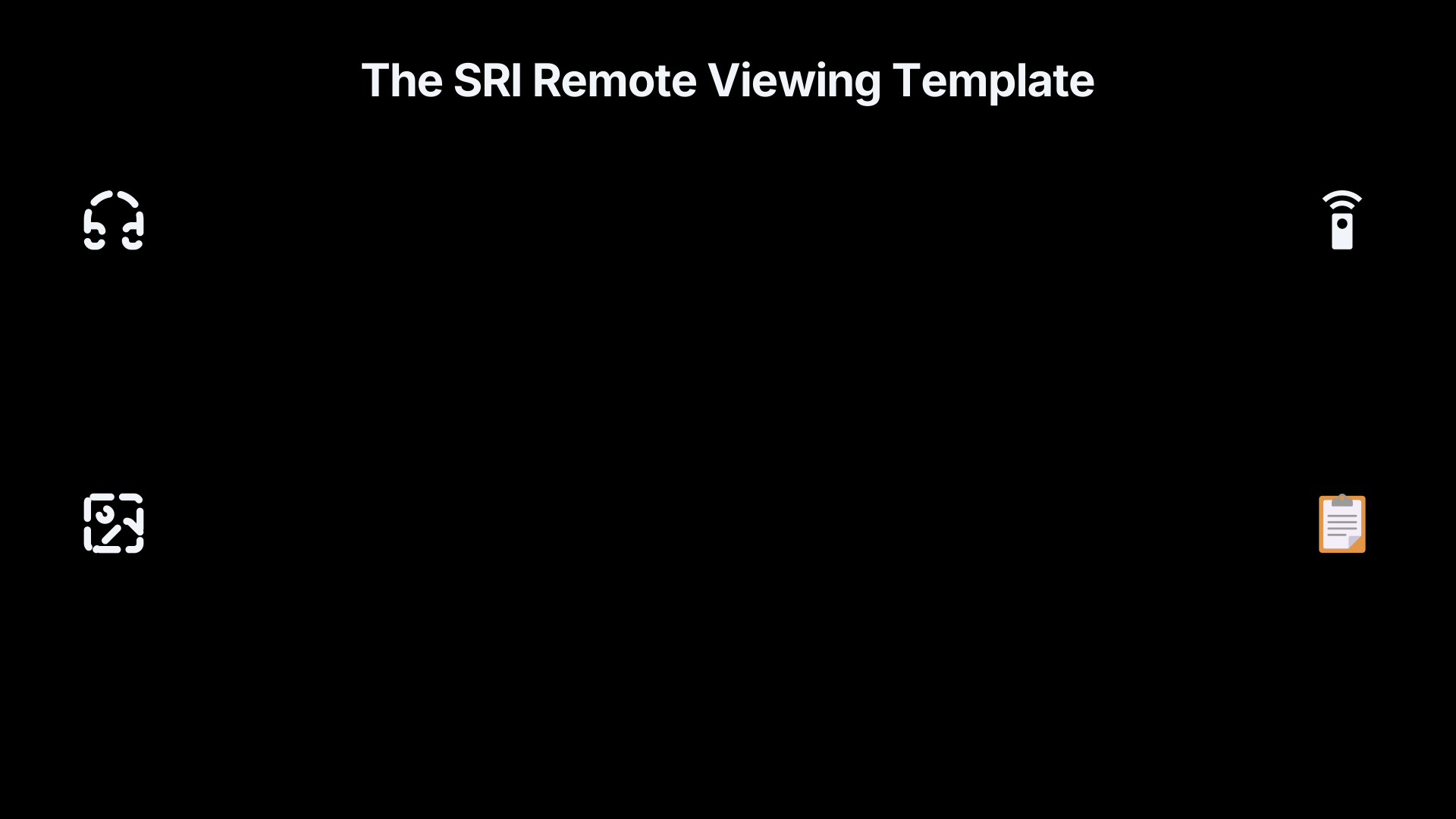
The SRI programme established more than the term “remote viewing”. It also created a practical research model that later organisations largely inherited. Beginning in the early 1970s under CIA sponsorship, Targ and Puthoff developed experiments in which a participant attempted to describe a distant location or target while isolated from ordinary sensory information. Sessions were recorded, compared against target material, and judged using structured scoring methods intended to minimise subjective interpretation. These procedures gave remote viewing the appearance of a repeatable laboratory protocol rather than a collection of spontaneous psychic anecdotes.[Government Attic]governmentattic.orgBeginning in February 1974, the SRI remote viewing program was being funded by the CIA through two different…Read more…
Equally important was the institutional setting. SRI was a respected defence contractor with experience handling classified government work. Although independent of Stanford University, its reputation gave the research credibility that a private paranormal organisation would not have enjoyed. For intelligence agencies concerned about reported Soviet interest in psychotronic and psychic research, SRI offered a technically credible environment in which extraordinary claims could at least be investigated under controlled conditions.[Government Attic]governmentattic.orgBeginning in February 1974, the SRI remote viewing program was being funded by the CIA through two different…Read more…
This combination of laboratory procedures, technical language and government sponsorship became the basic template for later remote-viewing programmes. The methodology changed over time, but the underlying assumption remained that remote viewing could be treated as an operational skill rather than merely a subject for parapsychological speculation.
How Later Programmes Inherited the Story
As responsibility shifted from early CIA contracts to military intelligence organisations, the personnel, terminology and administrative structures evolved, but the intellectual foundation remained tied to SRI. Programmes known at various times as SCANATE, Gondola Wish, Grill Flame, Center Lane, Sun Streak and eventually Stargate all traced their origins back to the SRI experiments conducted by Targ, Puthoff and their collaborators. The repeated renaming reflected changing sponsors and security arrangements rather than a complete restart of the research effort.[Wikipedia]WikipediaStargate Project (U.S. Army unitStargate Project (U.S. Army unit
Several forms of continuity are particularly notable:
- Research assumptions: Later programmes continued to investigate whether remote viewing could provide intelligence unavailable through conventional collection methods.
- Experimental procedures: Structured sessions, target selection, transcript analysis and independent judging remained central features, even as protocols became more formalised.
- Training approaches: Techniques such as Coordinate Remote Viewing, developed with significant input from Ingo Swann and Harold Puthoff, became influential within later operational units.
- Personnel networks: Researchers, consultants and experienced viewers often moved between successive programmes, carrying institutional knowledge across changing organisational structures.[ResearchGate]researchgate.netRay Hyman. Jessica Utts and I were commissioned to evaluate the research on remote viewing and related phenomena which was carried out…
The result was not a single uninterrupted project but a chain of related programmes that viewed themselves as continuing work first demonstrated at SRI.
Why SRI Remained the Origin Story
Origin stories often simplify complicated histories, and remote viewing is no exception. The prominence of SRI arose partly because it supplied several elements that later advocates found persuasive.
First, SRI provided published scientific papers and technical reports that could be cited as evidence that remote viewing had entered mainstream scientific investigation. Second, government funding created an impression that intelligence agencies believed the phenomenon warranted serious attention. Third, a handful of striking case reports—particularly involving early viewers such as Pat Price—became widely repeated examples suggesting operational promise, regardless of ongoing disputes about interpretation and verification.[Government Attic]governmentattic.orgBeginning in February 1974, the SRI remote viewing program was being funded by the CIA through two different…Read more…
Because later programmes inherited these narratives, discussions of Stargate frequently begin with SRI rather than with the administrative history of military intelligence. In effect, SRI became the movement’s founding chapter, even though much of the subsequent operational work occurred elsewhere under different leadership.
Why the Chain Was Less Continuous Than It Appears
Despite frequent references to a direct line from SRI to Stargate, the historical record shows important discontinuities.
Government sponsorship changed repeatedly among agencies including the CIA, the Defense Intelligence Agency and Army Intelligence. Research priorities shifted between basic experimentation, operational trials and training. Individual protocols were revised as researchers attempted to address methodological criticisms, particularly those concerning sensory leakage, subjective judging and inadequate controls identified by sceptics during the 1970s and 1980s.[Center for Inquiry]cdn.centerforinquiry.orgCenter for InquiryEvaluation of the Military's Twenty-Year Program on…by RAY HYMAN · 1996 · Cited by 8 — At the beginning of last summ…
Later work conducted under Scientific Applications International Corporation (SAIC) also differed in important respects from the original SRI experiments. The 1995 review commissioned by the CIA distinguished between earlier SRI studies and later SAIC research, noting that some methodological weaknesses had been addressed in the newer experiments. Even so, disagreement remained over whether the resulting evidence demonstrated a genuine anomalous phenomenon or reflected statistical and procedural artefacts.[CIA]cia.govAN EVALUATION OF THE REMOTE VIEWING PROGRAMUtts and Hyman were asked to prepare independent reports based on their review. In this rev…
Consequently, describing Stargate as simply “the SRI programme continued” overlooks substantial organisational and methodological evolution over two decades.
The 1995 Review and the Reassessment of the Legacy
The most influential assessment of the entire legacy chain came after the programme ended. In 1995 the CIA commissioned the American Institutes for Research to evaluate both the scientific evidence and the intelligence value of the remote-viewing programme accumulated from SRI through later operational work. Two principal reviewers reached notably different conclusions.
Jessica Utts argued that the experimental results showed statistical evidence deserving serious scientific consideration, while emphasising that the mechanism remained unknown. Ray Hyman accepted that some findings appeared unusual but concluded that methodological concerns and the absence of reliable independent replication prevented claims that psychic functioning had been established.[CIA]cia.govAN EVALUATION OF THE REMOTE VIEWING PROGRAMUtts and Hyman were asked to prepare independent reports based on their review. In this rev…
The broader programme evaluation reached a more practical conclusion. Regardless of debates over statistical anomalies, reviewers found no convincing evidence that remote viewing had produced intelligence sufficiently specific, reliable or consistently actionable to justify operational use. The programme was subsequently terminated.[CIA]cia.govAN EVALUATION OF REMOTE VIEWING: RESEARCH…Utts and Hyman were asked to prepare independent reports based on their review. In this r…
Why the Origin Story Still Matters
The connection between SRI and Stargate continues to shape public understanding of remote viewing because it links an unconventional claim to recognised scientific institutions and government agencies. For supporters, this continuity suggests that experienced intelligence organisations repeatedly found enough promise to continue funding the work. For critics, the same history illustrates how institutional momentum can sustain a research programme despite unresolved methodological problems and limited operational success.
Both interpretations rely on the same historical chain. The difference lies in how that chain is understood: either as a progression from pioneering laboratory research toward practical application, or as a sequence of programmes built upon an influential but scientifically disputed starting point. The enduring importance of SRI therefore lies less in proving remote viewing than in establishing the narrative framework through which nearly all later military remote-viewing programmes have been interpreted.
Amazon book picks
Further Reading
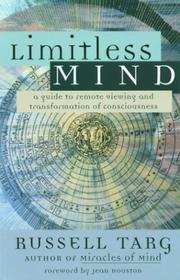
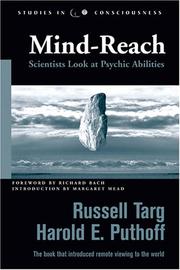
Books and field guides related to How SRI Became the Remote Viewing Origin Story. Use these as the next step if you want deeper reading beyond the article.
eBay marketplace picks
Marketplace Samples
Live-tested eBay searches with available results related to this page.

Endnotes
1.
Source: cia.gov
Link:https://www.cia.gov/readingroom/docs/CIA-RDP96-00791R000200180005-5.pdf
Source snippet
AN EVALUATION OF THE REMOTE VIEWING PROGRAMUtts and Hyman were asked to prepare independent reports based on their review. In this rev...
2.
Source: Wikipedia
Title: Parapsychology research at SRI
Link:https://en.wikipedia.org/wiki/Parapsychology_research_at_SRI
3.
Source: Wikipedia
Title: Stargate Project (U.S. Army unit)
Link:https://en.wikipedia.org/wiki/Stargate_Project_%28U.S._Army_unit%29
4.
Source: researchgate.net
Link:https://www.researchgate.net/publication/403178755_The_Star_Gate_Archives_Reports_of_the_United_States_Government_Sponsored_Psi_Program_1972-1995_Volume_4_Operational_Remote_Viewing_Memorandums_and_Reports
Source snippet
Ray Hyman. Jessica Utts and I were commissioned to evaluate the research on remote viewing and related phenomena which was carried out...
5.
Source: cia.gov
Link:https://www.cia.gov/readingroom/document/cia-rdp96-00791r000200180006-4
Source snippet
AN EVALUATION OF REMOTE VIEWING: RESEARCH...Utts and Hyman were asked to prepare independent reports based on their review. In this r...
6.
Source: researchgate.net
Link:https://www.researchgate.net/publication/267978941Evaluation_of_Program_on%27Anomalous_Mental_Phenomena%27
Source snippet
g and related phenomena which was carried out at Stanford Re-search...
7.
Source: Wikipedia
Title: Remote viewing
Link:https://en.wikipedia.org/wiki/Remote_viewing
Source snippet
Remote viewingThe program ran from 1975 to 1995 and ended after evaluators concluded that remote viewers consistently failed to produc...
8.
Source: governmentattic.org
Link:https://www.governmentattic.org/57docs/ThesisAnomalousHumanCognition2023.pdf
Source snippet
Beginning in February 1974, the SRI remote viewing program was being funded by the CIA through two different...Read more...
Published: February 1974
9.
Source: cdn.centerforinquiry.org
Link:https://cdn.centerforinquiry.org/wp-content/uploads/sites/29/1996/03/22165045/p21.pdf
Source snippet
Center for InquiryEvaluation of the Military's Twenty-Year Program on...by RAY HYMAN · 1996 · Cited by 8 — At the beginning of last summ...
Additional References
10.
Source: skepsis.nl
Link:https://skepsis.nl/stargate/
Source snippet
CIA onderzoekt ESP / remote viewingStargate onder het mes. Twintig jaar geheim militair onderzoek naar remote viewing. door Ray Hyman – S...
11.
Source: irp.fas.org
Link:https://irp.fas.org/program/collect/air1995.pdf
Source snippet
reportJavaScript is disabled. In order to continue, we need to verify that you're not a robot. This requires JavaScript. Enable JavaScrip...
12.
Source: philpapers.org
Link:https://philpapers.org/rec/HYMEOP
Source snippet
ting the program on "Anomalous Mental Phenomena" carried out at SRI International (formerly the...
13.
Source: reddit.com
Link:https://www.reddit.com/r/consciousness/comments/181s71r/the_cias_experiments_with_remote_viewing_and/
Source snippet
perimentation with Ingo Swann can provide some evidence toward “non-local...Read more...
14.
Source: pmc.ncbi.nlm.nih.gov
Title: PMCFollow‐up on the U.S
Link:https://pmc.ncbi.nlm.nih.gov/articles/PMC10275521/
Source snippet
Central Intelligence Agency's (CIA...by Á Escolà‐Gascón · 2023 · Cited by 10 — Reports on the declassified SRI and [SAIC experiments]({{ 'saic-tests/' | relative_url }}) were...
15.
Source: e-space.mmu.ac.uk
Title: mmu.ac.uk Follow‐up on the U.S
Link:https://e-space.mmu.ac.uk/631983/3/Brain%20and%20Behavior%20-%202023%20-%20Escol%20%E2%80%90Gasc%20n%20-%20Follow%E2%80%90up%20on%20the%20U%20S%20%20Central%20Intelligence%20Agency%20s%20%20CIA%20%20remote%20viewing.pdf
Source snippet
Central Intelligence Agency's (CIA...by Á Escolà-Gascón · 2023 · Cited by 10 — Utts determined that the evidence from the SRI and SAIC e...
16.
Source: ciaotest.cc.columbia.edu
Title: Since then, several research
Link:https://ciaotest.cc.columbia.edu/olj/sa/sa_jan02srm01.html
Source snippet
CIAOClairvoyant Remote Viewing: The US Sponsored Psychic...Information regarding this top-secret programme was partly declassified by th...
17.
Source: ucdavis.edu
Link:https://www.ucdavis.edu/news/[psychic-spying
Source snippet
'Psychic Spying' Research Produces Credible Evidence28 Nov 1995 — " Utts and Hyman evaluated a 20-year, $20 million basic research progra...
18.
Source: youtube.com
Title: Inside The Military’s Secret Psychic Unit
Link:https://www.youtube.com/watch?v=9nY3hu76SyU
Source snippet
Project Stargate: The Day a Psychic Spy Saw Through Time...
19.
Source: journalofscientificexploration.org
Link:https://journalofscientificexploration.org/index.php/jse/article/view/3865/2573
Source snippet
The Star Gate Archives: Reports of the United States...Since then, I have read and reviewed several books about remote viewing...
Topic Tree
Follow this branch
Parent topic
Targ Puthoff The Physicists Behind Remote Viewing's RiseRelated pages 5
- Authority Problem Did Physics Credentials Make Remote Viewing Credible?
- CIA Interest Did CIA Interest Prove Remote Viewing Worked?
- Geller Testing Why Uri Geller Made SRI More Controversial
- Mind Reach How Mind Reach Sold Remote Viewing to Readers
- Viewer Language Why Calling Psychics 'Viewers' Changed the Story