Within Remote Viewing
Is Remote Viewing Just ESP?
Remote viewing is usually framed as a disciplined ESP task, but it overlaps with broader psychic claim traditions.

On this page
- Shared Claims
- Protocol Differences
- Why Terminology Matters
Page outline Jump by section
Introduction
Remote viewing is best understood as a specialised, protocol-driven version of a wider ESP claim, not as a completely separate category of psychic ability. ESP, or extrasensory perception, is the umbrella idea that information can be gained without the ordinary senses; it usually includes telepathy, clairvoyance and precognition. Remote viewing narrows that broad claim into a task: a person attempts to describe a hidden, distant or future target while ordinary routes of information are meant to be blocked. That distinction matters because remote viewing borrowed the language of parapsychology but tried to make psychic claims testable, repeatable and potentially useful. The result was a hybrid: more disciplined than a public psychic reading, but still dependent on the same disputed premise that minds can access information beyond known sensory channels.[Parapsychology Foundation+2SPR]parapsychology.orgFoundation Basic Terms | Parapsychology Foundation, IncParapsychology FoundationBasic Terms | Parapsychology Foundation, Inc…
Shared Claims
Remote viewing and older ESP traditions overlap at the central claim: information can be obtained without seeing, hearing, touching, inferring or being told. In parapsychology’s own vocabulary, clairvoyance means alleged information about an external object or event rather than another person’s mind; telepathy concerns another conscious being’s thoughts or activity; precognition concerns future events; and “psi” is often used as the umbrella term covering ESP and psychokinesis. Remote viewing normally sits closest to clairvoyance when the target is a current hidden place or object, and closest to precognition when the target is selected or revealed only after the session.[Parapsychology Foundation]parapsychology.orgFoundation Basic Terms | Parapsychology Foundation, IncParapsychology FoundationBasic Terms | Parapsychology Foundation, Inc…
The most important difference is not the alleged faculty but the presentation. A psychic claim might come as a dream, séance message, hunch, vision, mediumistic communication or fortune-telling statement. Remote viewing reframes the same family of claims as a controlled information task. The viewer is usually given a target identifier, not the target itself, then asked to record impressions, sketches and sensory fragments before feedback. The language is deliberately procedural: viewer, monitor, target, transcript, judging, feedback. That vocabulary makes remote viewing sound less like spontaneous clairvoyance and more like a laboratory or intelligence method.[CIA]cia.govOpen source on cia.gov.
This is why remote viewing became attractive to researchers and intelligence sponsors in a way that ordinary psychic performance often did not. A public psychic reading can be hard to score because the statements may be personal, vague or retrofitted after the fact. A remote-viewing trial, at least in principle, can be judged against a defined target. That does not prove the phenomenon exists, but it explains why remote viewing was treated as a cleaner test case for ESP than many looser psychic claims.[Nature]nature.comInformation transmission under conditions of sensory shielding | NatureInformation transmission under conditions of sensory shielding | Nature…
Protocol Differences
Remote viewing’s distinctive feature is the attempt to control the information environment. In a classic experiment, the target is hidden from the viewer, the viewer records impressions before feedback, and a later judging process compares the session material with possible targets. Targ and Puthoff’s 1974 Nature paper framed the issue as “information transmission under conditions of sensory shielding”, reporting experiments that they said suggested people could obtain environmental information not available to the known senses.[Nature]nature.comInformation transmission under conditions of sensory shielding | NatureInformation transmission under conditions of sensory shielding | Nature…
That laboratory framing separates remote viewing from many everyday psychic claims in three practical ways:
- A defined target: The claim is tied to a specific object, image, location or event, rather than a broad reading about someone’s life.
- A record made before feedback: Notes and sketches are meant to exist before the viewer learns the answer.
- A judging stage: The result is assessed by comparing the viewer’s response with the actual target and, ideally, with decoys.
These features were meant to reduce the classic problems of psychic performance: leading questions, cold reading, memory distortion, selective recall and generous interpretation. They also created new weak points, especially where target pools, transcripts or judging procedures allowed subtle clues to leak into the result.
The best-known criticism of early remote-viewing work focused precisely on this issue. Psychologists David Marks and Richard Kammann attempted to replicate the SRI experiments and reported that they could not verify Targ and Puthoff’s conclusions. Marks later argued in Nature that sensory cues invalidated some remote-viewing experiments; subsequent discussion centred on whether judges could match transcripts to targets because of paranormal information or because the transcripts contained ordinary clues such as dates, ordering information or contextual hints.[ResearchGate+2Nature]researchgate.netResearch Gate Information transmission in remote viewing experimentsResearch Gate Information transmission in remote viewing experiments
The later U.S. government review sharpened the same problem. The American Institutes for Research evaluation found that recent laboratory work had produced a statistically significant effect, but it did not treat that as an unequivocal demonstration of remote viewing as a paranormal phenomenon. The review highlighted unresolved questions about independent judging, alternative explanations and whether observed effects could be attributed to the viewer, the judge, their interaction or subtle procedural influences.[National Security Archive]nsarchive2.gwu.eduNational Security Archiveremote~1.PD FNational Security Archiveremote~1.PD F
Why It Is Not “Just Being Psychic”
Calling remote viewing “just ESP” is understandable, but it misses the reason the term was created. Remote viewing is not a claimed power in the same loose sense as “psychic ability”; it is a task format for testing or applying such a claim. A person may claim to be clairvoyant, but a remote-viewing protocol asks that person to produce target-related material under constrained conditions. In that sense, remote viewing is to ESP what a standardised memory test is to memory: it does not create the underlying ability, but it structures a way to test it.
This distinction is especially clear in “controlled remote viewing” and related training traditions. These approaches treat the viewer’s impressions as noisy data that must be separated from imagination, analysis and guesswork. The claimed skill is not merely “seeing” a hidden place, but recording low-level impressions before the conscious mind turns them into stories. Supporters therefore present remote viewing as disciplined, trainable and feedback-driven rather than purely gifted or mystical.[scribd.com]scribd.comOpen source on scribd.com.
Yet the same distinction can be overstated. Even the most structured version still depends on an ESP premise: that information has entered the viewer’s awareness without a known sensory route. The procedure may be more disciplined than a psychic reading, but the claimed mechanism remains unexplained. This is one reason sceptics and cautious reviewers separate protocol quality from paranormal interpretation. A better protocol can reduce fraud, cueing and subjective validation; it cannot by itself show that the remaining signal is psychic.[National Security Archive]nsarchive2.gwu.eduNational Security Archiveremote~1.PD FNational Security Archiveremote~1.PD F
Where Remote Viewing Borrows From Psychic Traditions
Remote viewing borrowed heavily from older psychic categories while changing their packaging. The content of a session often resembles clairvoyance: shapes, textures, buildings, water, movement, emotions or scenes reported without ordinary access. When the target is future-selected, remote viewing overlaps with precognition. When early experiments used a person at the target site as a “beacon” or sender, the design also touched telepathy, because information might be imagined as coming from another person rather than directly from the place.[Parapsychology Foundation+2SPR]parapsychology.orgFoundation Basic Terms | Parapsychology Foundation, IncParapsychology FoundationBasic Terms | Parapsychology Foundation, Inc…
The borrowing is historical as well as conceptual. Targ and Puthoff’s 1974 article cited earlier ESP and telepathy literature, placing remote viewing inside a longer parapsychological tradition even as it introduced a more technical-sounding experimental frame. The U.S. intelligence context then changed the public meaning of the subject: “psychic spying” made remote viewing sound operational, strategic and modern, while older words such as clairvoyance or mediumship sounded occult or spiritual.[Nature]nature.comInformation transmission under conditions of sensory shielding | NatureInformation transmission under conditions of sensory shielding | Nature…
This change in language helped remote viewing travel between worlds. In parapsychology, it could be discussed as anomalous cognition. In intelligence history, it became part of Stargate and related programmes. In popular culture, it became “psychic spying”. Among practitioners, it became a teachable method with stages, monitors and feedback. The same core claim was therefore rebranded for different audiences: laboratory, military, spiritual and commercial.
The Evidence Dispute Is Also a Terminology Dispute
Remote viewing debates often look like arguments about evidence, but they are also arguments about what kind of claim is being made. Supporters may argue that the relevant question is whether viewers score above chance under blind conditions. Critics often reply that statistical anomalies are not enough unless sensory leakage, judging bias, selective reporting and ordinary psychological explanations have been ruled out. The difference matters because “ESP exists” is a much stronger claim than “some trials produced results that are difficult to explain immediately”.[National Security Archive]nsarchive2.gwu.eduNational Security Archiveremote~1.PD FNational Security Archiveremote~1.PD F
Jessica Utts, one of the reviewers of the government-funded research, argued that the evidence supported the existence of psychic functioning and that the observed effect was in the small-to-medium range seen in other parapsychology work. Ray Hyman, the sceptical reviewer, remained unconvinced, arguing that the research had not provided the kind of independent replication and causal clarity needed for a scientific conclusion. Both positions are important because they show that the dispute was not simply “believers versus debunkers”; it was also about what standards should apply before a statistical effect is interpreted as psychic.[CIA+2UC Davis]cia.govOpen source on cia.gov.
The American Institutes for Research conclusion was notably cautious. It acknowledged statistically significant laboratory findings but said the research did not unambiguously support a paranormal interpretation and had not shown value for intelligence operations. That finding cuts directly across popular psychic-spy narratives: even if one grants that some experiments produced anomalous results, that is not the same as showing a reliable information-gathering tool.[National Security Archive]nsarchive2.gwu.eduNational Security Archiveremote~1.PD FNational Security Archiveremote~1.PD F
Why Terminology Matters
The terms used for remote viewing shape how people judge the claim. “ESP” makes it sound like part of a broad paranormal category. “Clairvoyance” connects it to older psychic traditions. “Anomalous cognition” makes it sound more neutral and research-friendly. “Psychic spying” makes it sound operational and dramatic. “Remote viewing” sits between these labels: technical enough to suggest method, but broad enough to preserve the extraordinary claim.
That wording affects evidence standards. A psychic entertainer may be judged by whether an audience feels impressed. A clairvoyant anecdote may be judged by personal meaning. A remote-viewing experiment, by contrast, invites questions about blinding, target selection, transcript handling, statistical analysis and independent judging. The label therefore raises the bar: once a claim is framed as a disciplined protocol, it becomes fair to ask whether the protocol actually prevents normal information leakage and whether independent researchers can reproduce the result.[Nature+2PubMed]nature.comOpen source on nature.com.
Terminology also affects public misunderstanding. When people hear that the CIA or U.S. military studied remote viewing, they may infer official confirmation of psychic powers. The historical record supports a narrower conclusion: agencies funded research because they wanted to test a possible intelligence tool, partly in a Cold War setting, but later reviews did not find reliable operational value. Calling the subject “remote viewing” rather than “psychic claims” can make exploratory funding sound like endorsement.[UC Davis]ucdavis.eduUC Davis'Psychic Spying' Research Produces Credible Evidence | UC DavisUC Davis'Psychic Spying' Research Produces Credible Evidence | UC Davis
A Useful Comparison
Remote viewing is not separate from ESP in the way chemistry is separate from astrology; it is a specialised branch of the same disputed family of claims. The difference lies in format, not in the underlying paranormal premise.
QuestionESP and broad psychic claimsRemote viewingWhat is claimed?Information beyond normal sensesInformation about a defined hidden, distant or future targetTypical formHunches, readings, visions, dreams, mediumistic claims, telepathy or clairvoyanceSession notes, sketches and impressions recorded under a protocolMain strengthBroad cultural familiarity and many reported experiencesMore testable because the target and response can be documentedMain weaknessOften vague, personal, retrospective or hard to scoreStill vulnerable to cueing, judging bias, loose matching and weak replicationScientific statusNot accepted by mainstream science as establishedMore formally studied, but not established as a reliable paranormal ability or intelligence tool
The fairest summary is that remote viewing is ESP made procedural. It tries to turn a broad psychic claim into a controlled task with targets, records and scoring. That makes it more interesting historically and methodologically than many psychic claims, but it does not remove the central scientific burden. To be more than a disciplined form of clairvoyance, remote viewing would need robust evidence that survives strict blinding, independent judging, independent replication and practical use. The major reviews to date show why the distinction matters: better terminology and tighter protocols can make a claim easier to test, but they do not by themselves make the claim true.
Amazon book picks
Further Reading
Books and field guides related to Is Remote Viewing Just ESP?. Use these as the next step if you want deeper reading beyond the article.
Phenomena
Covers the military and intelligence context behind remote viewing and the lab-to-operations gap.
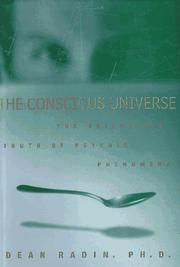
The Conscious Universe: The Scientific Truth of Psychic Pheno...
Places remote viewing within the wider ESP literature.
The Demon-Haunted World: Science as a Candle in the Dark
Provides a scientific perspective on ESP claims.
Phenomena: The Secret History of the U.S. Government's Invest...
Shows how remote viewing developed from wider psychic research.
eBay marketplace picks
Marketplace Samples
Live-tested eBay searches with available results related to this page.



Endnotes
1.
Source: parapsychology.org
Title: Foundation Basic Terms | Parapsychology Foundation, Inc
Link:https://parapsychology.org/basic-terms/
Source snippet
Parapsychology FoundationBasic Terms | Parapsychology Foundation, Inc...
2.
Source: spr.ac.uk
Title: SPRGlossary | spr.ac.uk
Link:https://www.spr.ac.uk/research/glossary
3.
Source: nature.com
Title: Information transmission under conditions of sensory shielding | Nature
Link:https://www.nature.com/articles/251602a0
Source snippet
Information transmission under conditions of sensory shielding | Nature...
4.
Source: cia.gov
Link:https://www.cia.gov/readingroom/docs/CIA-RDP96-00789R002200070001-0.pdf
5.
Source: researchgate.net
Title: Research Gate Information transmission in remote viewing experiments
Link:https://www.researchgate.net/publication/15839349_Information_transmission_in_remote_viewing_experiments
6.
Source: nature.com
Link:https://www.nature.com/articles/292177a0
7.
Source: scribd.com
Link:https://www.scribd.com/document/317587085/The-Controlled-Remote-Viewing-Manual-pdf
8.
Source: researchgate.net
Title: 403180890 Experts’ Remote Viewing Guidelines
Link:https://www.researchgate.net/publication/403180890_Experts%27_Remote_Viewing_Guidelines
9.
Source: cia.gov
Link:https://www.cia.gov/readingroom/docs/CIA-RDP96-00791R000200070001-9.pdf
10.
Source: researchgate.net
Link:https://www.researchgate.net/publication/18741867_Information_Transmission_Under_Conditions_of_Sensory_Shielding
11.
Source: researchgate.net
Link:https://www.researchgate.net/publication/333228024_An_Assessment_of_the_Evidence_for_Psychic_Functioning
12.
Source: researchgate.net
Link:https://www.researchgate.net/publication/267978941Evaluation_of_Program_on%27Anomalous_Mental_Phenomena%27
13.
Source: medium.com
Link:https://medium.com/remote-viewing-community-magazine/remote-viewing-definition-protocol-and-corollaries-dca159934230
14.
Source: cia.gov
Link:https://www.cia.gov/readingroom/docs/CIA-RDP96-00791R000200180005-5.pdf
15.
Source: cia.gov
Link:https://www.cia.gov/readingroom/document/cia-rdp96-00787r000100220001-8
16.
Source: cia.gov
Link:https://www.cia.gov/readingroom/document/cia-rdp79-00999a000200010008-7
17.
Source: cia.gov
Link:https://www.cia.gov/readingroom/docs/CIA-RDP96-00791R000200180006-4.pdf
18.
Source: cia.gov
Link:https://www.cia.gov/readingroom/docs/CIA-RDP96-00788R001200230015-9.pdf
19.
Source: cia.gov
Link:https://www.cia.gov/readingroom/docs/CIA-RDP96-00789R002600250001-6.pdf
20.
Source: cia.gov
Link:https://www.cia.gov/readingroom/docs/CIA-RDP96-00789R002200650001-6.pdf
21.
Source: cia.gov
Link:https://www.cia.gov/readingroom/docs/CIA-RDP96-00787R000200090017-5.pdf
22.
Source: cia.gov
Link:https://www.cia.gov/readingroom/docs/CIA-RDP96-00789R001300010001-6.pdf
23.
Source: archive.org
Title: Full text of “Daz Smith
Link:https://archive.org/stream/daz-smith-crv-controlled-remote-viewing-manuals_2/Daz%20Smith%20-%20CRV%20-%20Controlled%20Remote%20Viewing%20Manuals_djvu.txt
24.
Source: parapsychological.org
Link:https://parapsychological.org/
25.
Source: nsarchive2.gwu.edu
Title: National Security Archiveremote~1.PD F
Link:https://nsarchive2.gwu.edu/NSAEBB/NSAEBB438/docs/doc_57.pdf
26.
Source: pubmed.ncbi.nlm.nih.gov
Link:https://pubmed.ncbi.nlm.nih.gov/3945330/
27.
Source: ucdavis.edu
Title: UC Davis’Psychic Spying’ Research Produces Credible Evidence | UC Davis
Link:https://www.ucdavis.edu/news/psychic-spying-research-produces-credible-evidence
28.
Source: Wikipedia
Link:https://en.wikipedia.org/wiki/Parapsychology
29.
Source: Wikipedia
Title: Remote viewing
Link:https://en.wikipedia.org/wiki/Remote_viewing
30.
Source: explorable.com
Title: extrasensory perception
Link:https://explorable.com/extrasensory-perception
31.
Source: pubmed.ncbi.nlm.nih.gov
Link:https://pubmed.ncbi.nlm.nih.gov/4423858/
32.
Source: pubmed.ncbi.nlm.nih.gov
Link:https://pubmed.ncbi.nlm.nih.gov/7360248/
33.
Source: pubmed.ncbi.nlm.nih.gov
Link:https://pubmed.ncbi.nlm.nih.gov/7242682/
34.
Source: psychologytoday.com
Link:https://www.psychologytoday.com/gb/basics/parapsychology
35.
Source: rviewer.com
Link:https://rviewer.com/controlled-remote-viewing/
36.
Source: library.umbc.edu
Link:https://library.umbc.edu/specialcollections/garrett/parapsychology/
37.
Source: ics.uci.edu
Link:https://www.ics.uci.edu/~jutts/may.pdf
38. Source: citeseerx.ist.psu.edu
39.
Source: skepsis.nl
Link:https://skepsis.nl/[stargate
40.
Source: sixthsensereader.org
Title: remote viewing
Link:https://sixthsensereader.org/about-the-book/abcderium-index/remote-viewing/
41.
Source: envisioning.com
Link:https://www.envisioning.com/research/xenotech/psi-research-infrastructure
Additional References
42.
Source: youtube.com
Title: How to Remote View & Increase Psychic Abilities with Telepathy Tapes Researcher
Link:https://www.youtube.com/watch?v=jlt2arA5suo
Source snippet
Inside Operation Stargate: The CIA's Psychic Spy Experiment...
43.
Source: youtube.com
Title: Inside Operation Stargate: The CIA’s Psychic Spy Experiment
Link:https://www.youtube.com/watch?v=oasTnsLw_n8
Source snippet
Remote Viewing Explained: How the Mind Sees Without Eyes...
44.
Source: youtube.com
Title: Remote Viewing and Statistical Validation
Link:https://www.youtube.com/watch?v=YrwAiU2g5RU
Source snippet
Remote Viewing Training, Part One: The Initial Phases, with Paul H. Smith...
45.
Source: youtube.com
Title: Remote Viewing Explained: How the Mind Sees Without Eyes
Link:https://www.youtube.com/watch?v=whpZzUwrUNU
Source snippet
Remote Viewing and Statistical Validation...
46.
Source: academia.edu
Link:https://www.academia.edu/28187202/Be_All_That_You_Can_Be_Enhancing_Human_Performance1
47.
Source: reddit.com
Link:https://www.reddit.com/r/remoteviewing/comments/qrmn2c/can_someone_explain_remote_viewing_to_me_i_dont/
48.
Source: centerlane-rv.org
Link:https://centerlane-rv.org/books
49.
Source: nationalacademies.org
Link:https://www.nationalacademies.org/publications/1025
50.
Source: facebook.com
Link:https://www.facebook.com/groups/268772456134/posts/10158422119936135/
51.
Source: academia.edu
Link:https://www.academia.edu/136849593/Experts_Remote_Viewing_Guidelines
Topic Tree