Within Targ Puthoff
Did CIA Interest Prove Remote Viewing Worked?
Government funding showed official curiosity about remote viewing, not proof that psychic spying worked.
On this page
- What agency interest actually meant
- Why Cold War uncertainty encouraged funding
- How public memory turned evaluation into endorsement
Page outline Jump by section
Introduction
The CIA’s involvement with remote viewing is often presented as if it settled the question of whether psychic perception is real. It did not. What government interest demonstrated was that intelligence agencies considered the possibility worth investigating during the Cold War, not that they concluded the phenomenon worked. This distinction is central to understanding the legacy of Russell Targ and Harold Puthoff’s research. Their work at Stanford Research Institute (SRI) attracted government funding because intelligence organisations routinely examine unconventional ideas that might offer even a small strategic advantage. The existence of classified programmes and declassified documents therefore reflects official curiosity and risk management rather than official validation.

The misconception persists because many people remember that the CIA funded or inherited parts of the programme, but not how the programme ended. When the intelligence community commissioned an independent review in 1995, the overall judgement was that, despite some intriguing experimental findings, remote viewing had not produced information reliable enough to support intelligence operations.[Wikipedia+2UC Davis]WikipediaStargate Project (U.S. Army unitStargate Project (U.S. Army unit
What agency interest actually meant
Government agencies investigate many possibilities that ultimately prove unsuccessful. During the Cold War, the cost of overlooking a genuine breakthrough could have been far greater than the cost of funding a relatively modest research programme. Intelligence organisations therefore explored topics ranging from unconventional aircraft concepts to behavioural science, cryptography and alleged psychic phenomena.
The remote-viewing programme evolved through several code names and sponsors over more than two decades, involving the CIA, the Defense Intelligence Agency (DIA), Army Intelligence and defence contractors. Funding shifted between organisations as priorities changed. This institutional history is sometimes mistaken for continuous endorsement, when it was largely an ongoing effort to determine whether any operational value existed.[Wikipedia]WikipediaStargate Project (U.S. Army unitStargate Project (U.S. Army unit
Importantly, intelligence agencies distinguish between research and operational capability. A project may receive funding precisely because its usefulness is uncertain. The existence of classified contracts therefore says little by itself about whether the underlying hypothesis was confirmed.
Why Cold War uncertainty encouraged funding
The strategic environment of the 1970s helps explain why remote viewing received serious attention despite extraordinary claims.
Several factors encouraged investigation:
- Concern about Soviet research. American intelligence received reports that the Soviet Union was investing in parapsychology and related subjects. Even if those reports were exaggerated, officials worried that ignoring them could create a strategic blind spot.
- Relatively low research costs. Compared with major weapons programmes, exploratory studies into anomalous cognition required modest budgets.
- High potential payoff. If remote viewing had proved reliable, even occasionally, it might have transformed intelligence gathering by allowing access to otherwise inaccessible targets.
- Scientific uncertainty. Some early laboratory results appeared statistically unusual enough to justify further testing, even though they remained controversial.
This logic was consistent with broader Cold War decision-making. Intelligence agencies frequently funded exploratory research without assuming that every project would succeed. In that context, remote viewing represented a speculative hedge against uncertainty rather than acceptance of paranormal claims.[History+2Wikipedia]history.comcia esp espionage soviet union cold warThe CIA Recruited 'Mind Readers' to Spy on the Soviets in…17 Oct 2018 — The CIA, Army and Defense Intelligence Agency recruited…

Why evaluation did not become endorsement
One reason the CIA connection is misunderstood is that many accounts stop at the existence of the programme rather than its assessment.
In 1995, after the programme had accumulated roughly two decades of work, the CIA commissioned the American Institutes for Research (AIR) to conduct an independent review. Two prominent reviewers reached different conclusions about the scientific evidence.
Statistician Jessica Utts argued that some experimental results showed statistically significant effects that merited further scientific investigation. However, psychologist Ray Hyman agreed that some statistical findings appeared unusual while arguing that methodological weaknesses, insufficient independent replication and alternative explanations prevented concluding that psychic functioning had been demonstrated. Both reviewers therefore recognised that the evidence raised interesting scientific questions, but they differed on how much confidence it deserved.[ResearchGate+2UC Davis]researchgate.netEvaluation of Program on 'Anomalous Mental Phenomena'PDF | Jessica Utts and I were commissioned to evaluate the research on r…
The broader AIR assessment focused on intelligence usefulness rather than laboratory statistics. It concluded that remote-viewing reports were generally too vague, inconsistent and unreliable to support operational decision-making. According to the review, no verified intelligence successes justified continuing the programme as an intelligence collection tool. The CIA subsequently terminated the effort.[Wikipedia]WikipediaStargate Project (U.S. Army unitStargate Project (U.S. Army unit
This outcome is frequently overlooked. A government evaluation that identifies interesting anomalies is not the same as a government conclusion that psychic spying works.
How public memory turned evaluation into endorsement
Public memory has simplified a much more complicated history.
Several factors contributed to the misconception:
- Classification created mystery. Secret programmes naturally encourage speculation. Once documents became public, many readers assumed secrecy implied extraordinary discoveries rather than experimental uncertainty.
- Media emphasis on unusual stories. Dramatic accounts of individual “hits” attract more attention than discussions of inconsistent overall performance or failed sessions.
- Confusion between agencies. Many reports refer simply to “the CIA programme”, even though responsibility shifted among several military and intelligence organisations over the years.
- Selective storytelling. Popular books, documentaries and films often highlight remarkable anecdotes while giving less attention to the final operational assessment.
As a result, the public often remembers that the government studied remote viewing but forgets that the same government ultimately concluded it had not demonstrated sufficient practical value for intelligence work.[History]history.comcia esp espionage soviet union cold warThe CIA Recruited 'Mind Readers' to Spy on the Soviets in…17 Oct 2018 — The CIA, Army and Defense Intelligence Agency recruited…

Why this distinction matters for assessing Targ and Puthoff’s legacy
For Russell Targ and Harold Puthoff, government sponsorship remains one of the strongest arguments advanced by supporters. It is understandable why the association carries weight: respected defence contractors, classified funding and years of official attention make the research appear more credible than typical paranormal investigations.
However, institutional interest should not be confused with scientific confirmation. Governments routinely investigate uncertain possibilities, particularly where national security is involved. Funding reflects a willingness to test a hypothesis under conditions of uncertainty, not a declaration that the hypothesis has been verified.
The enduring debate surrounding Targ and Puthoff therefore turns less on whether intelligence agencies were interested—which is well documented—and more on whether the evidence generated by that interest met the standards required for scientific acceptance and dependable operational use. On that question, the historical record remains mixed: proponents point to intriguing experimental findings, while the intelligence community’s own final review concluded that remote viewing had not become a reliable intelligence capability.[Wikipedia+2ResearchGate]WikipediaStargate Project (U.S. Army unitStargate Project (U.S. Army unit
Amazon book picks
Further Reading
Books and field guides related to Did CIA Interest Prove Remote Viewing Worked?. Use these as the next step if you want deeper reading beyond the article.
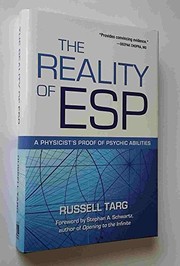
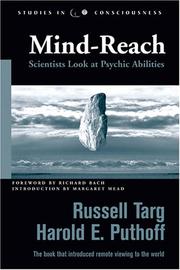
Mind-Reach
First published 2005. Subjects: Consciousness, Parapsychology, Case studies.
Reading the Enemy's Mind : Inside Star Gate
First published 2005. Subjects: United states, central intelligence agency, Parapsychology, Military intelligence.
eBay marketplace picks
Marketplace Samples
Live-tested eBay searches with available results related to this page.


Endnotes
1.
Source: Wikipedia
Title: Stargate Project (U.S. Army unit)
Link:https://en.wikipedia.org/wiki/Stargate_Project_%28U.S._Army_unit%29
2.
Source: cia.gov
Link:https://www.cia.gov/readingroom/docs/CIA-RDP96-00789R002800180001-2.pdf
Source snippet
l research, in- house investigations) of the STAR...Read more...
3.
Source: history.com
Title: cia esp espionage soviet union cold war
Link:https://www.history.com/articles/cia-esp-espionage-soviet-union-cold-war
Source snippet
The CIA Recruited 'Mind Readers' to Spy on the Soviets in...17 Oct 2018 — The CIA, Army and Defense Intelligence Agency recruited...
4.
Source: researchgate.net
Link:https://www.researchgate.net/publication/267978941Evaluation_of_Program_on%27Anomalous_Mental_Phenomena%27
Source snippet
Evaluation of Program on 'Anomalous Mental Phenomena'PDF | Jessica Utts and I were commissioned to evaluate the research on r...
5.
Source: Wikipedia
Title: Central Intelligence Agency
Link:https://en.wikipedia.org/wiki/Central_Intelligence_Agency
Source snippet
Central Intelligence AgencyThe Central Intelligence Agency (CIA) /ˌsiː.aɪˈeɪ/ is a civilian foreign intelligence service of the federa...
6.
Source: Wikipedia
Title: Remote viewing
Link:https://en.wikipedia.org/wiki/Remote_viewing
Source snippet
Remote viewingThe program ran from 1975 to 1995 and ended after evaluators concluded that remote viewers consistently failed to produc...
7.
Source: cia.gov
Link:https://www.cia.gov/
Source snippet
As the world's premier foreign intelligence agency, the work we do at CIA is vital to US national security. We collect and analyze for...
8.
Source: cia.gov
Link:https://www.cia.gov/legacy/cia-history/
Source snippet
of CIAThe Central Intelligence Agency. The National Security Act of 1947 established CIA as an independent, civilian intelligence...
9.
Source: cia.gov
Link:https://www.cia.gov/careers
Source snippet
CIA CareersWe are an Agency defined by our mission, values, and people. Together we accomplish what others cannot accomplish and go where...
10.
Source: ucdavis.edu
Link:https://www.ucdavis.edu/news/psychic-spying-research-produces-credible-evidence
Source snippet
UC Davis'Psychic Spying' Research Produces Credible Evidence28 Nov 1995 — " Utts and Hyman evaluated a 20-year, $20 million basic researc...
Additional References
11.
Source: skepsis.nl
Link:https://skepsis.nl/stargate/
Source snippet
CIA onderzoekt ESP / remote viewingStargate onder het mes. Twintig jaar geheim militair onderzoek naar remote viewing. door Ray Hyman – S...
12.
Source: philpapers.org
Link:https://philpapers.org/rec/HYMEOP
Source snippet
Evaluation of Program on Anomalous Mental Phenomena.by R Hyman · Cited by 74 — Professor Jessica Utts and I were given the task of evalua...
13.
Source: medium.com
Link:https://medium.com/the-peculiar-truth/the-peculiar-truth-about-the-cias-project-stargate-61ac0534d2f4
Source snippet
The Peculiar Truth about the CIA's Project StargateFifty years ago, Project Stargate employed people who supposedly possessed extra senso...
14.
Source: facebook.com
Link:https://www.facebook.com/historyoasis/posts/from-1972-to-1995-the-united-states-military-invested-over-20-million-in-one-of-/790173214116954/
Source snippet
government program that explored the potential for using psychic phenomena, such as remote viewing...Read more...
15.
Source: facebook.com
Link:https://www.facebook.com/AskImtinan/posts/project-stargate-the-cias-search-for-tabut-e-sakinahin-1972-the-cia-secretly-fun/1575907587435890/
Source snippet
Project Stargate was a secret U.S. government program aimed at using psychic phenomena, particularly remote viewing...Read more...
16.
Source: instagram.com
Link:https://www.instagram.com/cia/?hl=en
Source snippet
t others cannot accomplish and go where others cannot go...
17.
Source: youtube.com
Title: CIA Stargate figure says psychic was ‘murdered’
Link:https://www.youtube.com/watch?v=5NHQBoEmYBo
Source snippet
This video provides an in-depth exploration of the declassified history of Project Stargate, helping clarify the difference between the C...
18.
Source: facebook.com
Link:https://www.facebook.com/Central.Intelligence.Agency/
Source snippet
Central Intelligence Agency (CIA)Central Intelligence Agency (CIA). 1221814 likes · 13667 talking about this. We accomplish what others c...
19.
Source: youtube.com
Link:https://www.youtube.com/watch?v=tZ1dy7dG0M4
Source snippet
How the CIA worked with psychics on 'Project Stargate...
20.
Source: pmc.ncbi.nlm.nih.gov
Link:https://pmc.ncbi.nlm.nih.gov/articles/PMC10275521/
Source snippet
Central Intelligence Agency's (CIA...by Á Escolà‐Gascón · 2023 · Cited by 10 — Since 1972, the U.S. Central Intelligence Agency (CIA) co...
Topic Tree
Follow this branch
Parent topic
Targ Puthoff The Physicists Behind Remote Viewing's RiseRelated pages 5
- Authority Problem Did Physics Credentials Make Remote Viewing Credible?
- Geller Testing Why Uri Geller Made SRI More Controversial
- Legacy Chain How SRI Became the Remote Viewing Origin Story
- Mind Reach How Mind Reach Sold Remote Viewing to Readers
- Viewer Language Why Calling Psychics 'Viewers' Changed the Story