Within Targ Puthoff
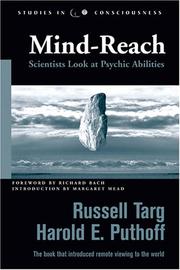
How Mind Reach Sold Remote Viewing to Readers
Popular writing helped turn SRI experiments into a lasting story about hidden human perception.
On this page
- How popular books reframed the lab work
- Why Cold War mystery made the story durable
- What popularization left out or simplified
Page outline Jump by section
Introduction
Mind-Reach: Scientists Look at Psychic Abilities, published in 1977 by Russell Targ and Harold Puthoff, did more than explain a series of laboratory experiments. It transformed remote viewing from a specialised research programme at Stanford Research Institute (SRI) into a cultural story that reached mainstream readers. Instead of presenting psychic perception as occult belief, the book framed it as an emerging scientific discovery backed by physicists, laboratory protocols and government interest. That combination proved highly influential. For supporters, Mind-Reach made extraordinary research accessible and respectable. For critics, it presented disputed findings with greater confidence than the underlying evidence justified. Either way, the book helped establish the enduring public image of remote viewing as a hidden human ability investigated by serious scientists rather than stage psychics or spiritual movements.[Google Books]books.google.comGoogle BooksMind-reach: Scientists Look at Psychic Ability"This book is a lucid and fascinating record of historic experiments–historic…
How popular books reframed the laboratory work
The greatest achievement of Mind-Reach was not a new experiment but a new narrative. Targ and Puthoff translated technical discussions of sensory shielding, target judging and statistical evaluation into stories that ordinary readers could follow. Laboratory sessions became accounts of individuals accurately describing distant locations or concealed objects under controlled conditions, making remote viewing appear both dramatic and experimentally grounded.[Google Books]books.google.comGoogle BooksMind-reach: Scientists Look at Psychic Ability"This book is a lucid and fascinating record of historic experiments–historic…
Several choices made the book especially persuasive to non-specialists:
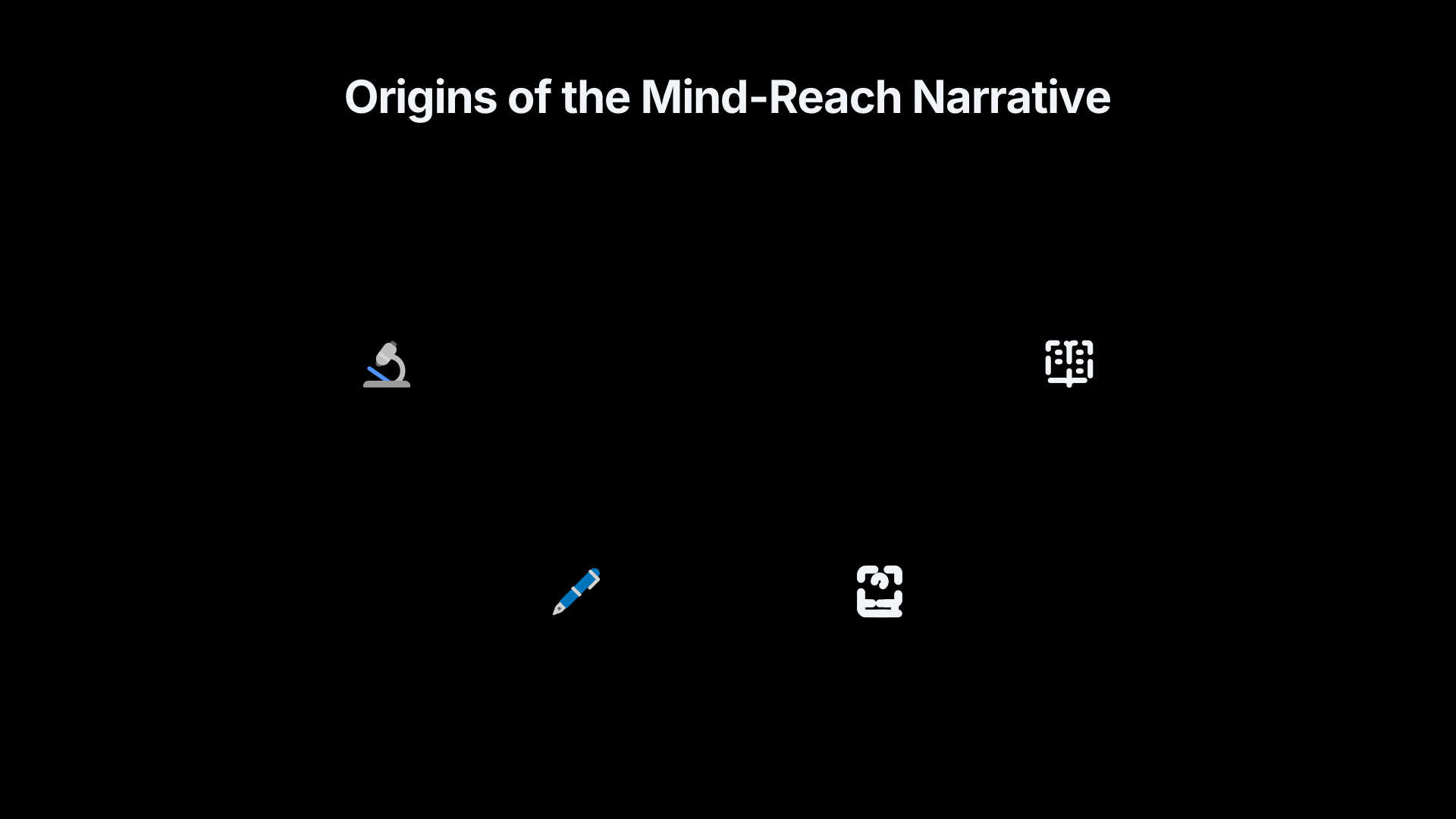
- Scientific identity first. The authors consistently presented themselves as physicists rather than paranormal enthusiasts, encouraging readers to see the work through the lens of experimental science.
- Accessible language. Mathematical details and specialist terminology were reduced in favour of anecdotes, illustrations and straightforward explanations.
- Universal potential. Rather than portraying remote viewing as a gift possessed only by rare psychics, the book suggested that many people might possess latent perceptual abilities that could be developed through practice.[Simon & Schuster UK]simonandschuster.co.ukSimon & Schuster UKMind-Reach | Book by Russell Targ, Harold Epublished by Delacorte, Mind-Reach is the book that led to the U. S. Army's psychic spy program and the subsequent…
This approach broadened the audience well beyond readers already interested in parapsychology. The experiments became part of wider discussions about consciousness, human potential and the limits of conventional science that were already popular during the late 1970s.
The book also helped establish the vocabulary that remains common today. Earlier traditions had generally spoken of clairvoyance or extrasensory perception. Targ and Puthoff preferred the more technical phrase “remote viewing”, which implied a specific laboratory protocol rather than a supernatural gift. That terminology gave the subject a more modern and research-oriented identity that persisted long after the original SRI studies.[Wikipedia]WikipediaRemote viewingRemote viewing
Why Cold War mystery made the story durable
The timing of Mind-Reach significantly strengthened its impact. During the Cold War, public fascination with intelligence agencies, classified research and technological competition created an audience receptive to stories about unconventional methods of gathering information.
Although many details of later government programmes remained classified when the book first appeared, readers knew that military and intelligence organisations had shown interest in psychic research. The suggestion that governments were willing to investigate remote viewing—even cautiously—made the subject appear less like fantasy and more like an unconventional research frontier. Declassified CIA documents later reinforced public awareness that remote-viewing experiments had indeed received government attention, helping the book acquire an almost prophetic reputation among supporters.[CIA]cia.govmind-reachThe method, called remote viewing, was evolved by two re spected scientists. Dr. Russel. Targ and Dr. Harold Puthoff of the…
This combination proved remarkably durable because it united several appealing themes:
- respected scientists investigating extraordinary claims;
- secretive government interest;
- the possibility of untapped human abilities;
- Cold War competition encouraging research outside conventional boundaries.
As later books, documentaries and media reports revisited the history of remote viewing, Mind-Reach increasingly became the foundational text that readers were directed towards. Modern editions explicitly describe it as the work that helped bring remote viewing to wider prominence.[Simon & Schuster UK]simonandschuster.co.ukSimon & Schuster UKMind-Reach | Book by Russell Targ, Harold Epublished by Delacorte, Mind-Reach is the book that led to the U. S. Army's psychic spy program and the subsequent…
What popularisation left out or simplified
The qualities that made Mind-Reach compelling for general readers also attracted criticism. Popular science writing naturally compresses technical debates, but critics argued that the book often presented tentative findings as stronger than the broader scientific community believed they were.
One important simplification involved experimental uncertainty. The book highlighted successful demonstrations and the promise of remote viewing while giving comparatively less attention to methodological disputes that later became central. Psychologists David Marks and Richard Kammann argued that some early SRI experiments contained sensory cues that could have influenced judging, while subsequent reviews concluded that positive findings generally became weaker under stricter controls.[centerforinquiry.s3.amazonaws.com]centerforinquiry.s3.amazonaws.comRemote Viewing RevisitedMarch 22, 2019 — by DF Marks · Cited by 13 — The 1970s saw the emergence of an astonishing psychic phenomenon that the principal investig…
Another omission was the wider scientific reception. Readers could easily come away believing that remote viewing was an emerging field awaiting broader acceptance. In reality, many scientists regarded the evidence as insufficient, and repeated attempts to establish reliable, independently reproducible effects failed to convince mainstream psychology or neuroscience. As a result, remote viewing gradually came to be classified by the scientific consensus as pseudoscience despite its continuing popularity in paranormal circles.[Wikipedia]WikipediaRemote viewingRemote viewing
Supporters, however, interpreted the same history differently. They argued that institutional scepticism prevented promising results from receiving fair consideration and continued to cite Mind-Reach as an accessible introduction to the original SRI work. Later editions and promotional material maintain that the book introduced protocols that remain influential within the remote-viewing community.[Simon & Schuster UK]simonandschuster.co.ukSimon & Schuster UKMind-Reach | Book by Russell Targ, Harold Epublished by Delacorte, Mind-Reach is the book that led to the U. S. Army's psychic spy program and the subsequent…
The lasting influence on remote viewing’s public image
The enduring importance of Mind-Reach lies less in its scientific status than in its cultural framing. It created a model that countless later books, lectures and documentaries repeated: present remote viewing through scientific credentials, laboratory stories and government connections rather than mystical doctrine.
That template proved remarkably resilient. Even decades after the original experiments, public discussions frequently begin with the same elements introduced to a mass readership in Mind-Reach: physicists at SRI, controlled experiments, intelligence interest and the possibility of hidden human perception. Whether these claims are presented as groundbreaking discoveries or cautionary examples of disputed science depends on the author, but the narrative structure remains recognisably the one Targ and Puthoff popularised.
For this reason, Mind-Reach occupies an unusual place in the history of remote viewing. Its greatest legacy is not simply documenting experiments, but shaping how generations of readers imagined those experiments—and, by extension, how remote viewing itself entered popular culture.
Amazon book picks
Further Reading
Books and field guides related to How Mind-Reach Sold Remote Viewing to Readers. Use these as the next step if you want deeper reading beyond the article.
The Demon-Haunted World
Provides the skeptical perspective on extraordinary claims omitted by popular accounts.
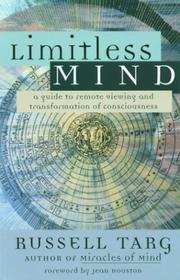
Reading the Enemy's Mind : Inside Star Gate
Explains how public fascination with remote viewing endured.
eBay marketplace picks
Marketplace Samples
Live-tested eBay searches with available results related to this page.


Endnotes
1.
Source: books.google.com
Link:https://books.google.com/books/about/Mind_reach.html?id=-P7nVmmXaFwC
Source snippet
Google BooksMind-reach: Scientists Look at Psychic Ability"This book is a lucid and fascinating record of historic experiments--historic...
2.
Source: cia.gov
Link:https://www.cia.gov/readingroom/docs/CIA-RDP96-00787R000500240025-6.pdf
Source snippet
mind-reachThe method, called remote viewing, was evolved by two re spected scientists. Dr. Russel. Targ and Dr. Harold Puthoff of the...
3.
Source: simonandschuster.co.uk
Title: Simon & Schuster UKMind-Reach | Book by Russell Targ, Harold E
Link:https://www.simonandschuster.co.uk/books/Mind-Reach/Russell-Targ/Studies-in-Consciousness/9781571744142
Source snippet
published by Delacorte, Mind-Reach is the book that led to the U. S. Army's psychic spy program and the subsequent...
4.
Source: Wikipedia
Title: Remote viewing
Link:https://en.wikipedia.org/wiki/Remote_viewing
5.
Source: Wikipedia
Title: Russell Targ
Link:https://en.wikipedia.org/wiki/Russell_Targ
Source snippet
Russell TargTarg's work on remote viewing has been characterized as pseudoscience and has also been criticized for lack of rigor.Read...
6.
Source: cia.gov
Link:https://www.cia.gov/readingroom/document/cia-rdp96-00787r000500410001-3
Source snippet
ite chosen by experimenters and unknown to the subject...
7.
Source: centerforinquiry.s3.amazonaws.com
Title: Remote Viewing Revisited
Link:https://centerforinquiry.s3.amazonaws.com/wp-content/uploads/sites/29/1982/07/22165420/p20.pdf
Source snippet
March 22, 2019 — by DF Marks · Cited by 13 — The 1970s saw the emergence of an astonishing psychic phenomenon that the principal investig...
Published: March 22, 2019
8.
Source: books.google.com
Title: Mind Reach
Link:https://books.google.com/books/about/Mind_Reach.html?id=n9czC7EhfGIC
Source snippet
google.comMind-Reach: Scientists Look at Psychic AbilitiesOriginally published by Delacorte, Mind-Reach is the book that led to the U. S...
9.
Source: books.google.com
Title: Remote Viewers
Link:https://books.google.com/books/about/Remote_Viewers.html?id=hEvuAAAAMAAJ
Source snippet
Viewers: The Secret History of America's Psychic...Science writer Jim Schnabel reveals for the first time the secret details of the stra...
10.
Source: amazon.co.uk
Link:https://www.amazon.co.uk/Mind-reach-Russell-Targ/dp/0224014242?tag=searcht-20
Source snippet
Targ, Russell, Puthoff, HaroldPublisher, Jonathan Cape. Publication date, 1 Sept. 1977. Language, English. Print length, 256 pages. ISBN...
11.
Source: abebooks.co.uk
Link:https://www.abebooks.co.uk/9780224014243/Mind-reach-Targ-Russell-Puthoff-Harold-0224014242/plp
Source snippet
ndition: Very Good; Condition · Very Good; Buy New. View this item; Used / Hardcover First...Read more...
12.
Source: psi-encyclopedia.spr.ac.uk
Title: spr.ac.uk Remote Viewing
Link:https://psi-encyclopedia.spr.ac.uk/articles/remote-viewing/
Source snippet
Viewing - Psi Encyclopedia13 Jan 2017 — In contrast, remote viewing offered a creative free response experience under conditions that mad...
Additional References
13.
Source: sixthsensereader.org
Link:https://sixthsensereader.org/about-the-book/abcderium-index/remote-viewing/
Source snippet
REMOTE VIEWINGby M Mowbray — Remote viewing, Targ writes, is “a process in which you quiet your mind and inflow information from anywhere...
14.
Source: abebooks.co.uk
Title: S. Army’s psychic spy program and the subsequent prominence of remote viewing
Link:https://www.abebooks.co.uk/9781571744142/Mind-Reach-Scientists-Look-Psychic-Abilities-1571744142/plp
Source snippet
AbeBooks UKMind-Reach: Scientists Look at Psychic Abilities (Studies in...Originally published by Delacorte, Mind-Reach is the book that...
15.
Source: researchgate.net
Title: 369604750 Remote Viewing a 1974 2022 systematic review and [meta analysis]({{ ‘meta-analysis/’ | relative_url }})
Link:https://www.researchgate.net/publication/369604750_Remote_Viewing_a_1974-2022_systematic_review_and_meta-analysis
Source snippet
(PDF) Remote Viewing: a 1974-2022 systematic review...This is the first meta-analysis of all studies related to remote viewing tasks con...
16.
Source: rviewer.com
Title: Review of Mind-Reach: Scientists Look at Psychic Abilities Puthoff
Link:https://rviewer.com/remote-viewing-book-and-movie-reviews/review-of-mind-reach-scientists-look-at-psychic-abilities/
Source snippet
It was the first book ever published specifically on the subject of remote viewing, and for some purposes it is still the best. I first e...
17.
Source: amazon.co.uk
Link:https://www.amazon.co.uk/Mind-reach-Scientists-Psychic-Abilities-Consciousness/dp/1571744142?tag=searcht-20
Source snippet
Amazon UKMind-Reach: Scientists Look at Psychic Abilities (Studies in...Originally published by Delacorte, Mind-Reach is the book that l...
18.
Source: goodreads.com
Link:https://www.goodreads.com/book/show/182428.Mind_Reach
Source snippet
Mind-Reach: Scientists Look at Psychic AbilitiesOriginally published by Delacorte, Mind-Reach is the book that led to the U...
19.
Source: goodreads.com
Link:https://www.goodreads.com/en/book/show/182428.Mind_Reach
Source snippet
Mind-Reach: Scientists Look at Psychic AbilitiesOriginally published by Delacorte, Mind-Reach is the book that led to the U...
20.
Source: archive.org
Title: Full text of “REMOTE VIEWING: PARAPSYCHOLOGICAL
Link:https://archive.org/stream/CIA-RDP96-00789R002600250001-6/CIA-RDP96-00789R002600250001-6_djvu.txt
Source snippet
Puthoff and Targ also conducted long distance experiments with equally significant results.... cold war. The unconventional weapon of re...
21.
Source: blackwells.co.uk
Link:https://blackwells.co.uk/bookshop/product/Mind-Reach-by-Russell-Targ-Harold-E-Puthoff/9781571744142?srsltid=AfmBOooT1hdxzhNYNz-oQaNXMjGookO74ZyA5iioieKaPrgBia1v79tN
Source snippet
Mind-Reach: Russell Targ: 9781571744142Originally published by Delacorte, Mind-Reach is the book that led to the U...
22.
Source: reddit.com
Title: Not to mention he advanced laser technology prior to doing so.Read more
Link:https://www.reddit.com/r/remoteviewing/comments/v4v2pp/if_you_have_read_this_book_or_know_if_its_author/
Source snippet
If you have read this book or know if it's author, thoughts...It's Russel Targ, he co-founded the [stargate program]({{ 'stargate/' | relative_url }}) and pioneered Remote...
Topic Tree
Follow this branch
Parent topic
Targ Puthoff The Physicists Behind Remote Viewing's RiseRelated pages 5
- Authority Problem Did Physics Credentials Make Remote Viewing Credible?
- CIA Interest Did CIA Interest Prove Remote Viewing Worked?
- Geller Testing Why Uri Geller Made SRI More Controversial
- Legacy Chain How SRI Became the Remote Viewing Origin Story
- Viewer Language Why Calling Psychics 'Viewers' Changed the Story